Mixing tile and plank flooring can give a Texas home more function without making every room look the same. Tile handles wet, dirty, and high-impact areas well. Luxury vinyl plank (LVP) and SPC flooring bring warmth and visual continuity to living spaces, bedrooms, and open-concept areas.
The key is to plan the materials as one whole-home design. Select compatible colors, decide where each material makes practical sense, and plan transitions before installation begins. These choices matter in homes around Corsicana, North Texas, and East Texas, especially where homeowners deal with pets, lake traffic, muddy shoes, wet towels, and frequent entertaining.
For homeowners considering professional flooring installation in Ennis, Apex Custom Floors can help coordinate tile flooring, waterproof plank flooring, layout direction, and transitions room by room.
Start With a Simple Whole-Home Flooring Plan
Before choosing individual products, decide which materials will carry through the home.
A practical plan usually includes:
- One primary plank flooring for living rooms, halls, dining rooms, and bedrooms
- One main tile style for bathrooms, entries, laundry rooms, or kitchen work zones
- One accent tile for showers, backsplashes, or fireplace areas
Keeping the number of flooring styles under control prevents the house from feeling chopped up. You can still use different tile sizes or patterns, but the colors and undertones should work together.
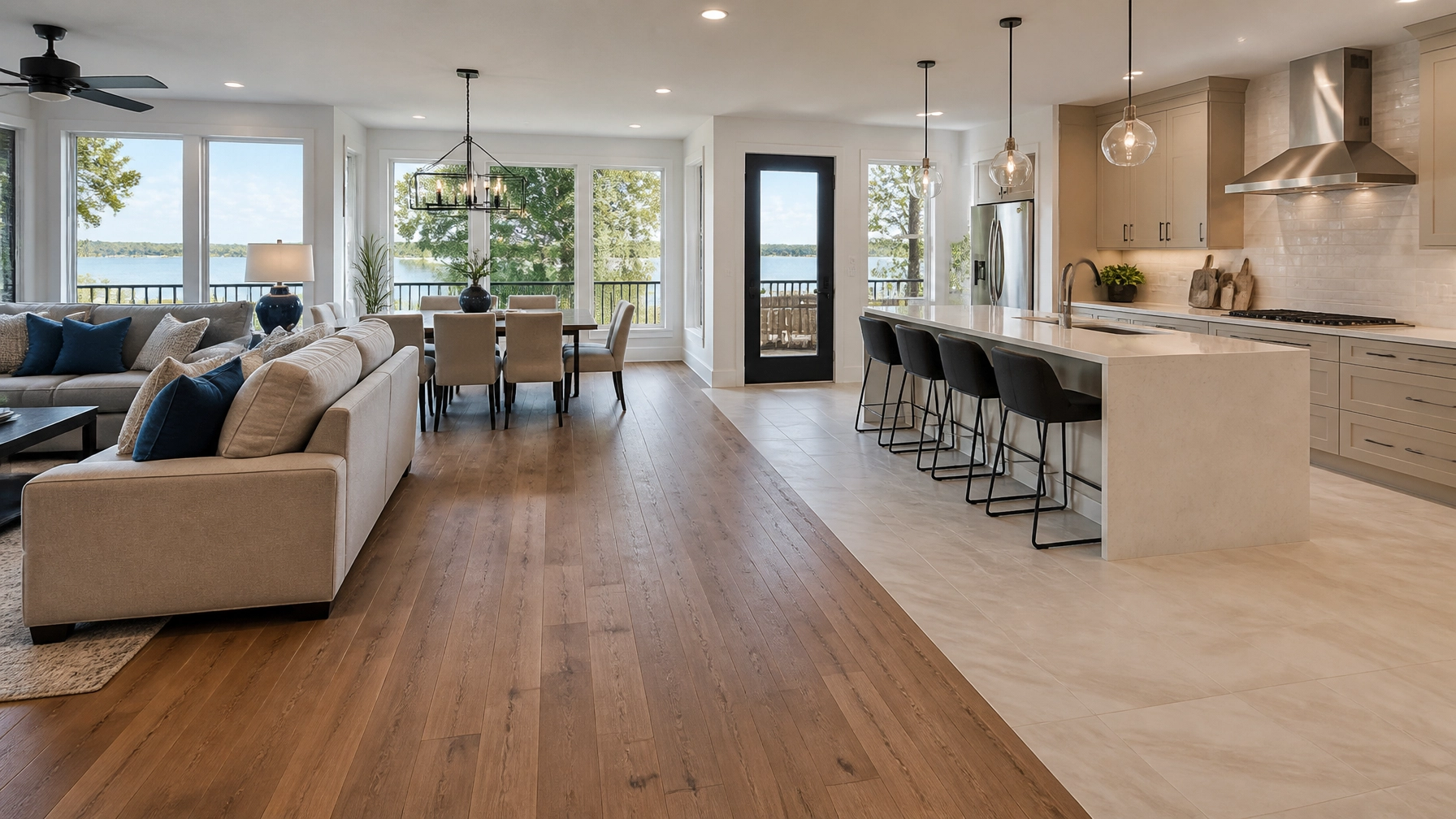
For example, warm wood-look LVP can pair with beige, cream, or warm gray tile. A cooler gray plank may work better with slate-look tile, white tile, or charcoal accents. Always view flooring samples beside cabinets, countertops, paint, and natural light. A color that looks neutral in a showroom may appear much warmer or cooler in a lake home.
A professional tile flooring installation plan should also account for floor height, door clearances, baseboards, and where each material will meet.
Where Tile Makes the Most Sense
Tile is a practical choice where water, dirt, heat, or heavy use are part of daily life.
Bathrooms and Showers
Tile is commonly used on bathroom floors, shower walls, shower floors, and tub surrounds. In a custom shower, the tile is only one part of the system. Proper waterproofing, slope, drainage, corners, and seams are just as important.
A bathroom can use the same tile throughout for a clean appearance, or combine a larger floor tile with a smaller shower-floor mosaic. If you want plank flooring outside the wettest areas, use it in an adjoining dressing area or hallway rather than inside the shower zone.
Apex Custom Floors provides custom shower and bathroom tile installation with attention to waterproofing and layout.
Entries, Mudrooms, and Laundry Rooms
Texas homes and lake houses often see plenty of tracked-in dirt, grass, water, and sand. Tile makes sense at exterior doors, mudrooms, and laundry rooms because it is durable and easy to clean.
One effective layout is to install tile inside the entry and transition to plank flooring at a doorway or clearly defined opening. This creates a useful drop zone without spreading tile across the entire living area.
Kitchen Work Zones
Tile can work well around sinks, ranges, islands, and other areas where spills and dropped items are common. In an open kitchen, some homeowners prefer tile throughout the kitchen while using LVP or SPC in the dining and living areas.
Another option is to carry the plank flooring through the entire open space and use tile only for the backsplash. The right choice depends on the floor plan, traffic, maintenance preferences, and the visual connection between rooms.
Fireplaces and Backsplashes
Tile is also useful as a vertical design material. A tiled fireplace surround or hearth can protect the area from ash, sparks, and everyday wear. A backsplash protects the wall behind a sink or range while providing a smaller place to introduce color or pattern.
If the backsplash or fireplace tile has a strong pattern, keep nearby flooring calmer. Specialty tile services can help with backsplashes, fireplace surrounds, mosaics, and other detailed layouts.

Where LVP or SPC Flooring Works Better
Plank flooring often works best where comfort, warmth, and visual flow are priorities.
Living rooms, bedrooms, hallways, offices, and dining areas are natural locations for LVP or SPC. Carrying the same plank through connected rooms makes an open floor plan feel larger. It also reduces the number of visible transitions.
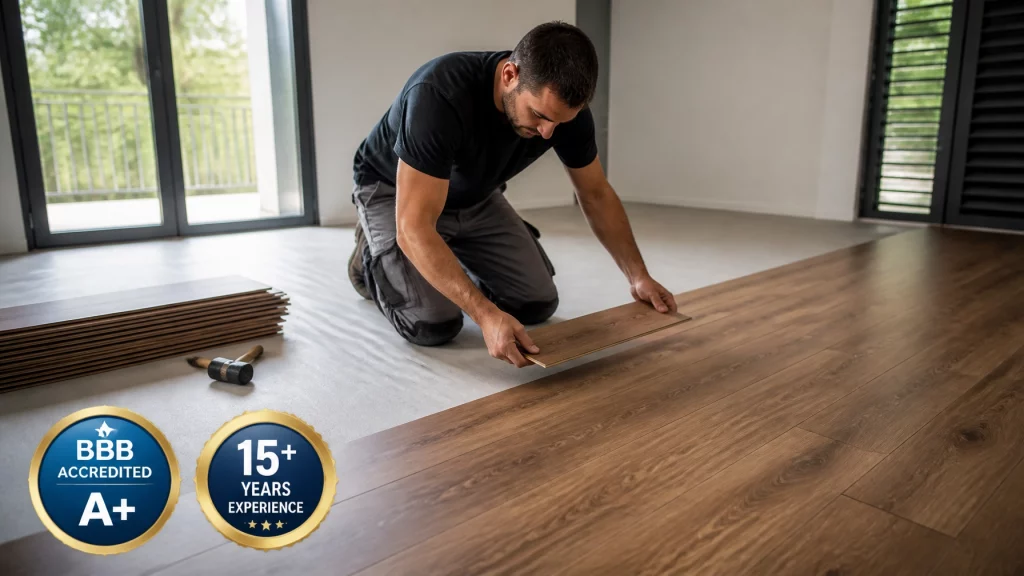
SPC flooring can be especially useful in active homes and lake properties because of its rigid core, water resistance, and low-maintenance surface. LVP and SPC can handle normal household spills, pets, and busy traffic, but installation still matters. The subfloor must be flat, clean, and properly prepared. Perimeter gaps and transitions must also follow the flooring system requirements.
For lake home flooring tips in Texas, think about how people actually use the house. If wet swimsuits and sandy feet enter through one door, consider tile in that entry and plank flooring everywhere beyond the cleanup zone. If the house is used as a rental, a durable waterproof plank may provide easier maintenance across larger areas.

Room-by-Room Mixing Ideas
Open Living and Kitchen Areas
Use plank flooring through the living room, dining area, and kitchen when you want the strongest visual flow. Add tile through the backsplash, fireplace surround, or a small entry zone.
If the kitchen is separated by an island or partial wall, tile can define the work area. Keep the plank and tile undertones similar so the change feels intentional.
Bathrooms
Use tile in the shower and around the tub. Tile also works well across the full bathroom floor. If the bathroom connects to a bedroom or dressing area, a planned threshold can separate the tile from the plank without making the rooms feel disconnected.
Laundry Rooms
Tile is a solid choice for laundry rooms because it is easy to clean and handles occasional moisture. A narrow room usually looks better with a simple tile layout rather than a busy pattern.
Bedrooms and Halls
Use the same LVP or SPC flooring through bedrooms and halls whenever possible. Keep plank direction consistent through connected spaces. This is one of the easiest ways to create a cohesive whole-home design.
Fireplace Areas
Tile or specialty tile can define the hearth and fireplace surround. Keep the floor pattern restrained if the fireplace wall is already the main focal point.
For homeowners near Fairfield, a Fairfield flooring contractor can review the room connections, existing floor heights, and the best location for each material change.
How to Handle Transitions and Plank Direction
Transitions should follow the architecture of the home. Doorways, room openings, islands, and changes in wall direction are usually better locations than stopping flooring in the middle of a wide room.
Common transition choices include:
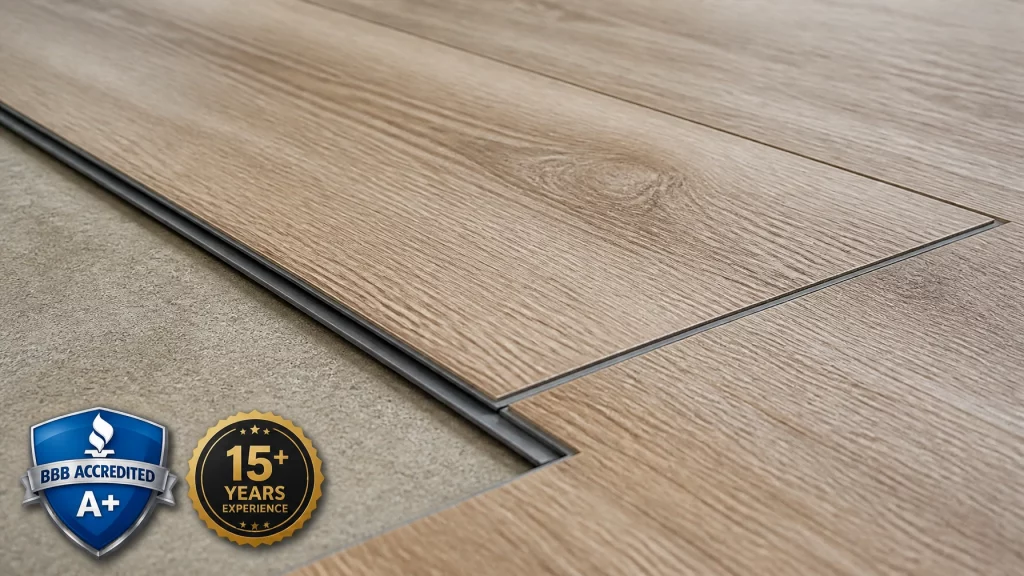
- T-molding: Used when both materials are close to the same height
- Reducer strips: Used when one floor sits higher than the other
- Tile edge profiles: Used to protect the tile edge and create a clean modern line
- Thresholds: Helpful at bathroom and bedroom doorways
Tile is often thicker than floating LVP or SPC. The installer may need to address the difference with subfloor preparation, underlayment, tile thickness, or a transition profile. Handling this early helps prevent trip points and doors that do not open properly.
For plank direction, run the boards along the longest dimension of the room in most cases. In open lake homes, lining the planks with the main windows or lake view can help the space feel longer and more connected. Keep the direction consistent through adjoining rooms unless a doorway creates a natural place to change it.
A Practical Design Rule for Texas and Lake Homes
Choose materials by function first and style second.
Tile generally makes sense where water, dirt, heat, or heavy impact are concentrated. LVP and SPC usually work well where people relax, walk barefoot, sleep, and spend extended time.
That does not mean every wet room must use tile or every dry room must use plank. The right decision depends on the structure, subfloor, ventilation, maintenance expectations, budget, and how the rooms connect.
Customers can also buy flooring materials directly from Apex Custom Floors. Our team can help you compare material options and coordinate the product selection with professional installation.
Frequently Asked Questions
Can tile and LVP be used in the same open-concept home?
Yes. The best results come from limiting the number of colors and matching the undertones. Use tile where it provides a functional benefit and plank flooring where you want comfort and continuity.
Is SPC flooring a good choice for lake houses?
SPC flooring can be a strong choice for lake houses because it is durable, moisture resistant, easy to clean, and suitable for busy areas. Proper subfloor preparation and installation are still important.
Should tile or plank flooring go in a kitchen?
Either can work. Tile is useful in high-spill and high-impact work zones. LVP or SPC may provide more comfort and a smoother visual connection to an open living room.
Where should flooring transitions be placed?
Place transitions at doorways, room openings, islands, or other architectural breaks whenever possible. Avoid placing a transition randomly across the center of a large room.
Can LVP or SPC be installed next to a tiled shower?
Yes, but the transition and moisture details must be planned carefully. Tile and waterproofing should protect the shower area, while the plank flooring should be installed on a properly prepared surface outside the wet zone.
How many flooring materials should be used in one home?
Two or three primary materials are usually enough. You can add accent tile in a shower, backsplash, or fireplace without introducing a completely different flooring style.
Conclusion: Build the Plan Before You Pick Every Finish
Mixing tile and plank flooring works best when each material has a clear job. Use tile for showers, bathrooms, entries, laundry rooms, kitchen work zones, fireplaces, and backsplashes. Use LVP or SPC to create comfort and visual flow through living areas, bedrooms, and halls.
The most successful projects connect the materials through color, scale, plank direction, and carefully planned transitions. If you are planning a remodel or lake home update, Apex Custom Floors can help you compare options and create a room-by-room flooring plan. Homeowners looking for professional flooring installation in Hillsboro can contact our team to discuss tile, LVP, SPC, and custom installation details.
Image Prompts for Production
- Featured image: Photorealistic completed Texas lake home interior showing warm wood-look LVP through an open living and dining area with light stone-look tile defining the kitchen and entry, clean transition, natural daylight, realistic furniture, no text, logos, or watermarks, 16:9 landscape.
- Supporting image 1: Photorealistic Texas home entry and laundry area using durable tile near moisture and traffic zones with wood-look SPC flooring beyond a natural doorway, realistic cabinetry, clean finished installation, natural light, no text or branding, 16:9 landscape.
- Supporting image 2: Photorealistic Texas lake-house bathroom with custom tiled walk-in shower, neutral large-format wall tile, practical tile floor, and wood-look waterproof plank in the dry vanity area, realistic fixtures, no text or branding, 16:9 landscape.
- Supporting image 3: Photorealistic close view of a professionally installed transition between stone-look kitchen tile and warm wood-look LVP in an adjoining living room, compatible undertones, realistic home setting, sharp detail, no text or branding, 16:9 landscape.
Get a Free Flooring Estimate
Apex Custom Floors
(903) 229-9556
Visit Apex Custom Floors
Call for a free estimate or to discuss your tile, LVP, SPC, shower, backsplash, or whole-home flooring project.
Call Apex Custom Floors at 903-229-9556.