If you are comparing tile, luxury vinyl plank, and other flooring options for your home, the best choice depends on how each room is used. That is especially true in East Texas, where homes may deal with pets, muddy shoes, lake traffic, humidity, and frequent indoor-outdoor activity.
For many homeowners, tile flooring East Texas projects make the most sense in kitchens, bathrooms, laundry rooms, entryways, and lake-house wet zones. Tile can handle moisture and heavy use, but it must be selected and installed correctly. The tile itself is only one part of the finished floor. Subfloor preparation, layout, grout, transitions, and workmanship all affect how well it performs.
Apex Custom Floors provides professional flooring and tile installation throughout North Texas and East Texas, including the Athens area. If you are planning a renovation, review our Athens flooring and tile installation services for more information about the communities we serve and the flooring systems we install.
Is Tile Flooring Right for an East Texas Home?
Tile is worth considering when durability, moisture resistance, and easy cleaning are high priorities. A properly installed tile floor can perform for many years in active areas of a home. It is also a practical option for rental properties, vacation homes, and lake houses that see different levels of traffic throughout the year.
Tile is often a strong choice for:
- Kitchens and dining areas
- Bathrooms and powder rooms
- Laundry rooms
- Mudrooms and lake entrances
- Hallways and high-traffic areas
- Pet areas
- Fireplace surrounds and specialty features
- Commercial spaces and rental properties
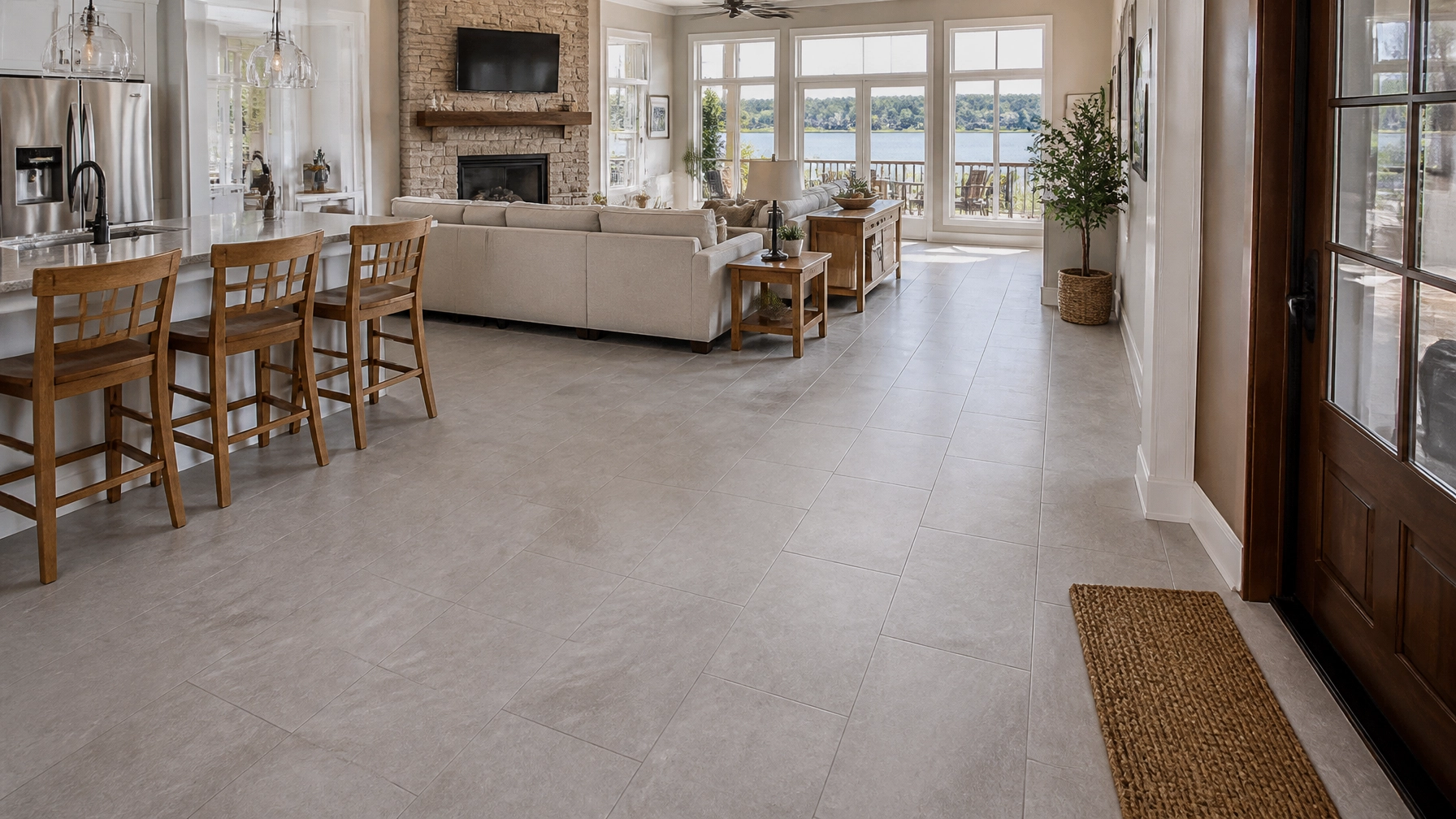
Porcelain and ceramic tile are available in many colors, sizes, textures, and layouts. You can choose a clean modern appearance, a traditional pattern, or wood-look tile that provides the visual character of planks with the durability of a hard tile surface.
Tile also has practical benefits for pets. It does not absorb spills the same way carpet can, and it is easier to sweep when dogs or children track in dirt. However, grout still needs attention. Dust, sand, and lake-area debris can collect in grout joints, especially near exterior doors.
The main drawback is that tile is hard underfoot and can feel cooler than plank flooring. It also requires more involved installation. If the subfloor is uneven or the layout is rushed, even a high-quality tile can crack, shift, or look uneven.
Lake Home Flooring Tips for Texas
Lake homes around Cedar Creek Lake and Richland Chambers Lake often have different flooring needs than a standard primary residence. Wet shoes, sand, fishing gear, pets, vacation guests, and outdoor furniture can all bring additional moisture and debris inside.
When choosing lake home flooring in Texas, think about where water is most likely to enter the home. The entry from a boat dock, patio, garage, or outdoor entertaining area deserves special attention. These spaces benefit from a floor that is durable, easy to clean, and less vulnerable to occasional moisture.
For many lake properties, porcelain tile is a practical option for:
- Main entries and mudrooms
- Laundry rooms
- Bathrooms
- Kitchens
- Hallways near exterior doors
- Utility areas
- Covered outdoor areas when the tile is specifically rated for that use
A matte or lightly textured finish can provide better traction than a highly polished surface. Smaller tile formats may also be useful in shower areas because additional grout joints can provide more grip. The exact tile should be selected based on the room, expected moisture, cleaning needs, and the manufacturer’s installation requirements.
Tile is not a substitute for proper waterproofing. In a shower, the waterproofing system, pan, corners, seams, drainage, and wall preparation must be completed before tile is installed. For bathroom projects, Apex Custom Floors provides custom shower and bathroom tile installation with attention to the construction details behind the finished surface.

Porcelain vs. Ceramic: Which Tile Should You Choose?
One of the most common questions homeowners ask is whether porcelain or ceramic tile is better. The answer depends on where the tile will be installed.
Porcelain Tile
Porcelain is made from refined clay and fired at a higher temperature than standard ceramic tile. This creates a denser tile with lower water absorption. It is commonly selected for floors, bathrooms, kitchens, laundry rooms, and high-traffic areas.
Porcelain is a strong choice when you need:
- Better moisture resistance
- Durability in busy areas
- Flooring for lake entrances
- Tile for bathrooms and laundry rooms
- Wood-look or stone-look flooring
- Large-format tile
- A floor that can handle pets and daily traffic
Porcelain is not completely maintenance-free. Grout still needs to be cleaned, and cement-based grout may need periodic sealing. The surface may also become slippery when wet if the finish is too smooth or polished, so the room and finish should be considered together.
Ceramic Tile
Ceramic tile is often more affordable and is available in a wide range of styles. It is a useful option for interior walls, backsplashes, decorative features, and areas with less moisture exposure.
Ceramic tile may work well for:
- Kitchen backsplashes
- Bathroom walls
- Fireplace surrounds
- Decorative accent walls
- Low-moisture interior areas
- Budget-conscious design projects
Ceramic can also be used for some floors, depending on the product and location. The important point is to confirm that the tile is rated for floor use and suitable for the amount of traffic and moisture expected in the room.
For many East Texas homes, the practical rule is simple: choose porcelain for most floors and wet zones, while ceramic can be a cost-effective choice for walls and decorative applications.
When Tile Beats Plank Flooring
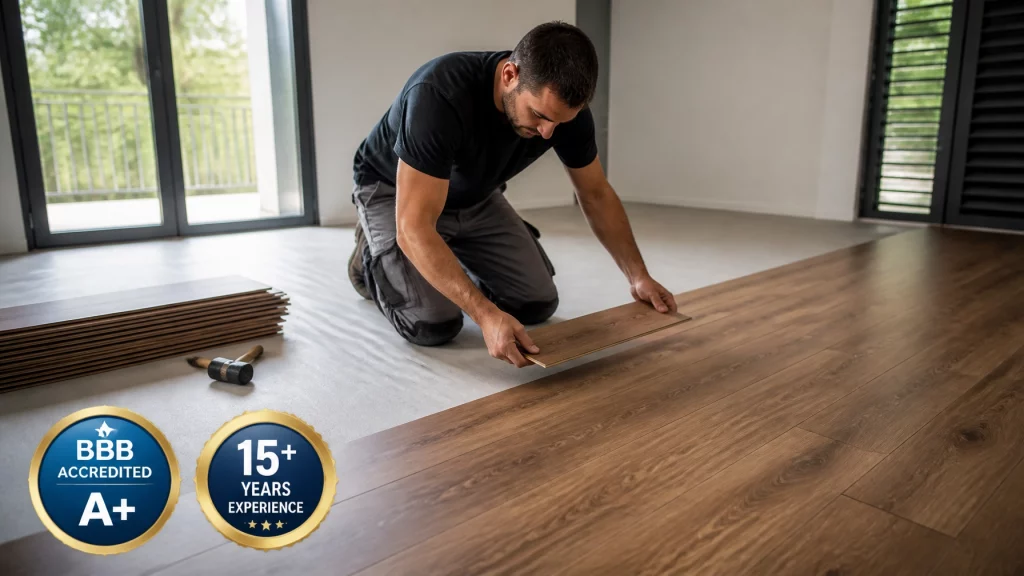
Luxury vinyl plank and SPC flooring are excellent options for many Texas homes. They are comfortable, easy to maintain, and available in wood-look designs. However, tile can be the better choice in certain situations.
Tile may beat plank flooring when:
-
The area receives frequent water exposure.
Bathrooms, showers, laundry rooms, and lake entries may benefit from tile and a properly prepared substrate. -
The floor must handle sand and grit.
Sand tracked in from a lake or outdoor area can wear down some flooring finishes over time. Tile is a hard surface that is easier to sweep and clean. -
You want a floor with long-term hard-surface durability.
Tile can hold up well in high-traffic areas when the product and installation are appropriate. -
You are creating a custom bathroom.
Tile allows coordinated floors, shower walls, niches, benches, borders, and accent details. -
You want a specialized layout.
Herringbone, offset, stacked, diagonal, and large-format layouts can create a custom appearance.
Plank flooring may still be better in bedrooms, living rooms, and other areas where comfort underfoot is important. It can also make sense when you want a faster installation or a consistent wood-look floor throughout much of the home.
Many projects use both materials. For example, a lake home may have tile in the entry, kitchen, laundry, and bathrooms, with LVP or SPC in the bedrooms and living areas. The key is planning the transition carefully so the two materials meet at a natural location with a clean height relationship.
Subfloor Preparation Matters More Than the Tile
A common mistake is to spend most of the budget on tile and overlook the surface underneath it. Tile is rigid. If the substrate moves, flexes, or has high and low spots, the tile and grout can show the problem.
Before installation, a professional should evaluate:
- Whether the subfloor is flat enough for the selected tile
- Low spots and high areas
- Cracks in a concrete slab
- Soft or damaged wood
- Moisture concerns
- Existing flooring and adhesive
- Transitions to adjoining rooms
- Cabinet and appliance elevations
- The required underlayment or waterproofing system
Large-format tile requires especially careful preparation. Larger pieces can make uneven surfaces more noticeable, leading to lippage where adjacent tile edges sit at different heights.
In wet areas, the installation system also needs to account for waterproofing, drainage, corners, penetrations, and movement. A shower floor must be sloped correctly toward the drain. A wall niche must be integrated into the waterproofing system. Changes of plane should be treated correctly rather than relying only on grout.
That is why proper installation often matters more than the brand or price of the tile. A modest tile installed over a properly prepared surface can perform better than expensive tile installed over an uneven or poorly protected substrate.
Grout, Layout, and Transition Details
Tile design is not just about choosing a color. Grout width, grout color, layout direction, and starting points all affect the finished appearance.
Before installation begins, decide how the tile should be positioned in the room. A good layout can reduce small cuts along visible walls and keep the pattern balanced around doors, cabinets, islands, and plumbing fixtures.
Important layout details include:
- Centering the pattern where it matters most
- Avoiding narrow slivers at walls
- Aligning tile with doorways and cabinets
- Planning where the first full tile will be placed
- Maintaining consistent grout joints
- Checking how patterns continue around corners
- Selecting trim or edge details
- Coordinating floor tile with backsplash or shower tile
Grout color also changes the appearance of the floor. A close grout color can make the surface look more continuous, while a contrasting grout emphasizes each tile. In lake homes and busy kitchens, a practical grout color may be easier to maintain than bright white grout.
Cement-based grout is common and can work well in many areas when properly installed and maintained. Some homeowners choose a more stain-resistant grout for showers, entries, and high-use areas. The best selection depends on the project conditions and the installation system.
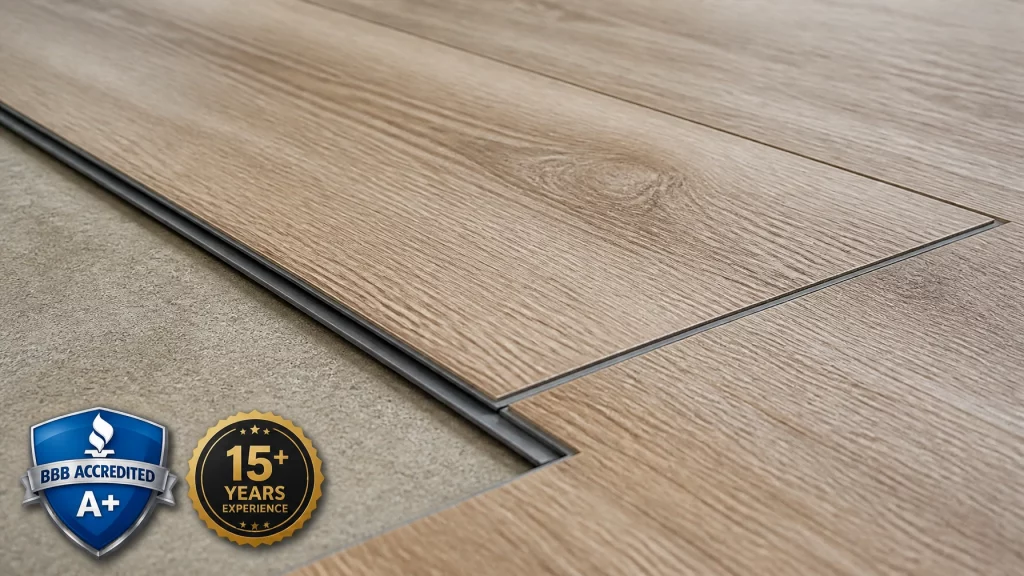
Transitions to plank flooring should be planned before either surface is installed. A transition may be needed where tile meets LVP, SPC, engineered hardwood, or an existing floor. The transition should look intentional and should not create an uncomfortable lip or tripping point.

Cost, Maintenance, Pets, and Resale Value
Tile installation costs vary based on the tile, square footage, layout, demolition, subfloor condition, waterproofing requirements, trim details, and labor. A simple room with a straight layout is different from a large-format installation requiring extensive preparation or a detailed pattern.
When comparing cost, look beyond the price per box of tile. Ask whether the estimate includes:
- Removal of old flooring
- Disposal
- Subfloor correction
- Underlayment
- Waterproofing
- Mortar and grout
- Trim and edge pieces
- Appliance or toilet removal
- Transitions
- Sealing and final cleanup
Maintenance is usually straightforward. Sweep or vacuum regularly, especially in a lake home where sand and grit can be tracked indoors. Use a cleaner recommended for tile and grout. Avoid harsh products that may damage grout or leave a residue.
For pets, tile offers easy cleanup and good resistance to scratches. However, very smooth tile may be slippery for some dogs, especially when wet. A matte or textured finish can provide a more practical surface.
Tile can also support resale appeal when it is installed in the right locations and matches the home. Durable flooring in kitchens, baths, entries, and laundry rooms is a useful feature for buyers. Design choices should still fit the home. An overly complicated pattern or highly personal color may not have the same broad appeal as a clean, well-proportioned layout.
Homeowners can also purchase flooring materials directly through Apex Custom Floors. This gives you another option when comparing materials and planning a project, whether you need tile for one room or flooring for a larger renovation.
For kitchen backsplashes, fireplace tile, accent walls, and other design details, see our specialty tile installation services.
Frequently Asked Questions About Tile Flooring East Texas
Is tile a good choice for a lake house?
Yes. Tile can be a strong choice for entries, kitchens, bathrooms, laundry rooms, and other areas exposed to wet shoes, pets, sand, and heavy traffic. Porcelain tile with an appropriate finish is often considered for these areas.
Is porcelain better than ceramic for flooring?
Porcelain is usually preferred for floors and wet areas because it is denser and absorbs less water. Ceramic can be a good choice for backsplashes, walls, and decorative features. The product must still be rated for its intended use.
Can tile be installed over an uneven subfloor?
The surface should be corrected before tile is installed. Depending on the conditions, preparation may include leveling, underlayment, crack isolation, or repairs. Installing tile over movement or unevenness can lead to cracked grout, lippage, or loose tile.
Does tile work better than plank flooring in a laundry room?
It can. Tile handles moisture and is easy to clean, making it a practical laundry-room option. Waterproof LVP or SPC may also work well, especially when comfort and a wood-look appearance are priorities.
How do I transition from tile to plank flooring?
The transition should be planned around the height and location of both materials. A professional installer can determine whether a reducer, transition strip, threshold, or clean material break is appropriate.
Do you install customer-purchased tile?
Yes. Apex Custom Floors can install customer-supplied materials when they are suitable for the project and can be installed according to the product requirements. Apex also offers flooring materials directly for customers who want help selecting products.
Conclusion: Choosing Tile for Your East Texas Home
The best tile floor is not always the most expensive one. It is the material selected for the room, installed over a properly prepared surface, and finished with a layout, grout, and transition plan that fits the home.
For East Texas homes and lake properties, porcelain tile is often worth considering in kitchens, bathrooms, laundry rooms, entries, and wet zones. Ceramic tile may be a practical choice for backsplashes, walls, and decorative applications. Tile and plank flooring can also work well together when the transition is planned from the beginning.
If you are planning a flooring project near Cedar Creek Lake, review our Cedar Creek Lake flooring and tile services to see how Apex Custom Floors serves lake homes, vacation properties, rentals, and businesses throughout the area. We also serve North Texas and East Texas communities, including Corsicana, Athens, Kaufman, Ennis, Fairfield, Hillsboro, Richland Chambers Lake, and surrounding areas.
Get a Free Tile Flooring Estimate from Apex Custom Floors
Apex Custom Floors can help you compare tile materials, review layout options, evaluate subfloor conditions, plan transitions, and install the finished floor with professional workmanship.
Call Apex Custom Floors today to discuss your project or request a free estimate.
Apex Custom Floors
(903) 229-9556
https://apexcustomfloors.com/