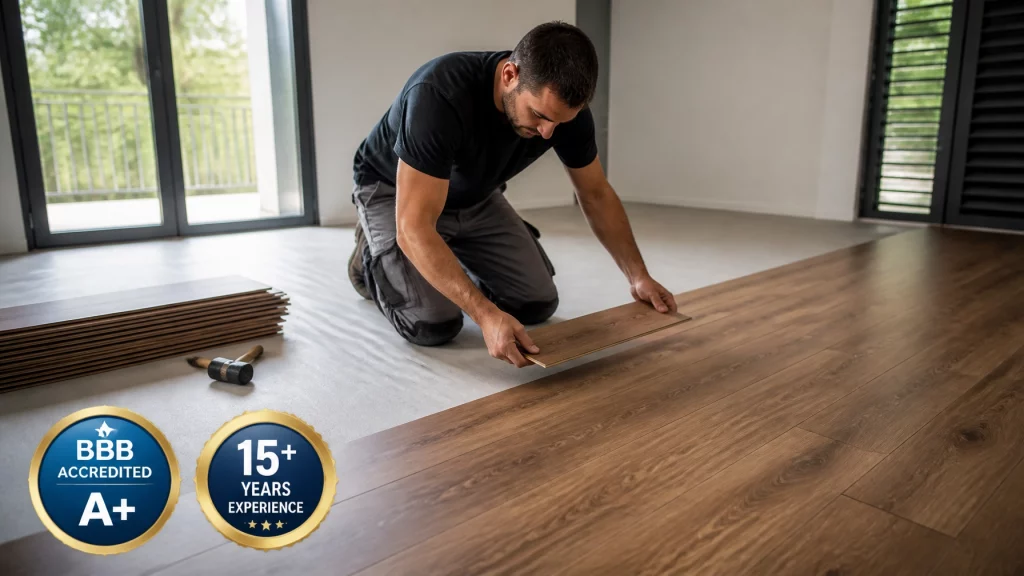
When you own a home near the water, whether it’s a weekend getaway or a permanent residence, your flooring choices matter more than they would in a standard suburban lot. Life at the lake brings unique challenges: wet feet coming off the boat, sand tracked in from the shore, and high humidity levels that can make traditional wood floors buckle. If you are looking for the best flooring for your Cedar Creek Lake home, you’ve likely narrowed it down to two heavy hitters: Luxury Vinyl Plank (LVP) and stone polymer composite.
Both options offer the beautiful look of natural wood without the high maintenance or water sensitivity. However, there are critical technical differences between the two that can impact the longevity and performance of your investment. At Apex Custom Floors, we bring over 15 years of experience to every project, helping homeowners navigate these choices to ensure their floors look stunning for years to come.
In this guide, we will break down the differences between traditional flexible luxury vinyl plank and its rigid-core cousin, stone polymer composite, so you can make an informed decision for your lakefront property.
Understanding the Basics: What is Luxury Vinyl Plank?
Traditional Luxury Vinyl Plank, often referred to as LVP, changed the game for the home improvement industry years ago. It provided a way to get the aesthetic of oak, walnut, or pine in a format that was significantly more water-resistant than laminate or engineered hardwood.
Traditional LVP features a core made primarily of polyvinyl chloride (PVC), which gives the planks a degree of flexibility. This flexibility makes it softer and warmer underfoot compared to tile or stone. However, because the core is purely synthetic and flexible, it is more susceptible to "telegraphing." This means that if your subfloor has minor dips, bumps, or imperfections, the flexible plank will eventually settle into those shapes, making them visible on the surface.
While LVP is a fantastic product for many residential settings, it has limitations in environments where temperature swings are common. Because it is essentially a plastic product, it can expand and contract when the Texas sun beats through those large lakefront windows.
The Rigid Core Powerhouse: What is stone polymer composite?
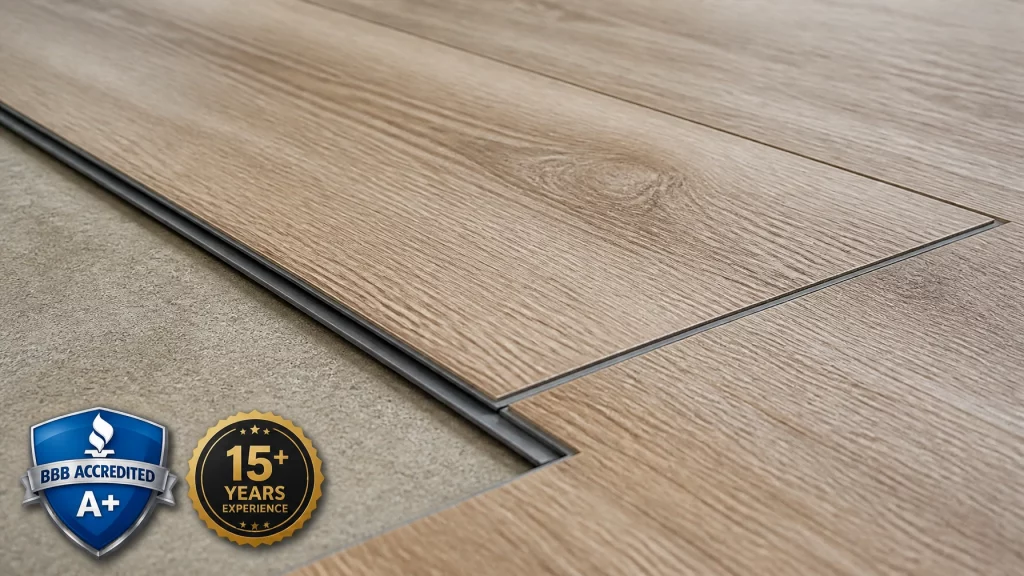
Stone polymer composite (often abbreviated as SPC) is the next evolution of vinyl flooring. Instead of a purely flexible PVC core, stone polymer composite uses a mixture of natural limestone powder, polyvinyl chloride, and stabilizers. This creates an incredibly dense, rigid core that does not bend.
Why does this matter for your home? The rigidity of stone polymer composite provides several key advantages:
- Impact Resistance: Because the core is stone-based, it is much harder to dent than traditional LVP. If you drop a heavy kitchen tool or move heavy furniture, stone polymer composite is less likely to show the mark.
- Subfloor Forgiveness: The rigid nature of the planks means they "bridge" over minor subfloor imperfections rather than settling into them.
- Dimensional Stability: This is perhaps the biggest selling point for lake houses. Stone polymer composite is remarkably stable. It doesn't expand or contract nearly as much as traditional vinyl, making it ideal for large open-concept rooms and homes with fluctuating temperatures.
At Apex Custom Floors, we often recommend stone polymer composite flooring for high-traffic areas where durability is the top priority.

Why Waterproof Flooring is Essential for Lake Homes
If you live near Richland Chambers Lake, you know that water follows you everywhere. Whether it’s the kids running in from the dock or the humidity that hangs in the air during a Texas summer, moisture is the enemy of traditional flooring.
Both luxury vinyl plank and stone polymer composite are marketed as 100% waterproof. This means the planks themselves will not swell, rot, or lose structural integrity if they get wet. This makes them far superior to traditional hardwood or standard laminate in a lake environment.
However, "waterproof" applies to the planks, not the subfloor. Proper flooring installation is crucial to ensure that water doesn't seep through the seams and sit on your subfloor, which could lead to mold or mildew issues. This is why working with an experienced contractor who understands moisture barriers and proper perimeter sealing is essential for lakefront properties.
Stone Polymer Composite vs. Luxury Vinyl Plank: The Durability Test
When choosing between these two materials, consider who will be using the space. Do you have large dogs with heavy claws? Do you often entertain guests who might be tracking in sand and grit from the shoreline?
- Scratch Resistance: Both materials usually feature a "wear layer" on top. This is a clear coating that protects the photographic layer of the plank. When comparing products, look for a wear layer of at least 20 mils for high-traffic lake homes.
- Dent Resistance: This is where stone polymer composite wins. The limestone core is nearly indestructible under normal residential use. Traditional LVP is softer; while it feels better on your joints, it is more prone to permanent indentations from heavy couches or dining tables.
- Pet Friendliness: For pet owners, both are excellent, but the extra rigidity of stone polymer composite provides that extra peace of mind against the wear and tear of active lake life.
If you are planning a more extensive update, such as a bathroom remodeling project, stone polymer composite is often the preferred choice for the flooring because of its extreme stability in wet environments.
Stability and Temperature: Dealing with the Texas Heat and Humidity
One of the most overlooked factors in flooring selection is "thermal expansion." Texas lake houses often feature expansive windows to take in the views. While beautiful, these windows can create "hot spots" on your floor where the sun hits directly.
Traditional luxury vinyl plank is more sensitive to these temperature changes. In extreme cases, if the floor isn't installed with enough of an expansion gap, the planks can buckle or "peak" at the seams as they expand.
Stone polymer composite, due to its stone-heavy core, has a very low coefficient of expansion. It stays flat and tight even when the temperature fluctuates. This makes it the superior choice for sunrooms, cabins that aren't climate-controlled year-round, or any home in the Athens area that experiences the full range of Texas weather.

Making the Choice for Your Richland Chambers Lake Property
Choosing between LVP and stone polymer composite often comes down to a trade-off between comfort and durability.
Choose Luxury Vinyl Plank if:
- You prioritize a softer, warmer feel underfoot (especially in bedrooms).
- Your subfloor is already perfectly flat and smooth.
- You are on a tighter budget but still want a waterproof solution.
Choose stone polymer composite if:
- You have a high-traffic home with pets and kids.
- You have large rooms where you want to avoid transition strips between areas.
- Your home experiences significant temperature fluctuations.
- You want the highest level of dent resistance available in a plank floor.
Regardless of which material you choose, the quality of the install is what determines the final look. At Apex Custom Floors, we are a BBB Accredited A+ company with over 15 years of combined experience. We take the time to prep your subfloor correctly, ensuring that whichever material you choose performs at its peak.
FAQ: Homeowner Questions About Lake House Flooring
Is stone polymer composite harder to install than LVP?
Not necessarily, but it does require different tools. While traditional LVP can often be cut with a utility knife (score and snap), stone polymer composite is much denser and often requires a power saw or a specialized heavy-duty cutter to get clean lines.
Can I install these floors over existing tile?
Yes, especially stone polymer composite. Because of its rigid core, it can often be installed directly over existing ceramic tile as long as the grout lines aren't too deep or wide. This can save you a significant amount of money on demolition and disposal. If you're interested in tile flooring installation or replacement, we can evaluate your current surface during a free estimate.
Do I need an underlayment?
Many high-quality stone polymer composite and LVP products come with a pre-attached acoustic pad. This helps with sound reduction and provides a bit of extra cushion. If your chosen product doesn't have one, we generally recommend adding a high-quality underlayment to improve the feel and sound of the floor.
How do I clean my new waterproof floors?
Maintenance is simple. Regular sweeping or vacuuming (without a beater bar) to remove sand and grit is the most important step. For deeper cleaning, use a pH-neutral cleaner designed for vinyl. Avoid steam mops, as the intense heat can sometimes damage the adhesives or the wear layer over time.
Conclusion: Professional Results in Corsicana and Beyond
Selecting the right flooring is a major decision that affects both the value and the "feel" of your home. Whether you are leaning towards the soft comfort of luxury vinyl plank or the rugged durability of stone polymer composite, the team at Apex Custom Floors is here to help.
We serve homeowners throughout Corsicana, North Texas, and the surrounding lake communities. Our goal is to provide a clean, organized job site and a finished product that exceeds your expectations. We stand behind our work with a one-year workmanship warranty, so you can rest easy knowing your lake house is in good hands.
If you are ready to upgrade your engineered hardwood or transition to a fully waterproof rigid core solution, give us a call. We can guide you through the selection process and provide a professional installation that stands up to the demands of lake life.

Apex Custom Floors
(903) 229-9556
https://apexcustomfloors.com/
We are more than just installers: Apex Custom Floors also sells high-quality flooring materials directly. Call Apex Custom Floors at 903-229-9556 to learn more.