Owning a lake home in North Texas is a dream come true, but it comes with unique challenges that standard suburban homes just don’t face. Whether you are spending your weekends at Cedar Creek Lake flooring or living full-time near the water, your floors take a beating. Between the humidity, the tracking in of lake water, and the intense Texas sun hitting those large scenic windows, you need a floor that won’t buckle under pressure.
At Apex Custom Floors, we’ve spent over 15 years helping homeowners choose materials that look great and actually last. Two of the most popular options today are luxury vinyl plank (LVP) and stone polymer composite (SPC). While they might look similar on the surface, the core differences matter, especially when you’re dealing with the specific environment of a Texas lake house.
In this guide, we’ll break down why stone polymer composite is often the superior choice for waterfront properties and how it compares to traditional LVP in terms of durability, moisture resistance, and long-term value.
What is Traditional Luxury Vinyl Plank (LVP)?
Luxury vinyl plank, or LVP, changed the flooring game a decade ago. It offered a way to get the look of hardwood without the high price tag or the sensitivity to water. Most traditional LVP is made with a flexible PVC core. This flexibility makes it comfortable to walk on and relatively easy to install over minor subfloor imperfections.
However, that same flexibility can be a drawback in a lake home. Because the core is softer, it is more prone to expanding and contracting when the temperature or humidity shifts. If your lake house sits empty during the week with the AC turned up, or if you have a sunroom that gets baked by the afternoon sun, traditional LVP can sometimes gap or buckle.
For many homeowners in Richland Chambers Lake flooring, LVP is still a solid choice for bedrooms or low-traffic areas. But when it comes to the main living spaces where the action happens, we often point people toward a more rigid solution.

The Rise of Stone Polymer Composite Flooring
If traditional LVP is "waterproof," then stone polymer composite is "waterproof on steroids." This material is engineered with a core made from a mix of limestone and stabilizers. The result is a completely rigid, incredibly dense board that doesn't bend.
When we talk to clients about luxury vinyl plank installation, we always mention stone polymer composite as the high-performance upgrade. Because the core is stone-based, it is virtually unaffected by moisture. It doesn't swell if a wet towel is left on it, and it won't warp if the lake-side humidity spikes.
For a high-traffic Texas home, this rigidity also means superior dent resistance. If you drop a heavy cooler or move furniture around, stone polymer composite is much less likely to show indentations than flexible vinyl. It’s the "tough guy" of the vinyl flooring world.
Why Stone Polymer Composite Wins in the Texas Heat
Texas heat is no joke, and lake homes often have massive windows to take in the views. Those windows act like magnifying glasses, heating up sections of the floor to temperatures well above 100 degrees.
Flexible LVP can struggle here. When it gets hot, the PVC core softens and expands. When it cools down at night, it shrinks. Over a few seasons, this "breathing" can cause the locking mechanisms to fail or the planks to pull apart.
Stone polymer composite is much more dimensionally stable. Because of that limestone core, it stays flat and tight regardless of the temperature. This makes it the ideal choice for sunrooms, entryways with direct sun, and homes that aren't climate-controlled 24/7. We see a lot of this in Fairfield TX flooring projects where the environment can be a bit more demanding.

The Waterfront Factor: Handling Moisture and Humidity
The primary reason people choose stone polymer composite for lake homes is the water. Whether it’s kids running in from the dock with wet feet or a humid breeze coming off the water, moisture is everywhere.
Traditional LVP is waterproof, but the subfloor beneath it isn't. If water sits in the seams of a flexible floor, it can eventually work its way down. Because stone polymer composite is rigid and has tighter locking systems, it provides a much more secure barrier against surface spills.
Many of our customers also opt for custom showers and tile flooring installation in their bathrooms to match the durability of their SPC floors. Combining a stone-core floor in the living area with a professionally waterproofed tile shower creates a home that can handle whatever the lake life throws at it.
Maintenance and Long-Term Value for Lake Properties
Nobody goes to the lake to spend their weekend cleaning floors. One of the best things about stone polymer composite is how easy it is to maintain. A quick sweep to get rid of sand and a damp mop with a pH-neutral cleaner is all it takes to keep it looking new.
From a resale perspective, durable, high-end flooring is a major selling point. Potential buyers around Cedar Creek Lake and Richland Chambers Lake know the environment is tough. Seeing a floor that is "dent-proof" and "heat-stable" gives them peace of mind that they won't have to replace the floors in three years.
As a BBB Accredited contractor with over 15 years of experience, we’ve seen how different materials age. Stone polymer composite consistently looks better for longer in Texas environments.

Frequently Asked Questions
Is stone polymer composite more expensive than LVP?
Generally, yes. Because of the limestone content and the advanced manufacturing process, stone polymer composite usually carries a slightly higher price tag per square foot than traditional flexible LVP. However, when you factor in the lifespan and the lack of repairs needed due to heat or dents, the long-term cost is often lower.
Does it feel different underfoot?
Because it is rigid, stone polymer composite feels firmer than flexible LVP. Some people describe it as feeling more like real wood or tile. Most high-quality SPC products come with a pre-attached underlayment that provides sound dampening and a bit of "give" to make it comfortable for all-day standing.
Can I install it over my existing floor?
In many cases, yes. Because it is rigid, it doesn't "telegraph" or show the bumps of the floor underneath it as much as flexible vinyl does. However, for the best results, we always recommend a flat, clean subfloor. Our team handles all the prep work to ensure your warranty remains valid and your floors stay level.
How do I clean stone polymer composite floors?
Keep it simple. Use a microfiber mop and a cleaner specifically designed for vinyl or hard surfaces. Avoid steam mops, as the intense heat and pressure can sometimes force moisture into the seams, and never use wax or polish, which can leave a dull film on the wear layer.
Conclusion: Making the Right Choice for Your Home
Choosing the right flooring for your lake home isn't just about picking a pretty color. It’s about understanding how the materials will react to the North Texas climate and your specific lifestyle. For most homeowners in the Athens TX flooring area, stone polymer composite offers the best balance of beauty, extreme durability, and peace of mind.
If you are looking for a floor that can handle the sun, the sand, and the splashes of lake life without missing a beat, stone polymer composite is the way to go.
We are more than just installers: Apex Custom Floors also sells high-quality flooring materials directly. Call Apex Custom Floors at 903-229-9556 to learn more.
Apex Custom Floors
Serving Corsicana, North Texas, and East Texas
(903) 229-9556
https://apexcustomfloors.com/
Ready to upgrade your lake home? Contact us today for a Free Estimate on your next flooring or remodeling project!

Image Prompts for This Article
Featured Image Prompt:
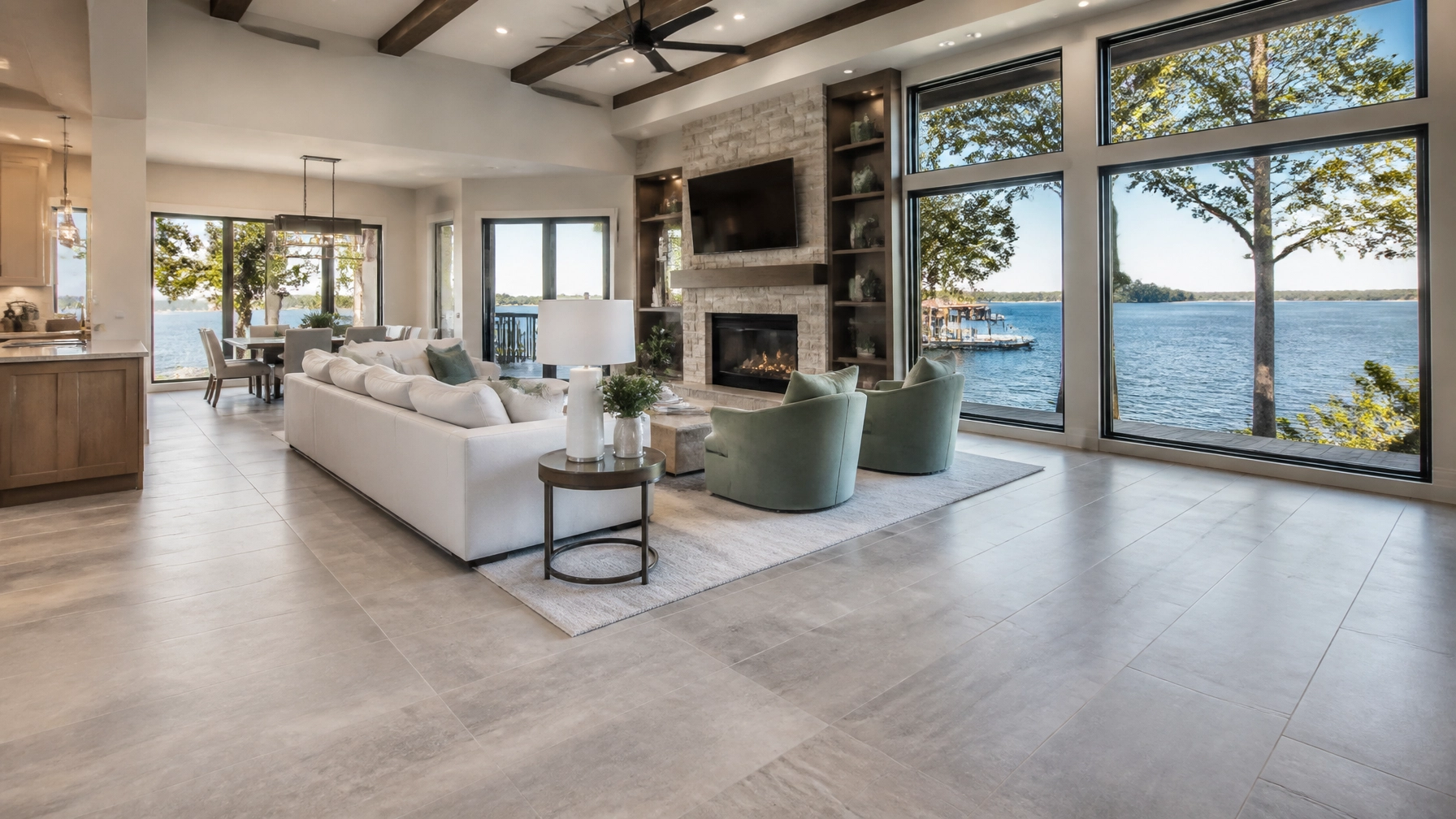
Photorealistic waterproof stone polymer composite flooring installed in a luxury Texas lake home living room, large windows overlooking Cedar Creek Lake, natural afternoon light, high-end residential interior, professionally finished flooring, sharp focus, 16:9 landscape format, no text, no logos.
Supporting Image 1 (Installation):
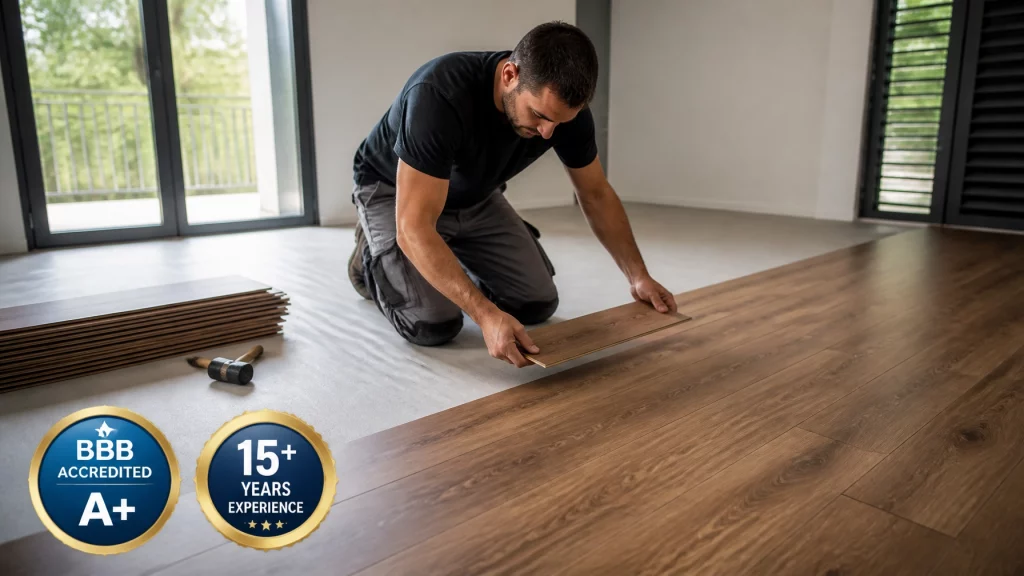
A close-up view of a professional flooring installer fitting a stone polymer composite plank into place in a residential kitchen, realistic tools, natural lighting, photorealistic, 16:9 landscape format, no text.
Supporting Image 2 (Jobsite):
Real jobsite photo of a completed stone polymer composite flooring installation in a modern Texas home, clean and organized room, natural sunlight through windows, high-quality residential finish, 16:9 landscape format.
Supporting Image 3 (Detail):
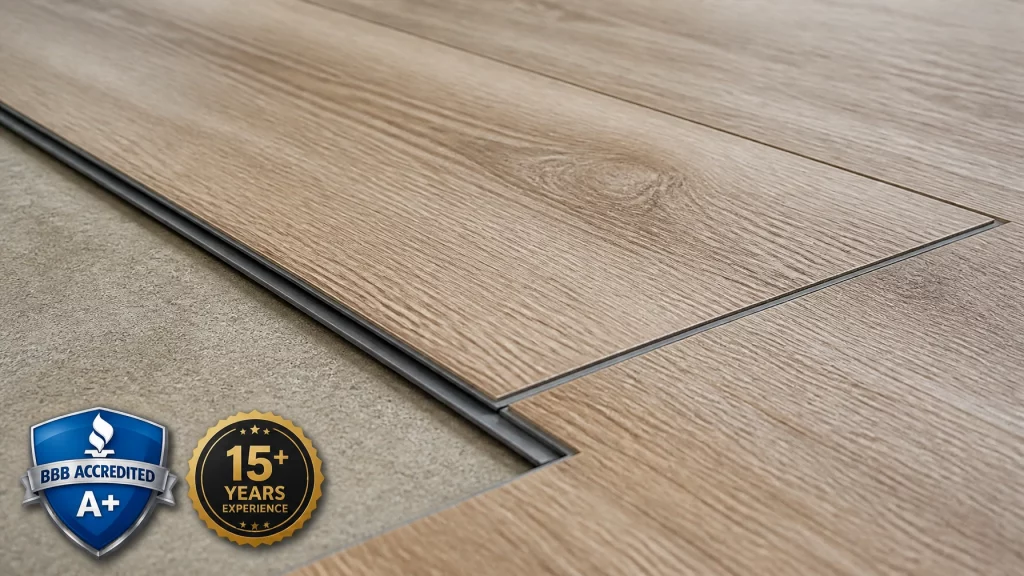
Close-up view of the texture and grain of a high-quality waterproof stone polymer composite plank, showing the realistic wood-look finish and durable wear layer, natural lighting, sharp focus, 16:9 landscape format.