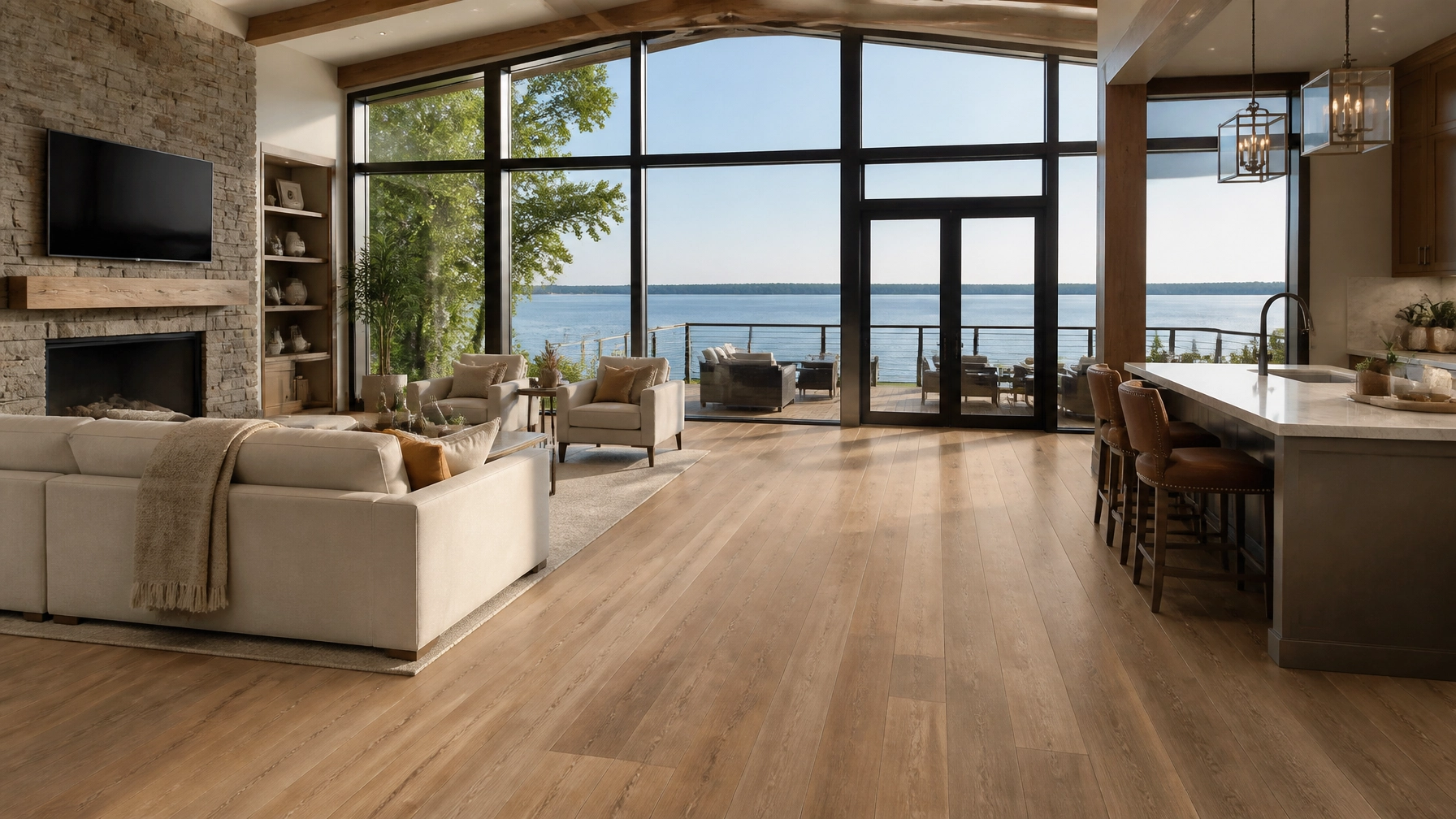
Owning a home on the water is a dream, but it comes with a unique set of maintenance challenges. Whether you are situated near Cedar Creek Lake or tucked away on a quiet cove at Richland Chambers, your floors have to work harder than they would in a standard suburban home. Between the humidity rising off the water, the sand tracked in from the shore, and the constant traffic of wet feet and heavy coolers, your choice of flooring can make or break your weekend relaxation.
At Apex Custom Floors, we’ve spent over 15 years helping North Texas homeowners navigate these choices. We know that "waterproof" isn't just a marketing buzzword, it's a requirement. Two of the most popular choices for lakefront properties are traditional luxury vinyl plank (LVP) and stone polymer composite flooring. While they might look similar on the surface, their internal construction makes a world of difference when it comes to long-term durability in a lakeside environment.
The Unique Challenges of Lakefront Living
Before diving into the technical differences, it’s important to understand why lake houses need specialized flooring. In areas like Athens, we see a wide range of temperatures and moisture levels.
- Humidity and Moisture: Living near a large body of water means higher ambient humidity. This can cause some materials, like natural wood, to expand and contract significantly.
- Abrasive Elements: Sand and grit are common at the lake. Your flooring needs a wear layer that can withstand constant abrasion without scratching.
- Temperature Swings: Many lake houses are secondary residences. If you turn off the AC when you aren’t there, the interior temperature and humidity can spike, putting stress on the floor’s stability.
- Wet Foot Traffic: Whether it’s kids coming in from the dock or a dog shaking off after a swim, water on the floor is a daily occurrence.
Understanding Traditional Luxury Vinyl Plank (LVP)
Traditional luxury vinyl plank installation has been the go-to for years because it offers a beautiful wood look at a fraction of the cost. The core of a standard LVP floor is typically made of a flexible PVC vinyl.
The Pros of Traditional LVP
- Comfort Underfoot: Because the core is flexible, it has a bit of "give." This makes it softer to walk on and warmer to the touch.
- Cost-Effective: It is generally more affordable than many other hard-surface options.
- Waterproof Surface: The material itself is impervious to water.
The Cons for Lake Houses
The biggest drawback for a lake house is its flexibility. In a non-conditioned space or a room with heavy sunlight (like those big lakefront windows), traditional LVP can expand, contract, or even "telegraph" imperfections from the subfloor. If you have heavy furniture, like a large dining table for the whole family, the softer core can be prone to denting.

Why Stone Polymer Composite is the Lake House King
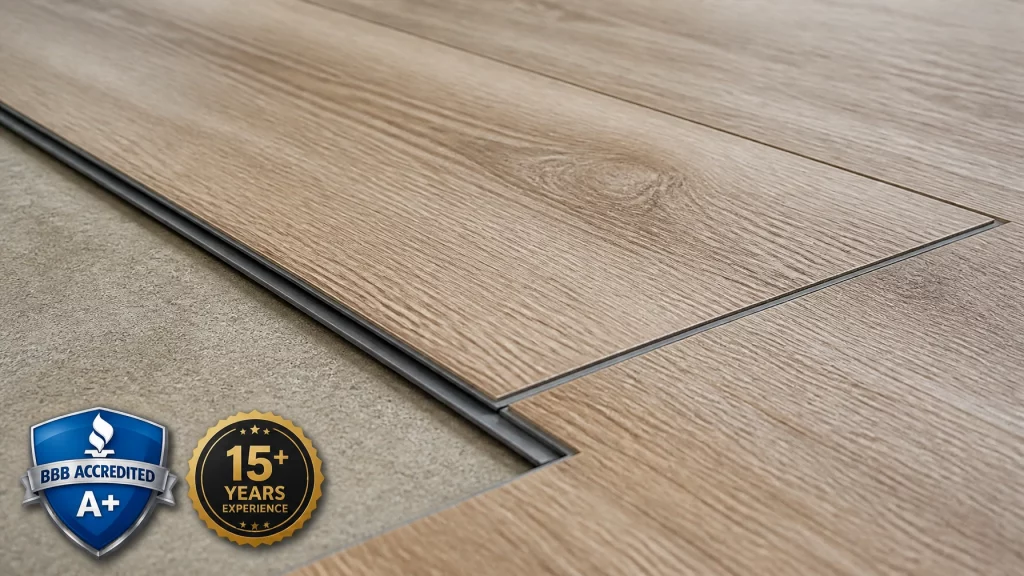
Stone polymer composite is often referred to as "rigid core" flooring. Instead of a flexible PVC core, it uses a core made from limestone powder and stabilizers. This creates a dense, rock-solid center that doesn’t budge.
Unmatched Dimensional Stability
In a place like Gun Barrel City, where the Texas sun beats down on your patio doors, stone polymer composite stays flat. It doesn't expand and contract like flexible vinyl. This is critical for lake houses that might not have the climate control running 24/7.
Superior Dent Resistance
Because the core is stone-based, it is incredibly hard. You can drop a heavy cooler or drag a chair across the floor without the same fear of leaving a permanent indentation that you might have with traditional LVP.
Better Waterproofing Performance
While both are waterproof, the rigid locking systems in stone polymer composite are often tighter. This prevents water from seeping through the joints to the subfloor, a major plus for those high-splash areas near the back door.
Comparing Durability: LVP vs. Stone Polymer Composite
When we sit down with customers in North Texas, we always look at the lifestyle of the home. If your lake house is a high-traffic zone with guests, pets, and outdoor equipment, stone polymer composite is almost always the winner for durability.
- Wear Layer: Both options come with various wear layer thicknesses (measured in mils). We recommend at least a 20-mil wear layer for lake properties to handle the sand and grit.
- Impact Resistance: Stone polymer composite wins here. The rigid core acts as a shield against heavy impacts.
- Ease of Cleaning: Both are easy to maintain with a simple damp mop. This is a huge upgrade over carpet or high-maintenance engineered hardwood that might require more care near water.

Installation Matters: More Than Just the Material
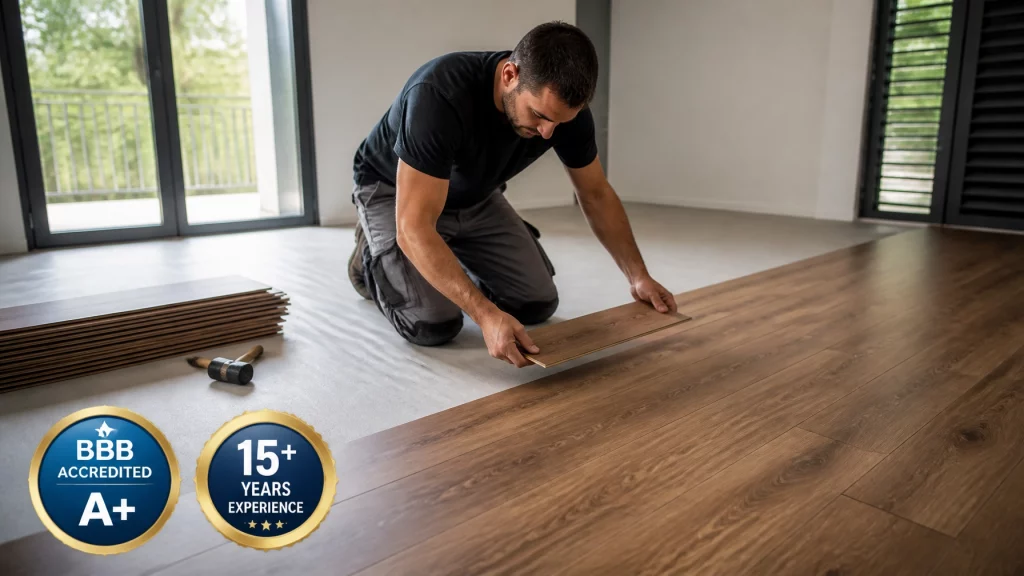
You could buy the most expensive stone polymer composite on the market, but if it isn't installed correctly, it won't last. At Apex Custom Floors, we prioritize subfloor preparation. This is especially important in lake homes where older subfloors might have settled or shifted.
We ensure the surface is level and clean before a single plank goes down. Our 15+ years of combined experience means we know how to handle the transitions between your new flooring and other areas, like custom showers or tiled entryways. We are proud to be a BBB Accredited business, which reflects our commitment to doing the job right the first time.
Frequently Asked Questions
Is stone polymer composite flooring hard to walk on?
It is firmer than traditional LVP, feeling more like tile or natural hardwood. Many homeowners actually prefer this because it feels more "permanent" and high-end. If you want more cushion, you can choose a product with an attached underlayment or use area rugs in sitting areas.
Can I install stone polymer composite over my existing floor?
In many cases, yes. Because it is a "rigid" product, it can often hide minor imperfections in the existing floor better than flexible vinyl. However, our team will always inspect the site to ensure the best results.
Does it look like real wood?
Absolutely. Modern printing technology has advanced so much that it is difficult to tell the difference between high-quality stone polymer composite and real timber. The textures are embossed to match the grain of the wood, giving you a realistic feel.
How do I clean my lake house floors?
Keep it simple. Frequent sweeping or vacuuming (with a hard-floor setting) to remove sand is key. Follow up with a damp mop using a pH-neutral cleaner. Avoid steam mops, as the extreme heat can eventually damage the core's bond.

Conclusion: Making the Right Choice for Your Home
Choosing the best flooring for your Richland Chambers Lake property doesn't have to be overwhelming. If you want a floor that feels soft and is budget-friendly, traditional LVP is a solid contender. However, for most lakefront owners who value long-term stability, dent resistance, and the ability to withstand humidity shifts, stone polymer composite is the clear choice.
Whatever you choose, the team at Apex Custom Floors is here to guide you. We handle the heavy lifting, from material selection to the final sweep of the jobsite. We serve the entire North Texas region, ensuring every lake house gets the professional finish it deserves.
We are more than just installers: Apex Custom Floors also sells high-quality flooring materials directly. Call Apex Custom Floors at 903-229-9556 to learn more.
Apex Custom Floors
(903) 229-9556
https://apexcustomfloors.com/