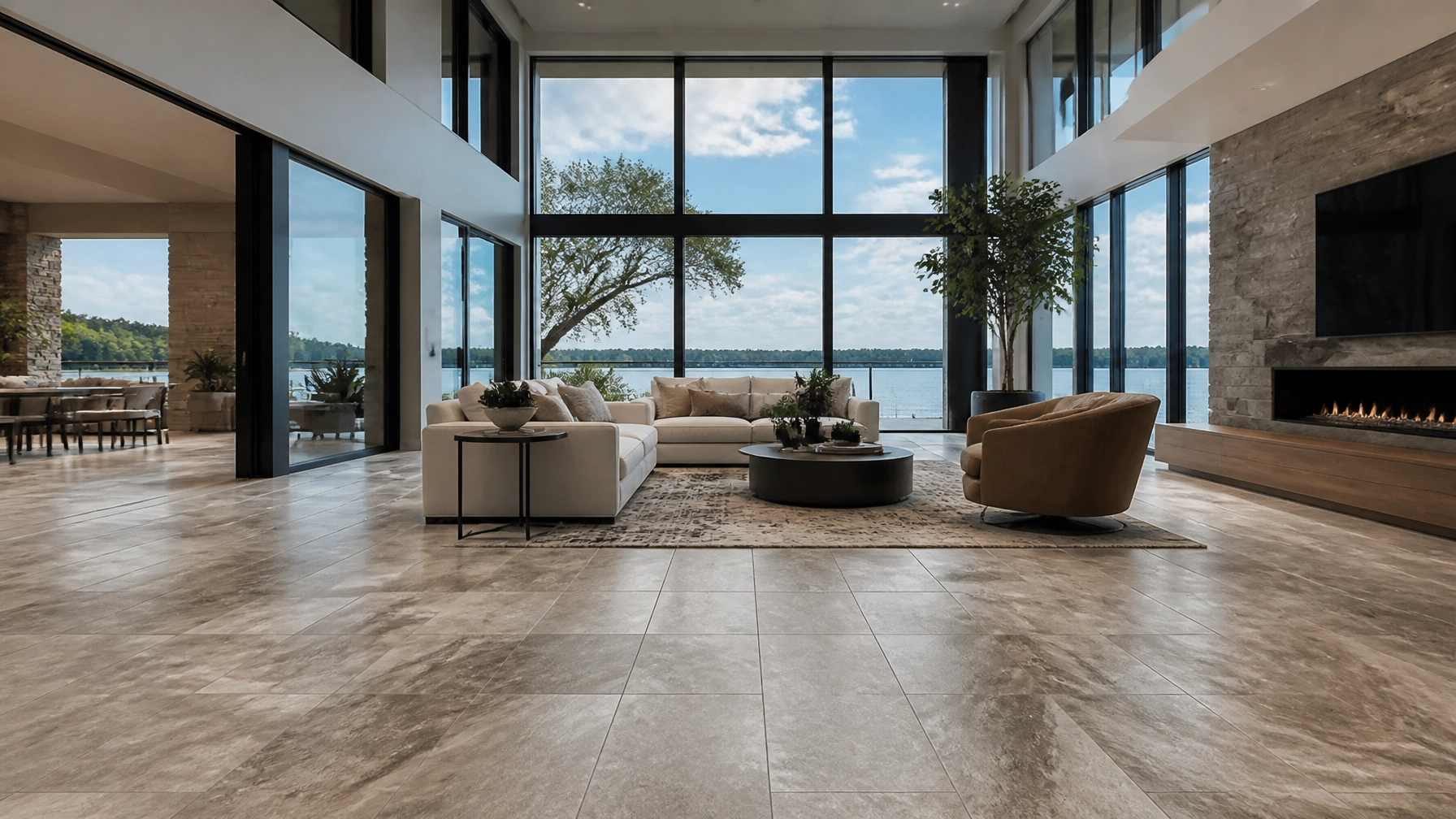
Owning a home near the water is a dream for many Texans, but it comes with a specific set of maintenance challenges. Whether you are building a new getaway or renovating a classic cabin, your choice of flooring is one of the most critical decisions you will make. Between the humidity, tracked-in sand, and wet feet coming off the boat, standard flooring materials often fall short. If you are looking for the best flooring for your property near Richland Chambers Lake flooring, you have likely narrowed your search down to two popular options: Luxury Vinyl Plank (LVP) and stone polymer composite.
Both materials have revolutionized the home improvement industry by offering the look of real wood with significantly better water resistance. However, they are not identical. At Apex Custom Floors, we have seen firsthand how these materials perform in the unique climate of North and East Texas. With over 15 years of experience and our status as a BBB Accredited business, we want to help you understand the technical differences so you can choose a floor that lasts for decades, not just seasons.
The Unique Challenges of Lake House Flooring
Lake houses are high-traffic environments that face environmental stressors most suburban homes never encounter. If you are managing a property or living full-time near the water, you know that moisture is your primary enemy. Traditional hardwood is beautiful, but it reacts poorly to the high humidity levels often found in East Texas. It can swell, cup, or even grow mold if it isn't perfectly maintained.
Sand and grit are also major factors. When guests walk in from the dock, they inevitably bring fine particles that act like sandpaper on a floor's finish. Furthermore, many lake properties are seasonal. This means the HVAC system might be turned off or set to a higher temperature when the home is vacant. These temperature and humidity swings cause many types of flooring to expand and contract, leading to unsightly gaps or buckling. To combat these issues, homeowners are increasingly turning to waterproof solutions like luxury vinyl plank installation and stone polymer composite options.
Luxury Vinyl Plank (LVP): A Flexible and Comfortable Choice
Luxury Vinyl Plank, or LVP, has been the "go-to" choice for waterproof flooring for years. It is constructed in multiple layers, including a wear layer, a print layer that mimics wood or stone, and a core made of flexible PVC (polyvinyl chloride).
The primary benefit of traditional LVP is its comfort. Because the core is flexible, there is a natural "give" when you walk on it. If you spend a lot of time on your feet in the kitchen or if you prefer a floor that feels warmer and softer underfoot, LVP is an excellent contender. It is also generally quieter than harder materials, which can be a relief in open-concept lake homes where sound tends to echo.
However, traditional LVP is more susceptible to temperature fluctuations. Because it is flexible, it can soften and expand when the Texas sun beats down through large waterfront windows. For a primary residence that is climate-controlled year-round, LVP is a fantastic, cost-effective choice. But for more rugged environments, there is a tougher brother in the family.

Stone Polymer Composite (SPC): The Toughest Waterfront Option
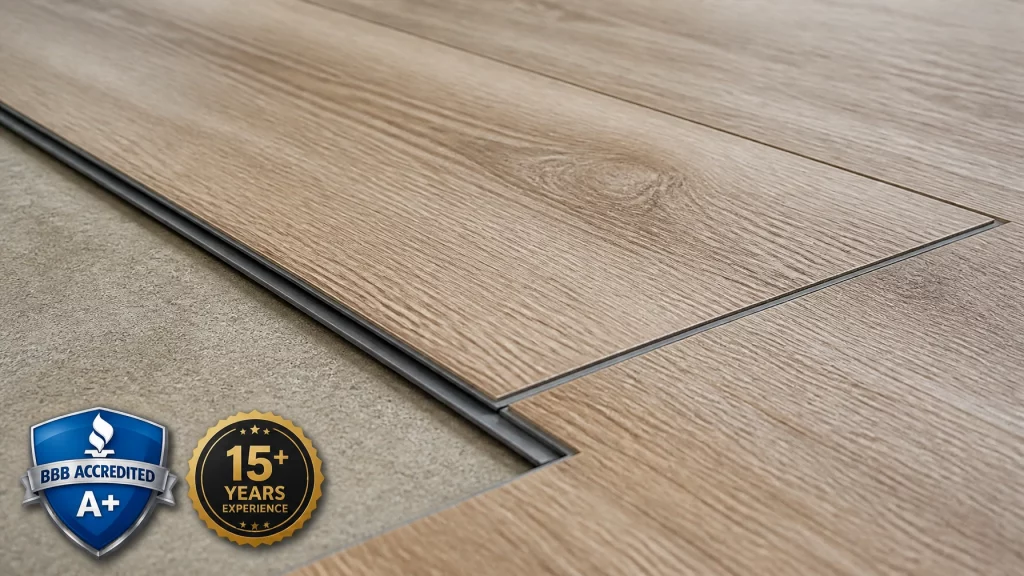
If you want the ultimate "bulletproof" floor for your lake house, stone polymer composite is the answer. Instead of a flexible PVC core, this material uses a core made of limestone powder and stabilizers. This creates a plank that is incredibly dense, rigid, and virtually indestructible.
Why does the "stone" part matter? For one, it makes the flooring 100% waterproof from the inside out. While LVP is also waterproof, stone polymer composite takes it a step further by being completely dimensionally stable. This means it will not expand or contract significantly, even if your lake house sits through a humid August with the air conditioning turned off.
For those with large dogs or high-traffic rental properties, the dent resistance of stone polymer composite is a game-changer. The rigid core provides a "shield" that prevents heavy furniture or dropped items from leaving marks. We often recommend this for commercial flooring services because of its extreme durability, and those same benefits apply perfectly to a busy lake home.
Side-by-Side: LVP vs. Stone Polymer Composite
To help you decide, let’s look at how these two materials stack up in the categories that matter most for lake living:
- Waterproof Performance: Both are excellent, but stone polymer composite has the edge in extreme moisture or standing water situations due to its ultra-dense core.
- Dent Resistance: Stone polymer composite wins here. The limestone core is much harder than the flexible core found in LVP.
- Comfort: LVP is the winner. It feels softer and warmer, making it a favorite for bedrooms.
- Installation on Uneven Subfloors: Stone polymer composite is better at "hiding" minor imperfections in your subfloor because its rigidity prevents it from "telegraphing" or following the dips and bumps in the concrete or plywood underneath.
- Cost: Generally, stone polymer composite is slightly more expensive than standard LVP, but the long-term durability often justifies the investment.
In many cases, our customers choose to mix these materials. You might want the toughness of stone polymer composite in your mudroom and kitchen, while opting for a softer engineered hardwood flooring or LVP in the upstairs bedrooms where comfort is the priority.

Why Professional Installation is Non-Negotiable
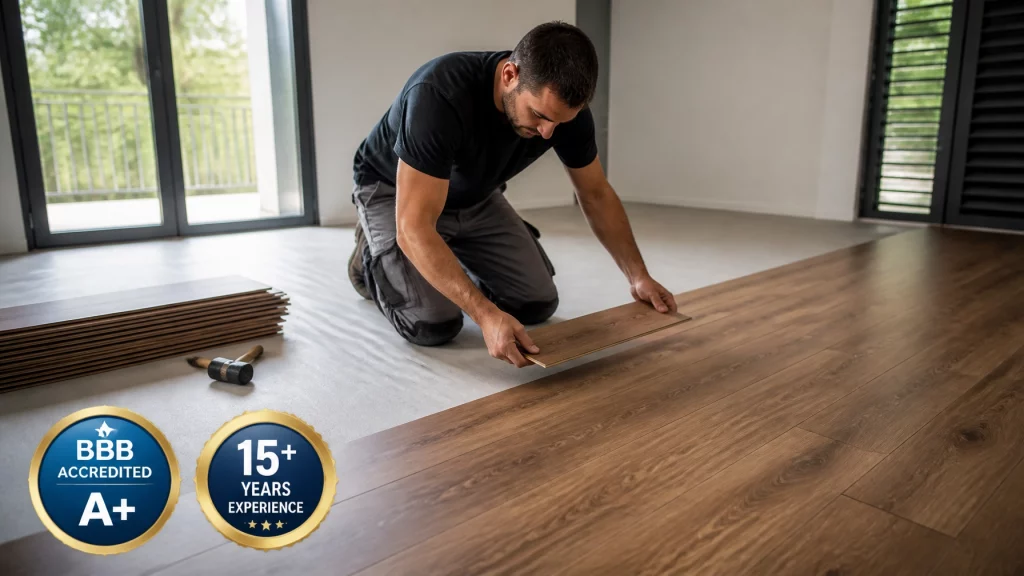
While many big-box stores sell these materials as "DIY-friendly," a lake house environment requires professional precision. At Apex Custom Floors, we don't just "click" the floors together. We perform a full subfloor assessment to ensure moisture levels are acceptable and the surface is level.
Improperly installed flooring in a high-humidity area will eventually fail. If the expansion gaps aren't exactly right, even the best stone polymer composite can buckle against the walls. Our team has spent over 15 years perfecting our methods in the greater Athens TX flooring market, ensuring that every transition piece and baseboard is finished to professional standards. We also offer a one-year workmanship warranty, so you can have peace of mind that your investment is protected.
Maintenance Tips for Your New Lake House Floors
Once your new floors are in, keeping them looking like new is relatively easy. Unlike real wood, you don't need special waxes or oils.
- Sweep Frequently: Use a soft-bristle broom or a vacuum without a beater bar to remove sand and grit. This prevents the micro-scratches that can dull the finish over time.
- Damp Mop Only: You can use a pH-neutral cleaner. Avoid steam mops, as the extreme heat can sometimes damage the adhesive or the wear layer over time, regardless of what the manufacturer says.
- Use Area Rugs: Place rugs at every entrance to catch water and sand before it reaches your main flooring.
- Trim Pet Nails: While stone polymer composite is highly scratch-resistant, keeping your dog's nails trimmed is always a good practice for any floor.
If you are also considering a bathroom upgrade, our team specializes in custom showers that use advanced waterproofing systems to match the durability of your new floors.

Frequently Asked Questions
Can I install stone polymer composite over my existing tile?
In many cases, yes. Because stone polymer composite is rigid, it can often be installed directly over existing tile flooring installation as long as the tile is well-bonded and the grout lines aren't too deep or wide. This can save you a significant amount of money on demolition costs.
Is stone polymer composite too cold for a winter cabin?
It is denser than LVP, so it can feel a bit cooler. However, many modern stone polymer composite products come with an attached underlayment that provides thermal insulation. It is still much warmer than traditional ceramic or porcelain tile.
How long does a typical installation take?
For a standard 1,000-square-foot lake house, the installation of stone polymer composite or LVP usually takes about 2 to 3 days, depending on the amount of furniture moving and subfloor preparation required.
Is this flooring safe for my kids and pets?
Absolutely. Most high-quality LVP and stone polymer composite products are FloorScore certified, meaning they meet strict indoor air quality standards and have low VOC emissions. They are also non-slip and easy to sanitize.
Choosing the Right Partner for Your Project
Selecting the right material is only half the battle. You need a contractor who understands the local environment in North and East Texas. We live and work here, serving homeowners throughout Cedar Creek Lake flooring and the surrounding communities. Whether you need a simple floor replacement or a full whole home flooring upgrade, we provide the guidance you need to make the right choice for your lifestyle and budget.
We are more than just installers: Apex Custom Floors also sells high-quality flooring materials directly. Call Apex Custom Floors at 903-229-9556 to learn more.
Apex Custom Floors
(903) 229-9556
https://apexcustomfloors.com/
Whether you are in Corsicana, Ennis, or Hillsboro, our team is ready to help you find the perfect waterproof flooring solution for your lake home. Contact us today for a free estimate and let's get started on your project.