Meta description: Compare waterproof flooring Cedar Creek Lake homeowners can use in lake homes, including LVP, SPC, and tile, with layout, maintenance, preparation, and cost tips.
Lake homes deal with more than ordinary household traffic. Wet feet come in from the dock. Sand collects near exterior doors. Pets track in grit. Humidity changes when the home sits closed during the week. A flooring product that looks good in a sample can still be a poor fit if it cannot handle the way the property is used.
For homeowners planning waterproof flooring Cedar Creek Lake properties, the best choice usually depends on the room, the traffic level, the subfloor, and the amount of water that enters the home. Cedar Creek Lake flooring installation should be planned around those conditions instead of choosing one product for every room without considering how each area functions.
This guide compares luxury vinyl plank, stone polymer composite flooring, and tile. It also covers plank direction, tile layout, grout, transitions, subfloor preparation, maintenance, resale value, and realistic cost planning.
How LVP, SPC, and Tile Compare for a Lake Home
Each flooring type has a place in a Cedar Creek Lake home. The right decision is often a combination of materials rather than one product throughout the entire property.
| Flooring type | Best use | Main strengths | Important considerations |
|---|---|---|---|
| LVP | Living rooms, bedrooms, hallways, kitchens | Comfortable, wood-look appearance, waterproof plank construction, easy care | Requires a flat subfloor and careful perimeter detailing |
| SPC | Busy common areas, rentals, kitchens, lake-facing rooms | Rigid core, strong dent resistance, stable during humidity changes | Can feel firmer underfoot than standard LVP |
| Porcelain or ceramic tile | Entries, bathrooms, laundry rooms, showers, high-moisture areas | Highly water-resistant, durable, easy to clean | Harder underfoot and typically more labor-intensive to install |
A practical lake-home plan may use tile at the entry and in bathrooms, then continue with LVP or SPC through the living areas and bedrooms. This creates a balance between moisture protection, comfort, appearance, and budget.
LVP for Comfort and Wood-Look Style
Luxury vinyl plank is a popular choice for lake homes because it offers the appearance of wood without the same concerns as solid hardwood around moisture. It is comfortable underfoot and works well in living rooms, bedrooms, hallways, kitchens, and open-concept areas.
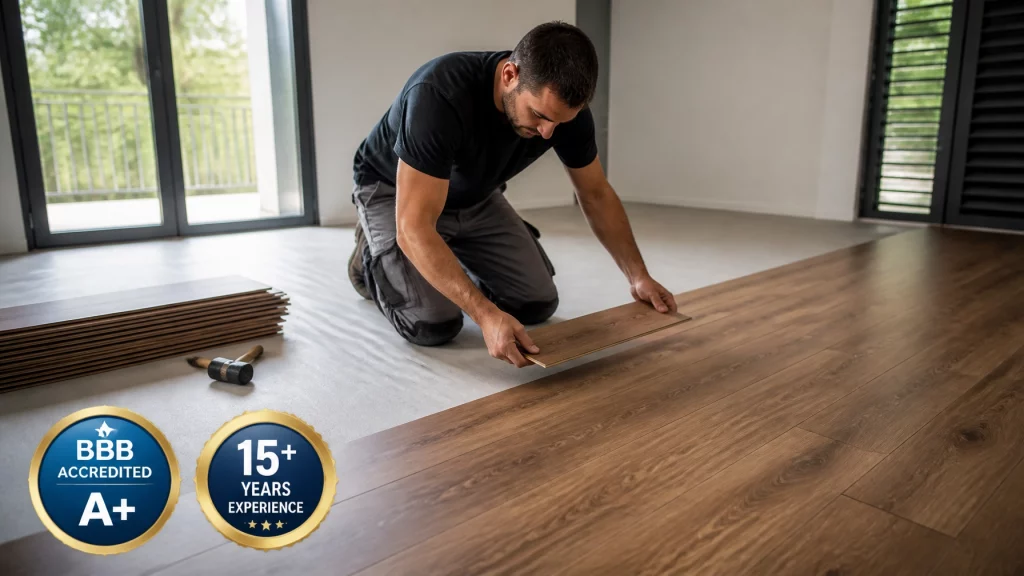
Professional LVP installation for lake homes still requires more than clicking planks together. The installer must check the subfloor, plan the layout, account for fixed objects, leave the required movement space, and install clean transitions at tile, cabinets, and doorways.
LVP can be a strong choice for homes with pets and children. Sand should still be removed regularly because grit can wear the finish over time. Waterproof does not mean maintenance-free.
SPC for Heavy Traffic and Humidity Changes
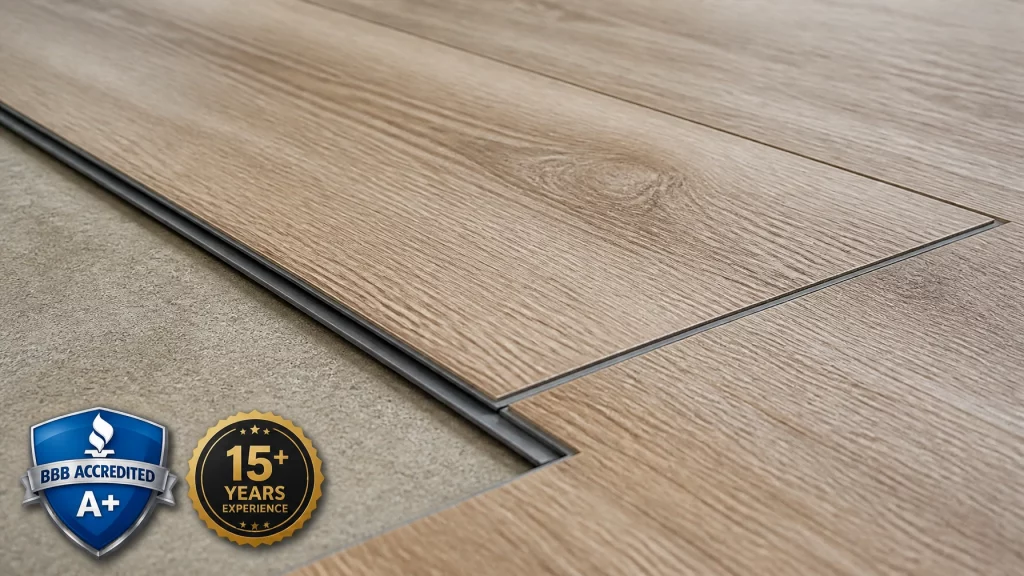
SPC stands for stone polymer composite. It has a dense, rigid core that provides stability and helps resist dents from furniture, dropped objects, and regular traffic. This makes it a good fit for busy kitchens, open living spaces, vacation rentals, and lake houses that may experience significant temperature and humidity changes.
Many homeowners researching SPC flooring for lake houses are looking for a product that can handle both wet conditions and periods of limited occupancy. SPC can perform well in that setting when the home is properly conditioned and the flooring is installed over a suitable surface.
The rigid construction can feel less soft than LVP, especially over concrete. Area rugs and runners can add comfort in seating areas without blocking the floor’s wood-look appearance.
Tile for the Wettest Areas
Porcelain and ceramic tile are dependable choices for bathrooms, laundry rooms, dock-side entries, mudrooms, and other areas where water regularly enters the home. Tile does not absorb water in the same way as many traditional flooring products, but the installation still matters. The substrate, setting materials, grout joints, movement joints, and transitions all affect long-term performance.
Matte or lightly textured tile is usually a better choice than highly polished tile in areas where wet feet are common. Medium-tone grout can also be easier to maintain than bright white grout when sand, dirt, and lake debris are part of daily life.
A professional tile flooring installation service can help balance tile size, room scale, grout spacing, and layout before the first piece is set.

Design Decisions That Matter More Than Most Homeowners Expect
Flooring design is not only about color. Direction, scale, transitions, and grout can change how a room looks and how well it functions.
Choose Plank Direction Based on the Room
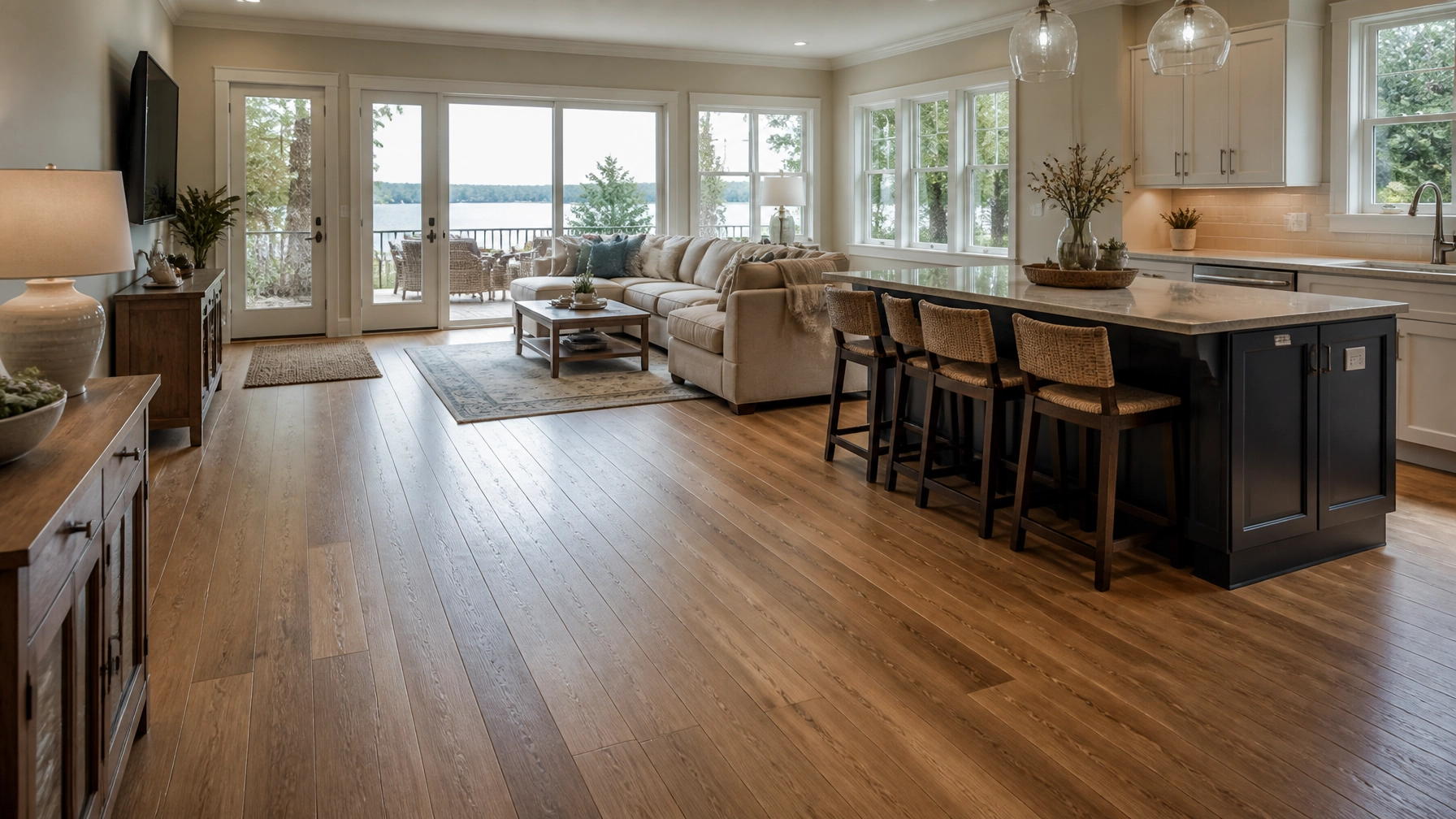
In an open living area, planks often look best when they run toward the primary view, such as large windows facing the lake. This can make the room feel more connected and create a clear visual path from the entry to the main living space.
In a long hallway, running planks in the direction of travel usually creates a cleaner appearance. In adjoining rooms, keeping the direction consistent can help the home feel more unified.
There are exceptions. Door locations, cabinets, fireplaces, stairways, and existing flooring may affect the best starting point. The installer should review the whole floor plan rather than deciding room by room without considering sightlines.
Pick a Tile Layout That Fits the Space
Common tile layouts include:
- Straight lay
- Offset or running bond
- Diagonal
- Herringbone
- Large-format grid patterns
A straight lay can look clean and simple in a modern lake home. An offset pattern can work well with wood-look tile, but the offset should match the tile manufacturer’s recommendations. Large-format tile can reduce the number of grout lines, but it requires a flat substrate and careful handling.
The goal is to avoid small, awkward cuts at highly visible walls. A good layout plan considers the center of the room, cabinet lines, door openings, plumbing fixtures, and the most noticeable sightline.
Plan Grout Color and Joint Width
Very light grout can show sand and staining quickly in a lake house entry. Very dark grout can show dust or mineral residue. A medium neutral shade often provides a practical balance.
Grout color should also relate to the tile. Matching grout closely to the tile can make the floor appear more continuous. A contrasting grout highlights the pattern and makes each tile more noticeable.
Joint width depends on the tile and installation requirements. It should not be chosen only for appearance. The tile’s shape, size, surface variation, and substrate condition all matter.
Treat Transitions as Part of the Design
Transitions are necessary when tile meets LVP or SPC. They are also needed at doorways, changes in elevation, stair edges, and areas where flooring stops.
A clean transition should:
- Follow the natural break in the room
- Avoid creating a trip point
- Accommodate the movement requirements of floating vinyl flooring
- Protect exposed tile edges
- Coordinate with the flooring colors
A transition placed in the middle of a main walkway can look distracting. Whenever possible, place it beneath a closed door or at a logical change in room function. If tile is used at the lake-side entry and vinyl continues into the living room, the transition should be planned before installation begins.
Subfloor Preparation Is the Foundation of Waterproof Flooring
The flooring surface may be waterproof, but the subfloor beneath it is not automatically protected from moisture. This is one of the most important points in any lake-home flooring project.
Before installation, the surface should be checked for:
- High and low areas
- Soft or damaged sections
- Excessive cracks
- Loose fasteners
- Old adhesive or flooring residue
- Moisture concerns
- Uneven transitions between rooms
LVP and SPC require a surface that is within the product’s flatness requirements. Small imperfections can telegraph through the finished floor or create movement and clicking sounds.
Tile has its own preparation requirements. The substrate must be strong, stable, and appropriate for the tile system. If the floor moves, the tile or grout can crack. In bathrooms and showers, custom shower waterproofing around corners, seams, drains, and penetrations must be handled as part of the complete system.
This is why the lowest installation quote is not always the lowest long-term cost. A project that skips preparation may look finished on day one but lead to loose tile, broken grout, uneven planks, or moisture-related repairs later.

Maintenance Tips for Sand, Wet Feet, Pets, and Humidity
Waterproof flooring is easier to maintain than many traditional options, but lake living still requires a routine.
Use Walk-Off Mats at Every Exterior Door
Place a durable scraper mat outside the door and a washable mat inside. This helps remove sand before it reaches the main floor. Lake-facing doors, garage entries, and paths from the boat area deserve special attention.
Avoid mats with rubber or latex backing unless the flooring manufacturer approves them. Some backings can discolor vinyl over time.
Sweep or Vacuum Often
Sand acts like fine grit under shoes and furniture. Sweep or vacuum regularly, especially during weekends with heavy activity. Use a vacuum head designed for hard surfaces so it does not scratch the wear layer.
Furniture glides and felt pads can help reduce damage when chairs and tables are moved.
Damp Mop Instead of Soaking
Use a damp mop with a cleaner approved for the flooring product. Do not flood the floor, even when the planks are labeled waterproof. Standing water can still reach edges, seams, baseboards, or the subfloor.
For tile, clean spills promptly and use a tile-safe product. Inspect grout and caulk periodically for cracks or separation, especially in bathrooms and entries.
Avoid Steam Mops on LVP and SPC
High heat and moisture can affect adhesives, joints, and wear layers. Follow the flooring manufacturer’s care instructions instead of assuming every cleaning machine is safe.
Plan for Pets
Trim dog nails regularly. Use water-resistant mats under food and water bowls. Clean spills quickly. LVP and SPC are practical pet flooring choices, but no floor is completely immune to scratches, stains, or damage from neglected spills.
Cost Planning Without Guessing at a Square-Foot Price
A reliable flooring budget should include more than the product itself. The installed cost can change based on room size, demolition, subfloor condition, layout complexity, trim, transitions, furniture moving, and disposal.
Tile usually requires more labor than floating LVP or SPC because the installer must prepare the substrate, mix setting materials, make more cuts, set the tile, grout the joints, and allow for proper curing. Tile can still offer excellent value in wet areas because of its durability and long service life.
LVP and SPC are often more cost-effective for large living areas. The final quote depends on the product selected, room layout, prep work, and installation method.
Ask for a written estimate that explains:
- Flooring material and expected waste
- Removal and disposal of existing flooring
- Subfloor repairs or leveling
- Baseboards, quarter round, or trim
- Transitions between materials
- Furniture moving requirements
- Installation labor
- Warranty coverage
- Project timeline
Apex Custom Floors can also help customers select materials directly. Customers can buy flooring materials directly from Apex Custom Floors, along with arranging professional installation for the project.
For larger lake-home renovations, flexible financing may help spread the project cost over time for qualified customers. It is still important to compare the full project price and payment terms before moving forward.
Which Flooring Plan Makes Sense for Resale Value?
Resale value depends on the quality of the installation, the overall condition of the home, and whether the flooring fits the property. A durable floor that is easy to clean can be attractive to future buyers, especially in a vacation or rental property.
A practical plan may include:
- Tile at exterior entries
- Tile in bathrooms and laundry rooms
- SPC in kitchens and high-traffic areas
- LVP in living rooms and bedrooms
- Consistent colors between adjoining materials
- Simple transitions instead of too many flooring breaks
The goal is not to use the most expensive flooring in every room. The goal is to select materials that match the home’s use and create a finished appearance that feels intentional.
This same approach works around Richland Chambers Lake flooring projects, where homes may be used as primary residences, weekend properties, rentals, or a combination of the three.
Frequently Asked Questions
Is LVP or SPC better for a Cedar Creek Lake home?
Both can work well. LVP is comfortable and offers a broad range of wood-look styles. SPC has a more rigid core and can provide added stability and dent resistance in busy areas. The best choice depends on the room, subfloor, traffic, pets, and budget.
Is tile better than vinyl near a lake-side door?
Tile is often the better choice for the area that receives the most water, sand, and outdoor traffic. A combination of tile at the entry and LVP or SPC beyond it can provide strong protection without making the entire home feel hard underfoot.
Can waterproof LVP or SPC be installed over an uneven subfloor?
Usually, the subfloor must be corrected first. Floating flooring can move, separate, or show imperfections when installed over excessive unevenness. The product’s installation requirements should guide the preparation.
What grout color is easiest to maintain in a lake house?
A medium neutral grout often hides everyday sand and dirt better than bright white grout. The best color also depends on the tile shade, room lighting, and whether the grout is cement-based or another approved type.
Does waterproof flooring protect the subfloor from water damage?
No. Waterproof planks resist water at the product level, but water can still reach the subfloor through edges, seams, doors, plumbing leaks, or prolonged standing water. Prompt cleanup and proper installation details still matter.
Can flooring be installed in a lake house that is closed during the week?
Yes, but the property’s temperature and humidity conditions should be discussed before installation. The installer should follow the product requirements for acclimation, expansion gaps, subfloor moisture, and indoor environmental conditions.
How can flooring help a rental or vacation home?
LVP, SPC, and tile are relatively easy to clean and can handle frequent use, pets, wet feet, and guest traffic better than many traditional products. Good entry mats and a simple cleaning routine are still important.
Conclusion: Build the Floor Around How the Lake Home Is Used
There is no single flooring product that is perfect for every room around Cedar Creek Lake. Tile is a practical choice where water and sand enter the home. LVP provides comfort and a warm wood appearance in living areas. SPC offers a rigid, stable option for busy rooms, rentals, and lake houses that experience humidity changes.
The best results come from planning the entire installation together. That includes plank direction, tile layout, grout color, transition placement, subfloor preparation, maintenance, and the long-term needs of the property.
For homeowners comparing waterproof flooring Cedar Creek Lake options, Apex Custom Floors provides material guidance and professional installation throughout Corsicana, North Texas, and East Texas. Homeowners in nearby communities can also review Athens flooring and tile installation services when planning a primary home, rental, or lake property upgrade.
Get Your Free Flooring Estimate
Ready to plan waterproof flooring for your Cedar Creek Lake home, rental property, or business?
Call Apex Custom Floors at 903-229-9556 to discuss your project, compare LVP, SPC, and tile options, and schedule a free estimate. We provide material guidance, professional installation, clean job sites, a one-year workmanship warranty, and flexible financing for qualified customers.
Visit Apex Custom Floors to get started.