Choosing the right flooring and tile layout can feel overwhelming when you are staring down dozens of samples under harsh showroom lights. Whether you are building a new home or upgrading an existing property in Athens TX flooring, getting the design right means looking at how materials perform in real life: under natural sunlight, high foot traffic, and the demands of everyday family schedules across North and East Texas.
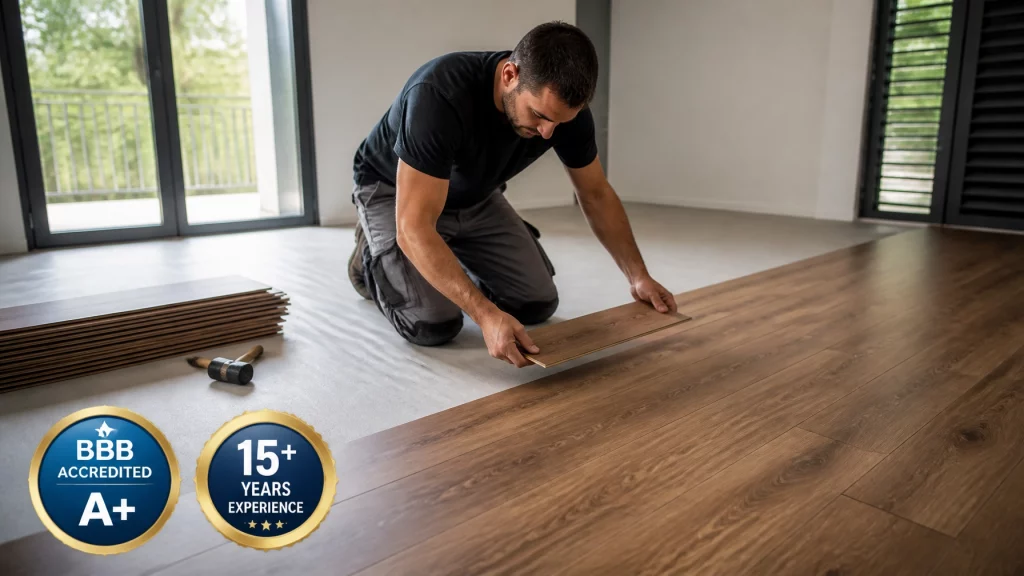
At Apex Custom Floors, we believe that great design is useless if it cannot stand up to pets, kids, and daily wear. With over 15 years of combined experience installing professional tile flooring installation and luxury vinyl plank flooring installation, we have put together this mid-day design and tile guide to help you make practical, durable choices for your next project.
A good flooring plan should work on paper and in real life. That means thinking through where muddy shoes come in, where dogs run, where kids spill drinks, and which rooms get the most sun during the day. It also means choosing materials that fit the way you live instead of chasing a look that may be hard to maintain. The goal is simple: pick surfaces that hold up well, clean up easily, and still look right five or ten years from now.
Understanding Texas Light and Color Undertones
When selecting tile or flooring samples, daylight changes dramatically from morning to mid-day and evening. Mid-day sun is intense, bright, and direct, which can wash out pale colors or make cool gray tones feel stark and sterile.
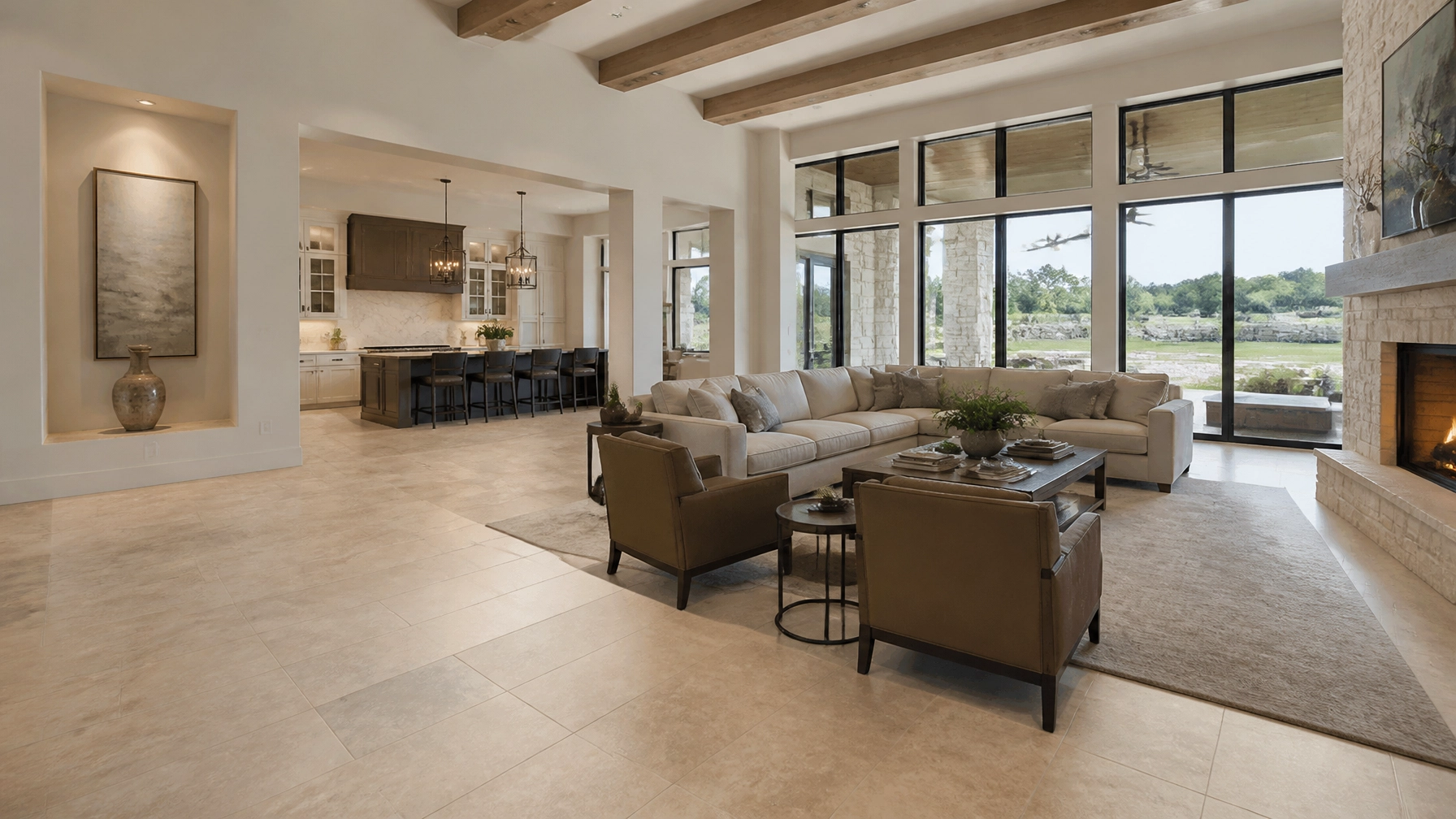
Instead of stark whites or cold grays that show every speck of dust, many homeowners are turning to warm neutral tones. Think honey beiges, soft taupes, creamy off-whites, and sandy shades. These earthy tones match the natural landscape around Cedar Creek Lake flooring properties and naturally conceal the everyday grit that comes in from the yard.
When matching materials, remember the golden rule of undertones: pair warm with warm and cool with cool. If your base flooring features a warm beige or travertine-look porcelain, select wall tiles and backsplashes that share that same golden or earthy undertone.
It also helps to check samples in more than one room. A tile that looks soft and balanced in a shaded bathroom can look much brighter in a living room with big windows. Bring samples into the house if possible. Set them on the floor, stand them against the wall, and look at them in natural daylight and at night with the lights on. That extra step can prevent expensive mistakes.
For North Texas and East Texas homes, practical color choice matters just as much as style. Dust, lake traffic, red clay, pet hair, and daily use all show up differently depending on the surface color and finish. Mid-tone floors usually hide normal wear better than very dark or very light floors. Matte and low-sheen finishes also tend to be easier to live with because they show fewer smudges and footprints.
The Power of Large-Format Tiles

One of the biggest shifts in residential remodeling is the move toward large-format tiles. Gone are the days of endless tiny tiles and excessive grout lines that trap dirt and require constant scrubbing.
Today, 12×24, 24×48, and larger format tiles dominate modern design. Using large tiles in main living areas, hallways, and bathrooms creates a seamless, expansive look. Fewer grout lines mean easier maintenance, which is a major win for busy homeowners and property managers.
When applied to vertical surfaces like shower walls, large-format porcelain creates a clean, monolithic look reminiscent of high-end spa retreats. Paired with reliable waterproofing systems, these large tiles protect your subfloors and framing from moisture damage for years to come.
There are practical advantages beyond appearance. Fewer grout joints mean less space for dirt, soap residue, and moisture to collect. That matters in kitchens, bathrooms, and mudrooms where cleanup is part of normal life. Larger tiles can also make narrow rooms feel more open when the layout is planned correctly.
That said, large tile is not forgiving. The floor or wall surface has to be flat before installation starts. If the substrate is out of level or wavy, you can end up with lippage, hollow spots, or cracked corners later. This is why prep work matters so much. A proper installer checks flatness, addresses low spots, uses the right mortar, and follows the layout carefully before the first tile is set.
Mastering Patterns and Layouts
Tile is not just about the material itself; how you lay it defines the character of the room. Strategic pattern placement can make a small powder room feel grand or add subtle movement to a long hallway.
- Herringbone & Chevron: Excellent for entryways, accent walls, and fireplace surrounds. These V-shaped patterns add sophisticated movement without overwhelming the eye.
- Straight & Stacked: Clean, modern, and minimal. Perfect for large-format porcelain tiles where you want the focus to remain on the natural stone texture.
- Hexagon & Mosaic: Ideal for shower pans, bathroom floors, and kitchen backsplashes where slip resistance and geometric interest matter.
When planning your layout, stick to the 60-30-10 rule: 60% dominant material (your main floor tile), 30% secondary material (walls or shower surrounds), and 10% accent tile (borders, niches, or feature strips). Keep patterns restrained to one focal area so your home does not feel cluttered.
A smart layout starts before tile is ordered. We always recommend thinking about where cuts will land, how the layout lines up with doorways, and what you see first when you walk into the room. A centered layout often looks best, but not always. In some rooms, it makes more sense to shift the pattern so you avoid tiny slivers along a tub, vanity, or long wall.
Grout color also changes the final look more than many people expect. Matching grout makes the floor feel quieter and more continuous. Contrasting grout highlights each tile and draws more attention to the pattern. Both can work. The right choice depends on whether you want the tile itself to stand out or the room to feel simple and calm.
Mixing Flooring Materials Across Open Floor Plans
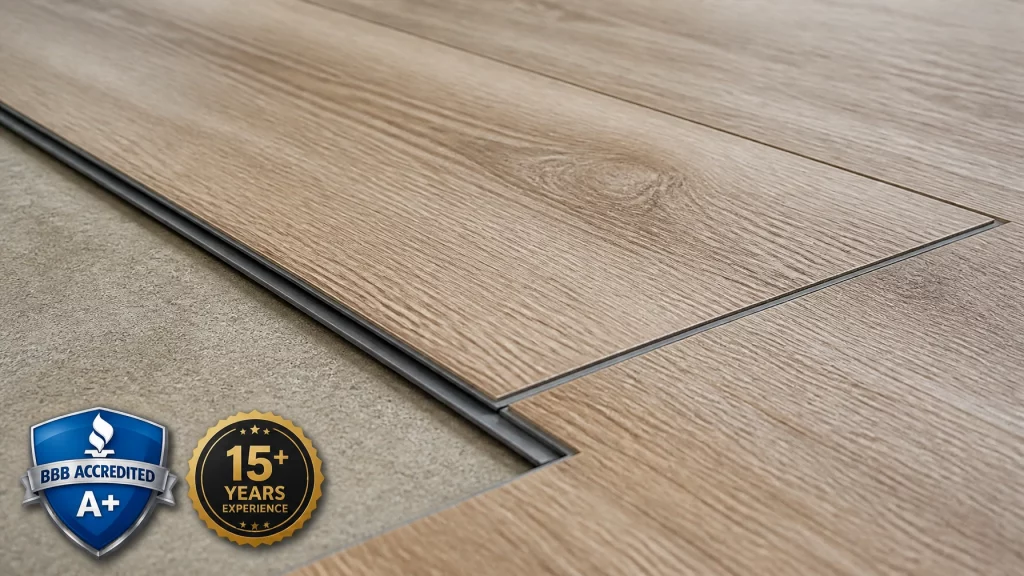
Open-concept homes work best when the flooring plan feels intentional. In many Texas homes, it makes sense to use tile in harder-working zones like kitchens, entries, mudrooms, and laundry rooms, while using luxury vinyl plank or engineered hardwood in living areas where homeowners may want a warmer feel underfoot. The key is making sure the colors, undertones, and plank or tile scale work together so the change in material does not feel abrupt.
Transitions also need to happen in the right places. Clean break points near island edges, hallway openings, and room thresholds usually look better than random cuts through the middle of a large space. Proper prep matters here too. If one material sits higher than the next, the transition can look uneven and become a tripping point over time.
For open layouts in Hillsboro TX flooring homes and Gun Barrel City flooring properties, mixing materials can be a smart way to balance durability, comfort, and style. The goal is not just to make each room look good by itself. The goal is to make the whole house flow well from one zone to the next.
Room-by-Room Tile Strategy

Every room in your house has different demands. What works in a dry guest bedroom will not survive a high-moisture kitchen or a high-traffic mudroom. A good room-by-room plan keeps your materials working with the space instead of against it.
Kitchens and Dining Areas
Kitchens demand floors that resist spills, dropped cookware, and heavy foot traffic. Stone-look and wood-look porcelain tiles give you the durability of ceramic with the organic warmth of natural materials. Pair a neutral floor with a textured tile backsplash behind the stove to create a practical yet striking focal point. If tile feels too hard underfoot during long cooking sessions, many homeowners also explore engineered hardwood flooring or waterproof vinyl alternatives in adjacent breakfast nooks.
For kitchen floors, think about cleanup first. Grease, water, crumbs, pet bowls, and chair movement all put stress on the surface. A matte or lightly textured tile usually performs better than a polished tile because it offers better traction and hides smudges. In dining areas, larger tiles can make the room feel cleaner and less busy, especially when paired with simple grout lines.
Backsplashes should also be easy to maintain. Small decorative mosaics can look nice, but they bring more grout joints to clean. If you want a simpler upkeep routine, larger backsplash tile or stacked subway tile often makes more sense.
Bathrooms and Custom Showers
Bathrooms require waterproof solutions from the subfloor up. Investing in custom showers built with professional waterproofing membranes ensures zero leaks behind your tile work. Combine matte floor tiles for slip resistance with sleek, easy-to-clean wall tiles for a balanced bathroom remodel.
Bathroom floors need traction, especially in family homes with kids or older adults. Smaller floor tile or mosaic tile often works well because the added grout joints can improve grip. On shower walls, larger tiles reduce grout maintenance and create a cleaner look. In shower pans, the tile choice should balance slip resistance with drain slope and cleaning needs.
A lot of shower problems start behind the tile, not on the surface. That is why waterproofing matters so much. Good-looking tile work is only part of the job. The assembly underneath has to be built correctly so moisture does not get into framing, insulation, or subfloor materials over time.
Entryways, Mudrooms, and Laundry Rooms
These areas take some of the hardest daily use in the house. Wet shoes, dirt, pet traffic, laundry baskets, and cleaning chemicals all land here first. Tile is often the safest long-term choice because it handles moisture and abrasion well.
In an entry or mudroom, a slightly textured porcelain tile can give you durability without feeling rough. Mid-tone colors tend to hide dust and small debris better than very dark charcoal or bright white finishes. If you want the entry to feel more custom, this is also a good place for a pattern change, border, or feature tile from our specialty tile services.
Laundry rooms should be planned like wet areas. Appliances can leak. Supply lines can fail. Detergent gets spilled. Tile flooring with solid prep underneath helps protect the room when life happens.
Living Areas and Hallways
Many people think tile only belongs in wet areas, but it can work very well in main living spaces too, especially in Texas homes where durability and easy cleaning matter. Large-format tile in a living room or long hallway creates strong visual flow and handles traffic far better than many softer materials.
The key is choosing the right look so the room still feels comfortable. Wood-look porcelain, warm stone visuals, and low-contrast patterns tend to work best. In hallways, layout direction matters. Running rectangular tile with the length of the hall can help the space feel longer and cleaner.
Bedrooms and Flex Rooms
Bedrooms are usually quieter, lower-moisture spaces, so you have more flexibility. Some homeowners still prefer tile for the whole house because it is durable, easy to clean, and good for allergy control. Others want a warmer feel underfoot and may choose waterproof luxury vinyl plank flooring in bedrooms and adjacent spaces.
Flex rooms, home offices, and guest rooms should be planned based on actual use. If the room may become a workout space, craft room, or overflow sleeping area, choose a surface that can handle changing needs without a lot of upkeep.
Practical Considerations for Durable Results
Choosing flooring and tile is ultimately an investment in your home’s long-term value and day-to-day livability. Before committing to a material, ask yourself three practical questions:
- How much maintenance does it need? Natural stone requires regular sealing, whereas glazed porcelain and luxury vinyl need very little upkeep beyond sweeping and occasional mopping.
- How does it handle pets and claws? Hard surfaces like porcelain tile and rigid-core SPC resist scratches far better than soft wood or cheap laminates.
- Will it hold its style? Classic neutral tiles paired with professional installation will look great for decades, whereas hyper-trendy colors can look dated in just a few years.

Frequently Asked Questions
Should I use the same tile throughout the entire house?
While running one continuous tile type through an entire open-concept home maximizes visual flow and makes spaces feel larger, many homeowners mix materials by zone: such as tile in wet areas (bathrooms, laundry rooms, entries) and luxury vinyl or engineered wood in living spaces and bedrooms.
Are large-format tiles harder to install?
Yes. Large-format tiles require a perfectly flat subfloor, specialized leveling clips, and experienced installers to avoid lippage (uneven edges). Hiring a professional contractor ensures your large tiles are set correctly and securely.
How do I prevent grout from staining?
Choosing a high-grade epoxy grout or applying a penetrating sealer to cement-based grout protects it against moisture, dirt, and staining, keeping your floors looking clean with minimal effort.
Can I install tile over existing flooring?
Sometimes, but it depends heavily on the stability, flatness, and condition of the existing surface. In most cases, removing old flooring down to the subfloor ensures the best bond and prevents future cracking.
What tile finish is best for high-traffic areas?
Matte or low-sheen finishes hide scratches, smudges, and wear better than polished or glossy finishes in high-traffic zones.
How long does a professional tile installation last?
With proper prep and quality materials, a professionally installed tile floor can last 30 years or more with basic maintenance.
Conclusion
Designing your home with tile and new flooring comes down to balancing aesthetic goals with practical realities. By focusing on warm neutral undertones, durable porcelain materials, and smart layout strategies, you can create spaces that look exceptional and withstand daily family life.
Ready to start your next flooring or remodeling project in Ennis TX flooring or for homeowners in Fairfield TX? Let our team guide you through material selection and professional installation from start to finish.
Apex Custom Floors
Phone: (903) 229-9556
Website: https://apexcustomfloors.com/
Call today to discuss your project and schedule your free estimate!