Meta description: Use these lake home flooring tips Texas homeowners can follow to coordinate waterproof flooring, tile sizes, grout, showers, backsplashes, budgets, and installation timelines.
A Texas lake home needs flooring that can handle more than normal household traffic. Wet shoes come in from the dock. Sand collects near the doors. Pets and guests move between the patio, kitchen, living room, and bedrooms. Many lake homes also sit empty during the week and see heavy use on weekends or holidays.
That is why material selection and design planning need to work together. The right combination of waterproof flooring and tile can make the home easier to maintain without making every room look the same.
For homeowners searching for lake home flooring tips Texas residents can use, the main goal is simple: choose surfaces based on how the home is used, then coordinate colors, textures, and transitions before installation begins. Apex Custom Floors helps homeowners around Cedar Creek Lake with professional lake-home flooring installation, including LVP, SPC, ceramic tile, porcelain tile, custom showers, and kitchen backsplash work.
Lake Home Flooring Tips Texas Homeowners Should Start With
Begin with the traffic pattern instead of choosing a floor from a small sample. Walk through the home and identify where water, sand, dirt, and furniture movement are most likely to create problems.
Important areas to review include:
- Exterior doors leading from the lake, dock, patio, or boat storage
- Kitchens and dining areas where spills are common
- Bathrooms used by guests or renters
- Hallways connecting bedrooms to living spaces
- Laundry rooms and utility areas
- Sunrooms exposed to strong Texas sunlight
- Short-term rental areas with frequent turnover
A tiled entry or drop zone can catch much of the moisture and grit before it reaches the main living area. Indoor and outdoor mats also help reduce scratching from sand. Felt pads under dining chairs and tables are useful in any lake house with movable furniture.
The subfloor matters, too. A floor can be labeled waterproof, but the installation still depends on a clean, dry, properly prepared surface. Uneven areas, soft spots, moisture concerns, and poor transitions should be addressed before the new material is installed.
For a cohesive design, collect samples of the flooring, tile, grout, cabinetry, countertops, and paint colors. Look at them together in both natural daylight and indoor lighting. A plank that looks neutral in a showroom can look very warm or cool once it is next to tile and cabinets.
Coordinating Waterproof Flooring With Tile
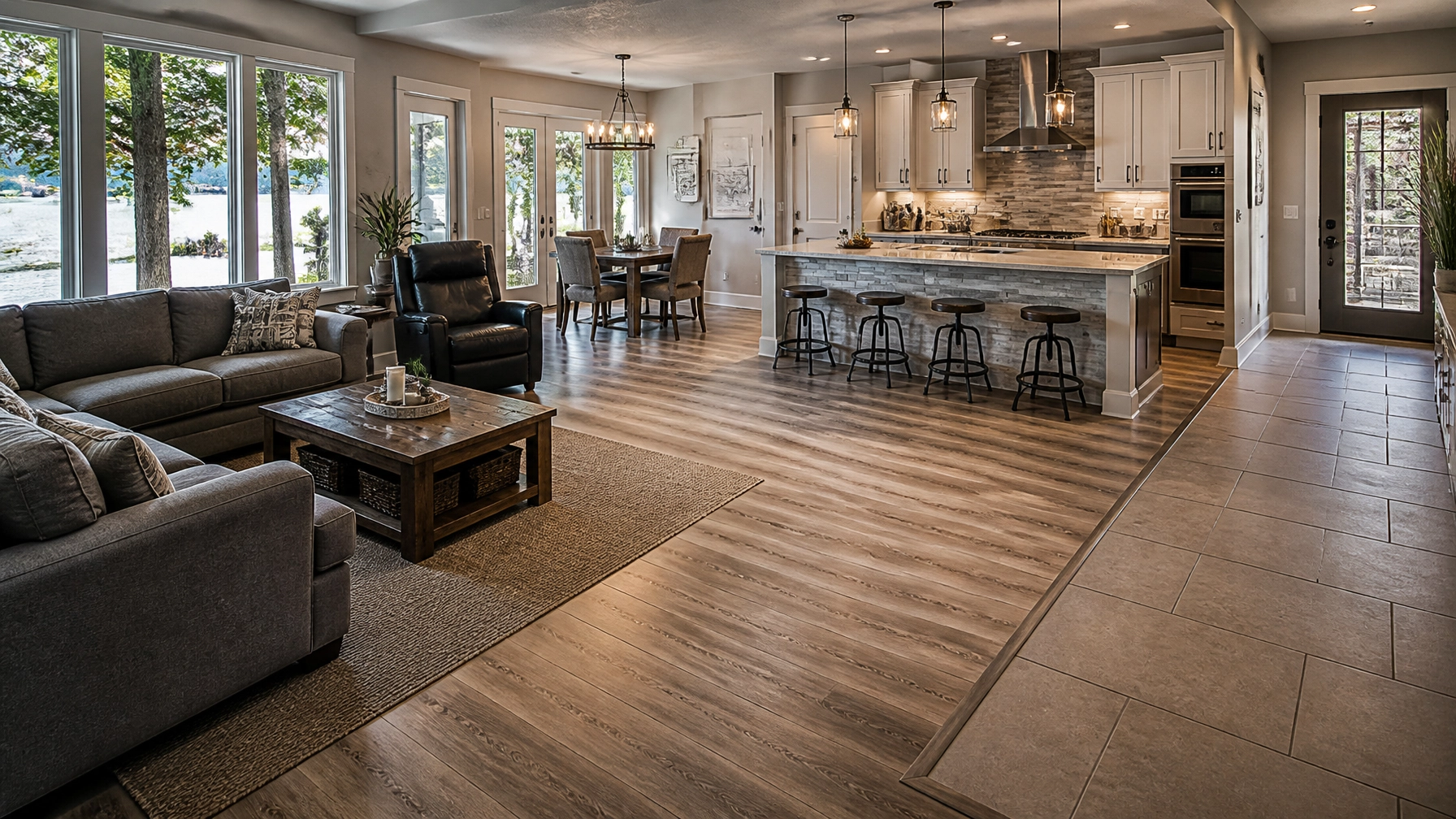
Waterproof flooring and tile do not need to match exactly. They need to share a similar color temperature and visual weight.
For example, a medium natural-oak LVP can work well with warm white porcelain tile and a soft beige or gray grout. A cooler gray SPC floor may coordinate better with white, charcoal, or blue-gray tile. Mixing warm wood tones with blue-gray tile is possible, but the transition needs to look intentional.
A few practical design rules help:
- Keep undertones consistent. Warm flooring usually works best with warm tile accents. Cool floors pair well with cool or neutral tile.
- Use one main focal pattern. If the floor has strong grain or a noticeable pattern, keep the backsplash or shower accent more restrained.
- Place transitions at natural breaks. Doorways, cabinet lines, hallways, and changes in room function are better than placing a transition in the middle of an open area.
- Pay attention to plank direction. LVP usually looks best when the planks run along the longest visual line of the room or toward a main view.
- Repeat a color without repeating the exact material. A gray grout, cabinet color, or shower accent can connect tile and waterproof flooring without making the home feel over-matched.
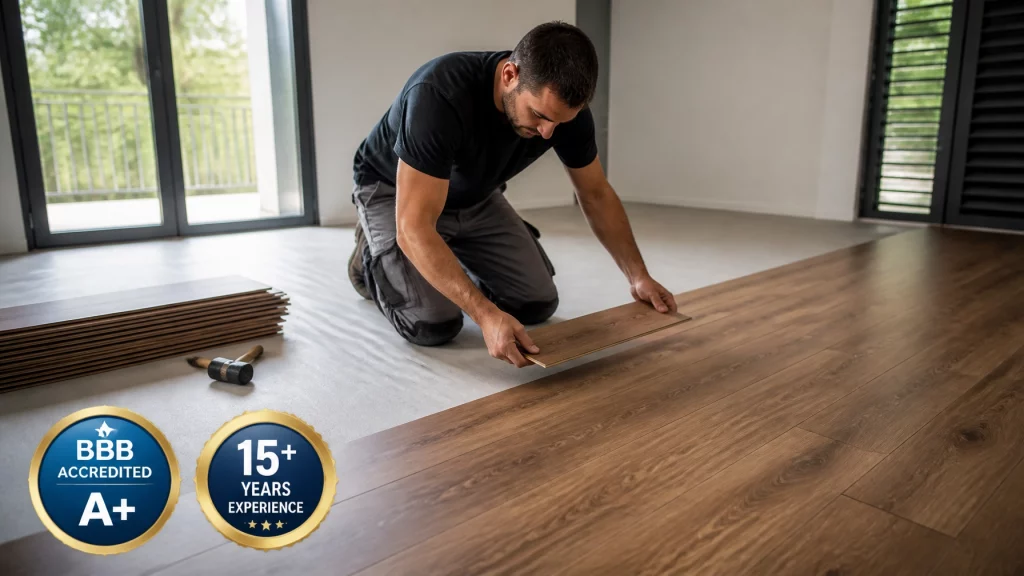
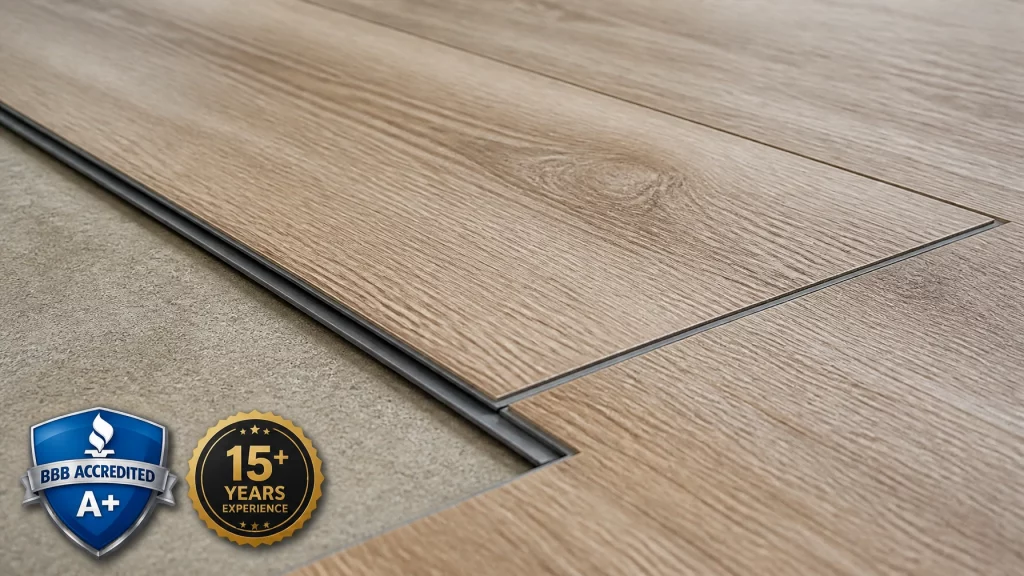
Apex Custom Floors offers LVP and SPC waterproof flooring installation for living areas, kitchens, bedrooms, rentals, and lake properties. These floors provide a wood-look appearance with easy daily maintenance and moisture resistance. Homeowners comparing LVP installation lake homes should still review the specific product, subfloor, transitions, and installation requirements with a professional.
SPC can also be a good fit in active lake properties. SPC flooring lake houses often need to handle wet traffic, pets, rentals, and temperature changes while keeping a stable feel underfoot. Product selection should be based on the room, expected traffic, and installation conditions rather than color alone.

Tile Sizes, Finishes, and Grout Color
Tile size changes both the appearance and the maintenance of a room.
Large-format tile
Large-format tile creates fewer grout lines and can make a bathroom, entry, or open living area look calmer. It is often a good option for homeowners who want fewer joints to clean. However, larger tiles require a flatter, well-prepared surface. Small dips or uneven areas can create lippage, where one tile edge sits higher than another.
Large tile also requires careful layout planning. The installer should check how the tiles will land at walls, cabinets, doorways, drains, and corners. Narrow slivers at visible edges can make an otherwise good installation look unbalanced.
Smaller tile and mosaics
Smaller tile provides more flexibility around shower slopes, drains, niches, curved edges, and detailed patterns. Mosaic tile can add interest to a shower floor, niche, backsplash, or accent band.
The tradeoff is more grout. More grout lines mean more cleaning and more opportunities for discoloration in high-use areas.
Matte and textured finishes
Glossy tile can be attractive on a backsplash or shower wall, but it may not be the best choice for every floor. Matte or lightly textured tile is usually easier to live with in entries, bathrooms, and areas where wet feet are common.
For lake homes, avoid choosing a floor based only on how it looks when dry. Consider traction, cleaning, sunlight, and the amount of sand the surface may see.
Choosing grout color
Grout has a major effect on the finished design. Matching grout closely to the tile creates a quieter appearance. Contrasting grout makes the shape and layout of the tile stand out more.
For busy lake-home entries, kitchens, and bathrooms, medium-neutral grout is often easier to maintain than very light grout. White grout can look clean when new, but it shows sand, dirt, and splashes quickly. Very dark grout can also show light residue and mineral deposits.
The best grout color depends on the tile, room, traffic, and desired appearance. A contractor can help you compare actual grout samples instead of relying on a small color chart.
For professional tile flooring installation, Apex Custom Floors focuses on surface preparation, layout, clean cuts, consistent grout joints, and transitions that work with the rest of the home. This is especially important when planning tile flooring East Texas lake homes, where entrances and wet areas may see heavy seasonal use.
Planning Shower Tile and Backsplash Layouts
A shower or backsplash should be planned before the first tile is set. The layout needs to account for fixtures, outlets, cabinets, windows, niches, benches, drains, and trim.
Shower layout
For a custom shower, start with the focal wall. This may be the wall with the shower valve, shower head, niche, or main view from the bathroom entrance. The layout should avoid awkward narrow cuts in the most visible areas.
Many homeowners choose large-format tile on the shower walls to reduce grout lines, then use smaller matte tile on the shower floor for better flexibility around the slope and drain. An accent mosaic can be used inside a recessed niche or in a narrow vertical band.
Waterproofing is more important than the tile pattern. A properly built shower needs appropriate preparation around corners, seams, penetrations, niches, benches, and the shower pan. Apex Custom Floors provides custom shower installation with waterproof shower systems for lake homes and other residential properties.
Backsplash layout
For a kitchen backsplash, center the layout on the range, sink, or the most visible cabinet section. Check how the tile will meet:
- Countertops
- Upper cabinets
- Window trim
- Electrical outlets
- Hood vents
- Open shelves
- Outside corners
Dry-laying a section of tile before installation can show whether the design will leave thin strips at the countertop or cabinet edges. It also helps determine whether a stacked, offset, herringbone, or vertical layout fits the wall.
If the kitchen floor has strong wood grain, a simpler backsplash may create better balance. If the floor is quiet, a patterned backsplash can become the main design feature. Apex also provides specialty tile services for kitchen backsplashes and custom tile details.
Budgeting a Lake Home Flooring and Tile Project
A realistic budget includes more than the tile or flooring material. The final cost can be affected by:
- Square footage
- Ceramic versus porcelain tile
- Large-format or specialty tile
- Decorative patterns and mosaics
- Demolition and removal
- Subfloor repairs or leveling
- Shower waterproofing
- Niches, benches, and trim
- Grout type and joint size
- Number of rooms
- Transition details
- Furniture moving and site conditions
As a general planning figure, many tile projects fall around $10 to $27 or more per installed square foot, depending on the scope and materials. This is not a fixed quote. A small backsplash, a basic bathroom floor, and a full custom shower will have very different labor requirements.
One way to manage cost is to prioritize the areas that receive the most moisture and traffic. Use waterproof LVP or SPC through living spaces and bedrooms, then reserve more detailed tile work for the entry, bathrooms, shower, backsplash, or fireplace.
Also ask about overage before ordering. Extra tile is needed for cuts, pattern matching, breakage, and future repairs. Ordering too little can create a delay if the same color or lot is no longer available.
Customers can buy flooring materials directly from Apex Custom Floors. The team can help match material choices to the room, installation method, design goals, and budget instead of leaving you to guess from disconnected samples.
Homeowners in the area can also review Kaufman flooring installation services when planning a lake-home renovation or nearby residential project.
What to Expect During the Installation Timeline
A professional installation usually follows a clear sequence.
1. Consultation and measurements
The contractor reviews the rooms, traffic patterns, existing materials, subfloor conditions, desired finishes, and project schedule. Measurements are taken so material quantities and transitions can be planned accurately.
2. Material and layout decisions
This is when you confirm plank direction, tile size, grout color, shower details, backsplash height, trim, and transition locations. Making these decisions before demolition helps reduce delays.
3. Removal and surface preparation
Existing flooring may need to be removed. The surface is checked for cracks, dips, soft areas, moisture concerns, and height differences between rooms. Tile requires a properly prepared substrate. Waterproof flooring also needs an acceptable, clean, and level installation surface.
4. Installation
Tile is set according to the approved layout. Plank flooring is installed with attention to expansion requirements, seams, doorways, and transitions. Shower work includes waterproofing and careful treatment of corners, niches, benches, and the pan before tile is installed.
5. Grouting, curing, and final details
After tile is set, grout is installed and allowed to cure according to the product requirements. The crew completes trim, transitions, base details, and cleanup. Some areas may need to remain undisturbed for a period of time before heavy traffic or water exposure.
A one-room project may take a few days. A multi-room lake-home renovation with demolition, repairs, shower work, and detailed tile layouts may take longer. The contractor should explain the sequence before work begins and communicate if site conditions change.
Frequently Asked Questions
Is tile better than waterproof flooring for a Texas lake home?
Neither is automatically better for every room. Tile is a strong choice for entries, bathrooms, showers, kitchens, and other areas where durability and moisture resistance are important. LVP and SPC are comfortable, low-maintenance options for living rooms, bedrooms, hallways, and larger areas. Many lake homes use both materials.
What grout color is easiest to maintain?
Medium-neutral grout is often practical for entries, kitchens, bathrooms, and other busy areas. It tends to hide everyday sand and light staining better than bright white grout. The correct choice still depends on the tile color and the look you want.
What tile is best for a shower floor?
A smaller matte or textured tile is often easier to use on a sloped shower floor because it can follow the slope toward the drain. The surface should provide appropriate traction, and the complete shower system must be waterproofed correctly before tile is installed.
How high should a kitchen backsplash go?
A standard backsplash often runs from the countertop to the underside of the upper cabinets. Some kitchens use a taller feature wall behind the range or sink. The final height should account for cabinet lines, outlets, windows, hood vents, and the chosen tile pattern.
How much extra tile should I order?
The amount depends on the tile size, layout, pattern, room shape, and number of cuts. A professional can calculate the overage, but homeowners should plan for extra material for cuts, breakage, pattern matching, and future repairs. Keep leftover tile labeled and stored in a dry location.
Can LVP or SPC be used throughout a lake house?
Often, yes, depending on the product and room conditions. LVP and SPC are commonly used in living areas, bedrooms, kitchens, laundry rooms, rentals, and lake homes. Bathrooms and wet areas require careful attention to product instructions, seams, edges, transitions, and the condition of the subfloor.
How do I maintain tile and waterproof flooring?
Sweep or vacuum regularly to remove sand and grit. Use a manufacturer-approved cleaner and avoid harsh products that can damage finishes or grout. Wipe up standing water, use mats at exterior doors, and avoid dragging heavy furniture. Grout and tile should be cleaned according to the material and installation requirements.
A Practical Plan for Your Lake Home
The best flooring plan starts with how your home is used. Choose waterproof flooring for areas that need comfort, easy cleaning, and broad coverage. Use tile where water, sand, heat, or detailed design make it the better fit. Then coordinate undertones, grout, finishes, transitions, and layout before installation begins.
Apex Custom Floors serves homeowners throughout North and East Texas with professional LVP, SPC, tile, custom shower, and backsplash installation. If you are planning a renovation near the lake, review Athens flooring installation services or contact the team to discuss your rooms, materials, budget, and timeline.
Apex Custom Floors
Ready to plan flooring and tile for your Texas lake home?
Call Apex Custom Floors to discuss your project and request a free estimate.
Apex Custom Floors
(903) 229-9556
https://apexcustomfloors.com/
Get help choosing materials, coordinating tile and waterproof flooring, planning the installation sequence, and building a finished result that fits the way your lake home is used.