
Choosing flooring for a Texas home is not only about color and style. The material also needs to handle real conditions: wet shoes, pets, lake traffic, dust, humidity, furniture, guests, and everyday cleaning. A floor may look excellent in a sample but perform poorly if it does not match the room or the way your family uses the property.
This guide offers practical lake home flooring tips Texas homeowners can use when planning a remodel, rental update, or new installation. We will cover LVP, SPC flooring, tile, engineered hardwood, layout planning, maintenance, and installation details that matter in the greater Corsicana area.
Apex Custom Floors provides professional flooring and tile installation for homes, lake properties, rentals, and businesses throughout North and East Texas. You can learn more about our approach to flooring and remodeling through the Apex Custom Floors home page.
Start With the Room, Not the Sample
The best flooring choice begins with the room’s purpose. A quiet bedroom has different requirements than a lake-side entry, rental property, kitchen, or commercial space.
Before choosing a material, consider:
- How much foot traffic the room receives
- Whether water, mud, or sand commonly enters the space
- Whether pets or children use the room
- How much cleaning and maintenance you want to perform
- Whether the home is occupied year-round or used seasonally
- What type of subfloor is already in place
- How the new flooring will transition into nearby rooms
- Whether you want the same material throughout the home
Lake homes around Cedar Creek Lake and Richland Chambers Lake often see more moisture and heavier traffic than a typical primary residence. Guests may enter directly from the water, outdoor areas, or boat storage. Vacation rentals may also experience rapid turnover between visitors.
That makes durability and easy maintenance just as important as appearance.
A useful design rule is to choose one primary flooring material for connected living areas, then use tile in rooms that need extra moisture protection. This creates a consistent look without forcing one product into every space.
LVP Installation for Lake Homes
Luxury vinyl plank is a practical choice for living rooms, kitchens, hallways, bedrooms, and many lake-home interiors. It offers a wood-look appearance while providing easier maintenance than traditional hardwood.
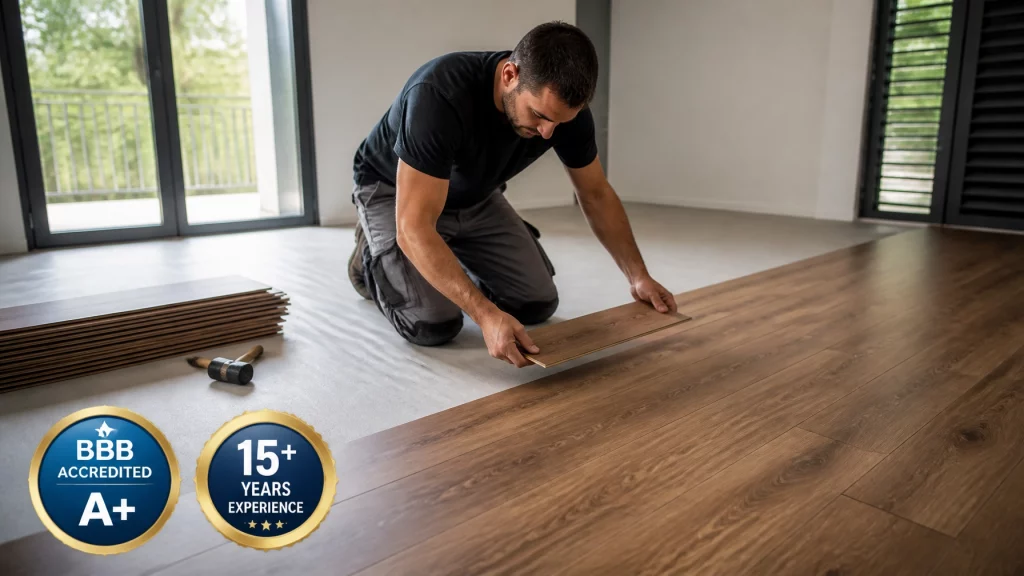
Professional LVP and SPC flooring installation includes more than placing planks on the floor. The existing surface must be inspected, cleaned, and prepared. Low spots, uneven areas, damaged sections, and transition points can affect the final result if they are ignored.
For lake homes, look for LVP with:
- A durable wear layer
- A realistic wood-grain finish
- A color that hides occasional dust and footprints
- A texture that provides a natural appearance
- Manufacturer-approved waterproof performance
- A profile that works with existing doors and trim
Light and medium wood tones are often easier to live with than very dark finishes. Dark floors can show dust, grit, and pet hair more clearly. Extremely light floors can show mud and tracked-in soil. Natural oak, warm brown, driftwood, and soft gray-brown colors usually provide a good balance.
Plank direction also affects the design. In a long living room, running planks in the direction of the room can make the space feel more organized. In an open-concept home, installers often consider the main sightline from the entry, kitchen, or windows. The goal is to make the floor flow naturally through the connected spaces.
SPC Flooring for Lake Houses and Rentals
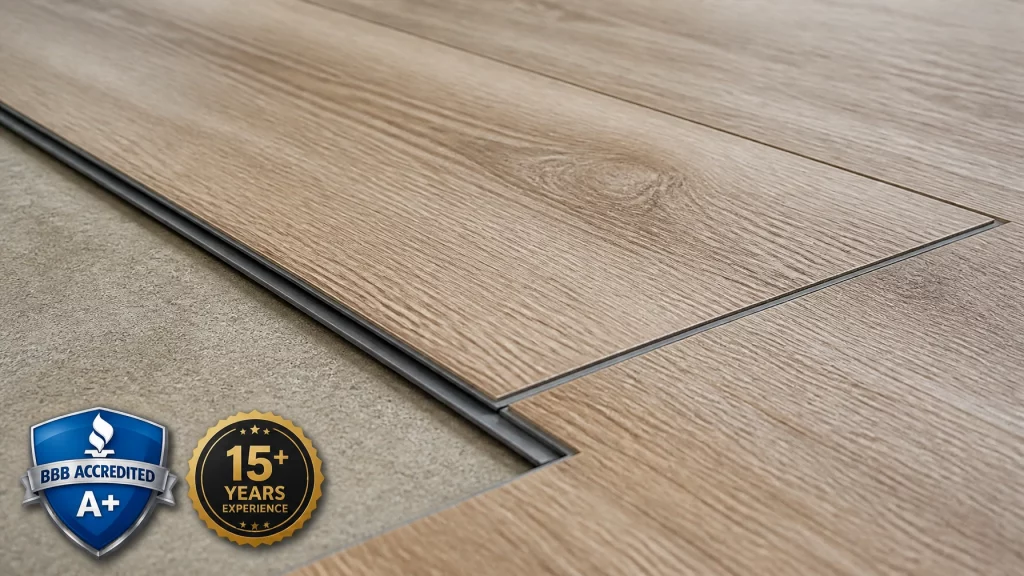
SPC stands for stone polymer composite. This rigid-core flooring is designed for stability, moisture resistance, and everyday durability. It is a strong option for SPC flooring lake houses, rental properties, and high-use areas where the floor needs to handle frequent traffic.
SPC may be a good fit for:
- Open living and dining areas
- Kitchens
- Hallways
- Bedrooms
- Laundry rooms
- Rental properties
- Entry areas away from direct outdoor exposure
- Small commercial spaces
The rigid core can help the flooring feel more solid underfoot than some flexible vinyl products. It also provides a consistent platform when installed over a properly prepared surface.
However, no flooring product can compensate for poor installation conditions. The subfloor still needs to be reasonably flat, clean, and suitable for the product. Perimeter spacing, plank staggering, transitions, and cabinet details must follow the flooring requirements.
For property managers and landlords, SPC is often attractive because it provides a durable appearance with relatively simple maintenance. A consistent plank style can also make future repairs or replacements easier if additional material is kept in storage.
Customers can buy flooring materials directly from Apex Custom Floors. This gives homeowners, contractors, and property managers the option to discuss material selection and installation together rather than managing separate suppliers and installers.

Where Tile Makes More Sense
Tile remains one of the most dependable choices for rooms exposed to water, dirt, and heavy use. Porcelain and ceramic tile can work well in bathrooms, kitchens, laundry rooms, foyers, lake-entry areas, and commercial spaces.
A professional tile flooring installation should include layout planning, surface preparation, clean cuts, proper setting materials, and careful transitions.
For waterproof flooring Cedar Creek Lake homeowners can rely on in high-moisture areas, tile is often a good choice near exterior doors, bathrooms, and laundry rooms. A matte or lightly textured finish may provide better everyday traction than a highly polished surface.
Tile design decisions include:
Tile Size
Large-format tile can reduce the number of grout joints and create a cleaner appearance. It also requires a flat substrate and careful handling. Smaller tile can work well for detailed layouts, shower floors, and spaces where more flexibility is needed.
Grout Color
A grout color close to the tile can create a more continuous look and make joints less noticeable. A contrasting grout can emphasize the pattern but may require more cleaning attention.
Pattern
Straight layouts are simple and dependable. Offset patterns can provide movement, while herringbone and other specialty patterns require more planning, cuts, and material. The pattern should fit the room instead of competing with cabinets, fixtures, or architectural features.
Transition Planning
Tile may meet LVP, SPC, engineered hardwood, or an existing floor at doorways and open areas. Transitions should be considered before installation begins. A small height difference can affect trim, doors, furniture, and how the finished space feels underfoot.

Custom Showers Need Waterproofing First
A custom shower is not simply a tile project. Tile is the visible finish, but waterproofing, drainage, substrate preparation, corners, seams, and the shower pan protect the structure behind it.
A well-planned shower design may include:
- Large-format wall tile
- Recessed niches
- Built-in benches
- Accent tile
- Shower floor tile selected for traction
- Curbless or low-profile entries
- Clean edge and trim details
- Coordinated bathroom floor tile
When planning a shower, start with function. Decide where bottles will be stored, how the shower will be accessed, where the controls should go, and how the layout will work for daily use. Then choose tile size, color, pattern, and grout.
Apex Custom Floors provides custom shower installation with attention to waterproofing and long-term performance. This is especially important in lake homes and vacation properties, where a bathroom may receive heavy use during weekends or seasonal gatherings.
Avoid choosing a complicated tile pattern before confirming the wall dimensions. A design that looks balanced in a showroom may result in narrow cuts around niches, corners, or plumbing fixtures. Professional layout planning helps reduce awkward pieces and keeps the finished installation looking intentional.
Engineered Hardwood Has a Place, Too
Engineered hardwood can bring real wood character to living rooms, offices, bedrooms, and other lower-moisture areas. It is more dimensionally stable than many solid hardwood applications, but it still should be protected from standing water and repeated moisture exposure.
Engineered hardwood may be appropriate when:
- The room is conditioned year-round
- Water exposure is limited
- The homeowner wants real wood appearance and feel
- Maintenance requirements are understood
- The subfloor and installation method are suitable
For a lake home, many property owners use waterproof LVP or SPC in entries, kitchens, and utility rooms, then use engineered hardwood in selected living areas or bedrooms. This creates contrast while placing each material where it makes practical sense.
Avoid using wood-based flooring where wet towels, water shoes, or repeated spills are common unless the product and installation conditions are specifically suited to that location.
Midday Lighting Helps With Design Decisions
The title of this guide is not accidental. Flooring and tile can look different throughout the day. A color that appears neutral in a showroom may look warmer in morning sunlight and cooler in the afternoon.
When reviewing samples, check them:
- Near the room’s primary windows
- Beside cabinets and countertops
- Against wall paint and trim
- Next to existing flooring that will remain
- In both bright and shaded areas
- Under the type of lighting used at night
Midday light can reveal undertones that are easy to miss in a store. It may also show how plank variation or tile texture will look across a larger area.
Do not judge a flooring choice from one small sample alone. Place several planks or tiles together. Look at the variation, joint pattern, surface texture, and how the material works with the entire room.
For open-concept homes, review the sample from the main entry and the primary seating area. Floors are seen from standing height, not just from directly above.
Installation Details That Protect the Finished Floor
Good materials still require good preparation. Several installation details have a direct effect on durability and appearance.
Subfloor Preparation
Uneven areas can create movement, hollow spots, cracked tile, or visible imperfections. The installer should inspect the surface and recommend appropriate preparation before material is installed.
Moisture Considerations
Concrete slabs, lake homes, laundry rooms, and bathrooms require careful attention to moisture conditions. Product instructions and site conditions should guide the installation method.
Plank Staggering
LVP and SPC planks should be staggered naturally. Repeating joints or short, predictable offsets can make the floor look artificial and may weaken the visual flow.
Tile Layout
The layout should be planned around walls, cabinets, plumbing, doorways, and focal points. Starting in the wrong location can leave narrow cuts in highly visible areas.
Clean Work Areas
Flooring installation involves removal, cutting, adhesives, setting materials, and trim work. A clean, organized job site helps protect the rest of the home and makes it easier to identify details that need attention before the final walkthrough.
Apex Custom Floors brings more than 15 years of combined experience to residential, lake-home, rental, and commercial flooring projects. Work is backed by a one-year workmanship warranty, and customers can discuss flexible financing options when planning a larger project.
Maintenance Tips for Texas Lake Homes
The right maintenance plan is simple but consistent.
Use walk-off mats at exterior doors. Mats help collect sand, grit, mud, and moisture before they reach the floor. Avoid rubber-backed products if the flooring manufacturer warns that they may discolor the surface.
Sweep or vacuum regularly with a setting suitable for hard floors. Grit can act like sandpaper under shoes and furniture. Clean spills promptly, even on waterproof flooring.
Use manufacturer-approved cleaners and avoid harsh chemicals unless specifically recommended. A damp mop is usually more appropriate than soaking the floor. Tile floors also benefit from regular grout cleaning because dirt can collect in the joints.
Use felt pads under furniture and lift heavy items instead of dragging them. In rental properties, include these maintenance instructions in the turnover checklist so the floor receives the same care between occupants.
For seasonal lake homes, maintain reasonable indoor climate control when the property is vacant. Large temperature and humidity changes can affect flooring materials and other parts of the home.

Frequently Asked Questions
What is the best flooring for a Texas lake house?
Waterproof LVP and SPC are popular choices for living areas, kitchens, bedrooms, rentals, and hallways because they are durable and easy to maintain. Tile is often preferred for bathrooms, laundry rooms, entries, and areas with frequent direct moisture. The best choice depends on the room, subfloor, traffic, and design goals.
Is SPC flooring a good option for lake houses?
SPC, or stone polymer composite flooring, can be a good option for lake houses because of its rigid construction, moisture resistance, durability, and low-maintenance surface. Professional preparation and installation remain important for long-term performance.
Is tile better than LVP near a lake entry?
Tile may be the better choice where wet shoes, sand, mud, or direct outdoor traffic are common. LVP or SPC can work in nearby living areas when the entry has effective mats and the floor is properly installed.
Can Apex Custom Floors supply the flooring materials?
Yes. Customers can buy flooring materials directly from Apex Custom Floors. The team can help homeowners, contractors, and property managers review available LVP, SPC, tile, and engineered hardwood options for the project.
Do you install flooring in rental and commercial properties?
Yes. Apex Custom Floors works with homeowners, property managers, builders, contractors, and business owners on residential and commercial flooring projects throughout North and East Texas, including projects for property owners in Fairfield and nearby communities.
How should I begin a flooring or tile project?
Start with a consultation and estimate. Share the rooms involved, the property’s location, your preferred style, the expected traffic, and any moisture concerns. Apex Custom Floors can help coordinate material selection, preparation, installation, and final details.
Conclusion: Choose Materials That Fit the Property
Good flooring design balances appearance, durability, maintenance, budget, and installation conditions. LVP and SPC can provide a practical wood-look surface for active lake homes and rentals. Tile is a strong choice for wet areas, entries, bathrooms, and spaces that need extra resistance. Engineered hardwood can add real wood character in suitable lower-moisture rooms.
The best flooring plan is not necessarily the same for every room. It is the plan that fits the way the property is used.
For homeowners and property owners planning a remodel in Ennis and surrounding North Texas communities, as well as homes around Athens, Cedar Creek Lake, Richland Chambers Lake, Corsicana, and nearby East Texas areas, Apex Custom Floors can help with material selection and professional installation.
Get a Free Estimate From Apex Custom Floors
Ready to review flooring or tile options for your home, lake property, rental, or business?
Call Apex Custom Floors at 903-229-9556.
Apex Custom Floors supplies flooring materials directly and provides professional installation for LVP, SPC, tile, engineered hardwood, custom showers, and related flooring projects. Ask about a free estimate, material options, project scheduling, and flexible financing.
Image Prompts
Featured image prompt: Photorealistic completed engineered hardwood flooring installation in a spacious Texas lake-home living room, natural afternoon daylight entering through large windows, realistic furniture in warm neutral colors, visible wood grain and professional transitions, lived-in but organized residential interior, subtle lake-home character without visible branding, sharp focus, natural shadows, realistic room proportions, high-resolution contractor marketing photography, 16:9 landscape format, no text, no logos, no watermarks, no signs, no artificial lettering.
Supporting image prompt 1: Photorealistic professional flooring installer completing an LVP installation in a realistic Texas lake house, planks aligned across an open living area, measuring tools and organized installation materials visible but not cluttered, natural daylight, realistic subfloor and trim details, authentic contractor jobsite, sharp focus, high-resolution photography, 16:9 landscape format, no text, no logos, no watermarks, no manufacturer branding.
Supporting image prompt 2: Photorealistic stone polymer composite flooring installed in a busy lake-home interior with an open kitchen and living room, realistic wood-look plank variation, durable matte finish, furniture, entry mat, and subtle signs of everyday use, natural Texas daylight, accurate room dimensions, professional finished installation, sharp focus, 16:9 landscape format, no text, no logos, no watermarks.
Supporting image prompt 3: Photorealistic professional tile flooring installation in progress inside a Texas home, installer carefully aligning large-format porcelain tile over a properly prepared floor, realistic spacers, level, tile cutter, clean organized work area, natural lighting, believable construction details, high-resolution contractor photography, 16:9 landscape format, no text, no logos, no watermarks, no artificial graphics.