Primary keyword: kitchen backsplash and fireplace tile installation
Meta description: Learn how to plan kitchen backsplash and fireplace tile installation in North Texas, including material choices, grout, flooring coordination, costs, heat, moisture, and project sequencing.
A kitchen backsplash and fireplace surround can make a room feel finished, but good results depend on more than choosing a tile color. The tile needs to fit the space, stand up to heat or moisture, work with the flooring, and be installed with clean lines and proper preparation.
For homeowners in North Texas and East Texas, tile selection also needs to account for everyday life. Kitchens deal with cooking splashes, grease, sinks, and busy traffic. Fireplaces experience repeated temperature changes and require careful attention around the firebox. A tile that looks good in a sample may not be the right choice for every surface.
Apex Custom Floors provides professional specialty tile and flooring installation throughout the region. If you are planning a kitchen or living room update in Fairfield, our Fairfield, TX flooring services can help you coordinate materials, layout, and installation from the start.
Choosing the Right Tile for a Kitchen Backsplash or Fireplace
Ceramic, porcelain, and large-format tile can all work well when selected and installed for the correct application. The best choice depends on the location, design, maintenance expectations, and project budget.
Ceramic tile
Ceramic tile is a common choice for kitchen backsplashes. It is available in many colors, shapes, textures, and price points. Subway tile, square tile, decorative borders, and patterned ceramic tile can all work well in a kitchen.
Glazed ceramic tile is easy to wipe clean. This matters behind a range or cooktop where cooking residue can collect. Ceramic is also a practical option when you want more design flexibility without making the backsplash the most expensive part of the remodel.
For a fireplace surround, ceramic tile may also be appropriate when the product is rated for the application and installed with the correct setting materials. The tile should not be used inside a firebox unless it is specifically designed for direct-fire exposure.
Porcelain tile
Porcelain tile is denser and less porous than standard ceramic tile. It is a strong choice for areas where durability, moisture resistance, and easy maintenance are priorities.
Porcelain works well for:
- Fireplace surrounds
- Kitchen backsplashes
- Hearth areas
- Large-format wall applications
- High-use floors
- Areas near sinks and cooking surfaces
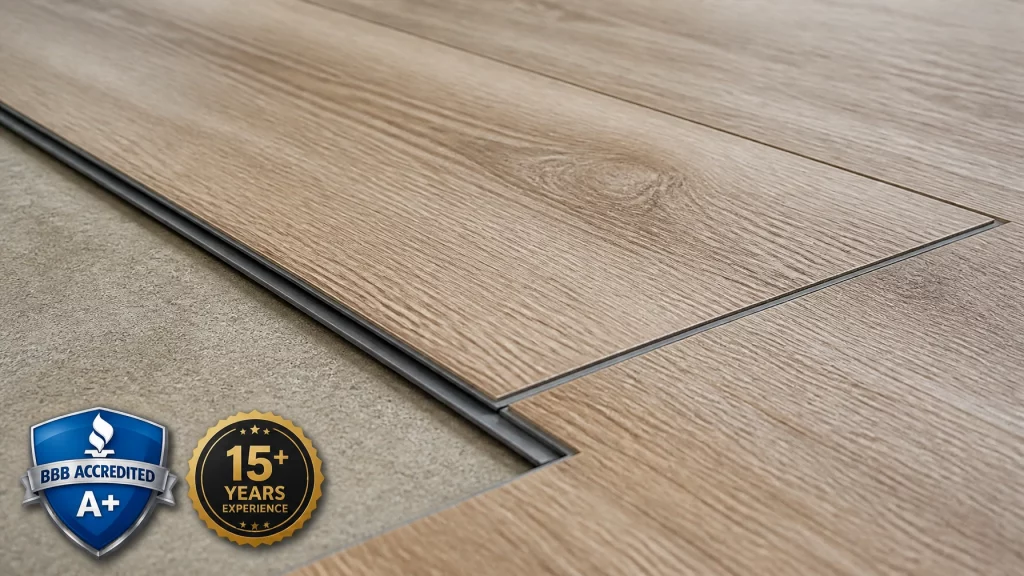
Porcelain can create a clean, solid appearance with fewer visible grout joints. It is also available in wood-look, stone-look, concrete-look, and marble-look styles. This makes it easier to coordinate a backsplash or fireplace with LVP, SPC, tile, or engineered hardwood flooring.
Large-format tile
Large-format tile can give a fireplace a simple, uninterrupted appearance. It reduces the number of grout joints and can make a wall feel less busy.
It also requires more preparation. Walls must be flat and stable. The layout must be planned around the firebox, mantel, electrical outlets, corners, and trim. A small error becomes more noticeable when each tile is large.
Large-format tile can work in a kitchen backsplash, too. However, outlet locations and cabinet lines need to be considered before installation. A dry layout helps prevent small, awkward cuts in highly visible areas.

How Backsplash and Fireplace Tile Should Work With Your Flooring
A backsplash and fireplace do not have to match the floor exactly. In most homes, they look better when they coordinate without becoming identical.
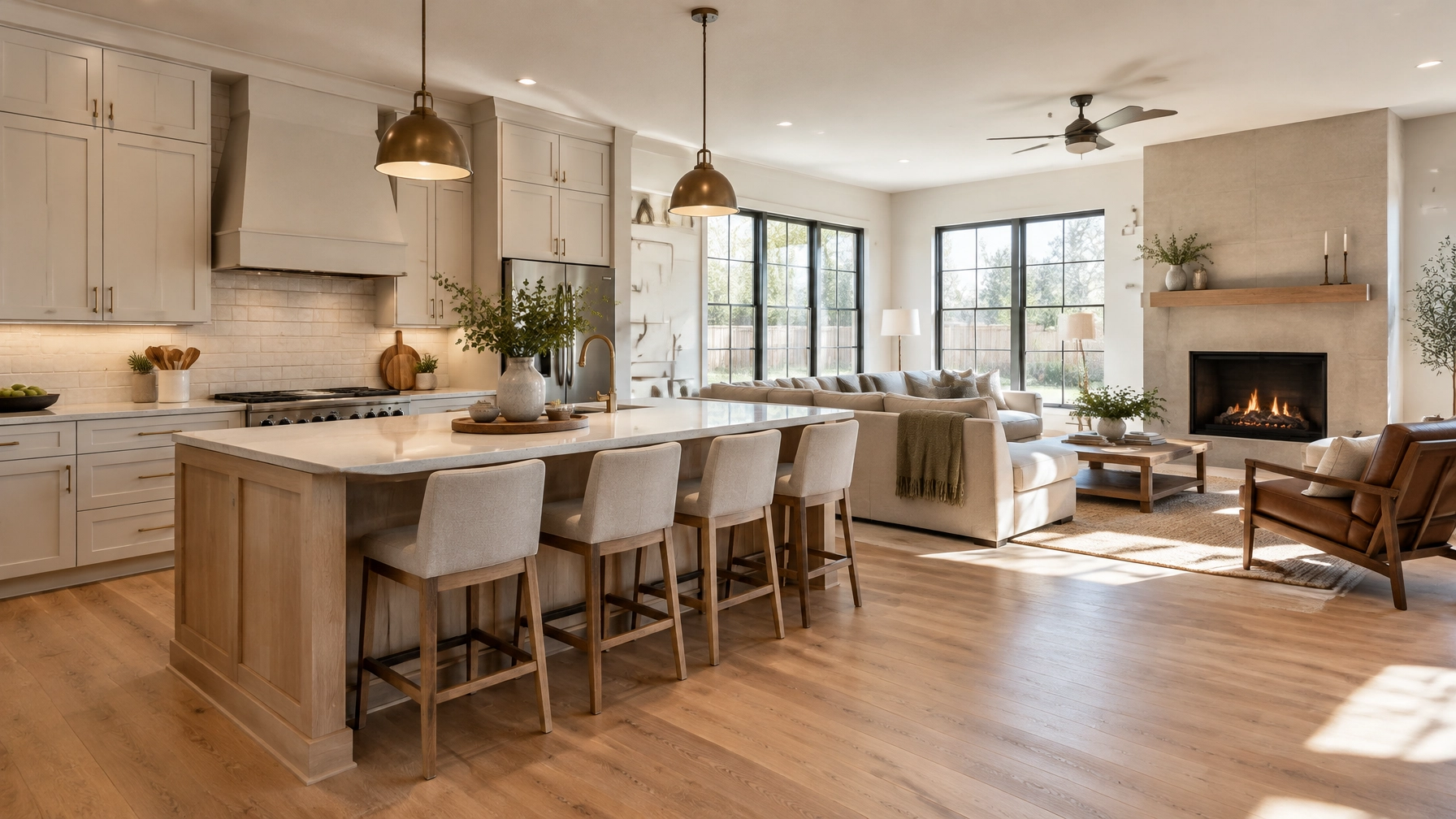
Start with the flooring if it covers a large area. LVP, SPC, tile, and engineered hardwood usually have a stronger effect on the overall room because they extend across more square footage. The backsplash and fireplace can then support the floor through color, texture, or pattern.
For example:
- Warm wood-look LVP can pair with a soft white backsplash and a warm gray fireplace surround.
- SPC flooring with cool gray undertones may work well with concrete-look porcelain tile.
- Natural-looking engineered hardwood can be balanced with a simple matte backsplash.
- Tile flooring with strong movement may need a quieter fireplace and backsplash.
- A patterned backsplash can work with plain flooring, but both surfaces should not compete for attention.
The grout color also helps connect the materials. A warm gray grout can bridge wood tones and neutral tile. A matching grout creates a quieter appearance. A contrasting grout highlights the tile pattern and makes each shape more noticeable.
Apex Custom Floors helps homeowners compare these materials before installation. Our LVP and SPC flooring installation service is often considered for kitchens, living areas, lake homes, rental properties, and whole-home projects where moisture resistance and easy maintenance matter.
Grout Selection and Maintenance
Grout affects both appearance and long-term maintenance. It should be selected based on the tile, joint size, location, and expected exposure.
Kitchen backsplash grout
Standard cement grout may be suitable for many backsplash projects. Behind the range or near the sink, homeowners often prefer a stain-resistant, high-performance grout because these areas receive more cooking residue and moisture.
The grout color should be chosen with maintenance in mind:
- Light grout creates a clean, bright appearance but may show stains more quickly.
- Medium gray or beige grout is easier to maintain in busy kitchens.
- Dark grout can add contrast but may show light residue or mineral deposits.
- Matching grout creates a more continuous surface.
Some grout products require sealing. Others are designed to resist absorption with less routine maintenance. The installer should follow the manufacturer’s instructions for curing, sealing, and cleaning.
Fireplace grout
Fireplace tile requires careful grout planning. The grout and setting materials must be appropriate for the temperatures and conditions around the surround. The firebox opening should not be covered with ordinary decorative tile or standard materials that are not rated for that use.
Around the firebox, mantel, floor, and other change-of-plane areas, flexible caulk may be needed instead of rigid grout. These joints allow for minor movement and temperature changes. The exact detail depends on the fireplace design and materials.
Routine cleaning is usually simple. Glazed ceramic and porcelain can often be wiped with a soft cloth and a mild household cleaner. Avoid harsh acids, abrasive pads, and unapproved chemicals that can damage grout or tile finishes.
For professional layout, tile selection, and grout planning, see Apex Custom Floors’ specialty tile installation services.
Heat and Moisture Considerations
Kitchens and fireplaces have different installation demands.
Around the fireplace
Tile installed around a fireplace should be selected for the specific surround area. The interior firebox requires materials designed for direct heat and flame. Decorative ceramic or porcelain tile is generally used on the surrounding wall or hearth, not inside the firebox.
The installer should also:
- Keep required clearances around the firebox.
- Use the correct mortar or setting material.
- Plan expansion and movement joints.
- Avoid covering vents or access panels.
- Use clean, accurate cuts around the opening.
- Confirm the fireplace manufacturer’s installation requirements.
Porcelain and ceramic are commonly used because they are durable, noncombustible materials when properly installed in the correct location.
Behind the stove and near the sink
A backsplash behind a stove should be made from a material suitable for heat exposure. Ceramic and porcelain are common choices because they are durable and easy to clean.
Near the sink, moisture resistance matters. Tile itself may resist water, but the wall substrate, grout, sealant, and perimeter joints still need to be handled correctly. The backsplash should be installed over a stable, properly prepared surface.

Project Sequencing for a Kitchen and Fireplace Remodel
Correct sequencing reduces damage, delays, and rework. Every project is different, but a typical remodel follows this order.
Kitchen sequence
- Complete framing, plumbing, electrical, and other rough work.
- Repair and prepare the walls.
- Install the cabinets.
- Install the countertops.
- Confirm backsplash height, outlets, corners, and tile layout.
- Complete the backsplash tile installation.
- Allow the setting materials and grout to cure.
- Install outlet covers and flexible caulk where needed.
- Complete final paint and trim touch-ups.
The backsplash is usually installed after the countertops. This gives the installer a finished surface to work from and allows the tile to end cleanly at the counter.
Fireplace sequence
- Complete the firebox, framing, and mantel structure.
- Install and prepare the approved tile substrate.
- Verify dimensions and clearances.
- Dry-lay the tile to plan the cuts and grout joints.
- Install the fireplace surround and hearth tile.
- Complete grout and flexible joints.
- Install trim or edge details.
- Finish nearby paint and carpentry work.
Tile work is usually completed after major construction but before final paint. That gives the installer enough access while allowing the painter to finish cleanly around the completed tile.
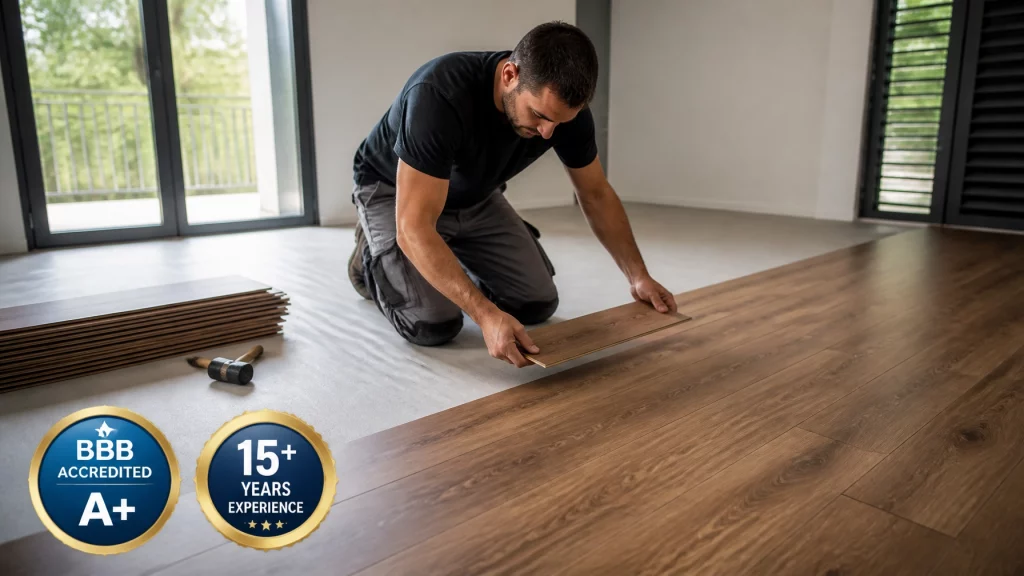
If your project includes flooring and tile work, the installation schedule should be discussed before materials are ordered. Some flooring projects require baseboard removal, furniture movement, floor preparation, or transitions that affect the kitchen and living room work.
Typical Cost Expectations in North Texas
The cost of kitchen backsplash and fireplace tile installation depends on the square footage, tile material, layout, wall condition, grout type, access, and amount of cutting.
As a general planning range:
- A standard ceramic or porcelain kitchen backsplash may cost approximately $25 to $50 per square foot installed.
- Large-format tile, glass, stone, specialty patterns, or high-performance grout may bring the backsplash closer to $40 to $60 or more per square foot.
- A straightforward porcelain or ceramic fireplace surround may fall around $35 to $65 per square foot installed.
- Large-format slabs, complex cuts, substrate repairs, or detailed fireplace layouts may reach $60 to $80 or more per square foot.
These are planning ranges, not a fixed quote. A small backsplash may have a higher effective cost per square foot because setup, protection, layout, and cleanup still take time. A larger project may have different labor efficiencies but more preparation requirements.
Material costs also vary. Homeowners can buy flooring and tile materials directly from Apex Custom Floors, and our team can help match selections to the room, budget, maintenance needs, and installation method. A free estimate is the best way to review the actual scope.
What to Expect From a Professional Tile Installation
Good specialty tile work is visible in the details:
- Balanced layouts at walls and corners
- Straight grout lines
- Consistent joint spacing
- Clean cuts around outlets and trim
- Properly prepared surfaces
- Correct transitions between materials
- Finished edges at exposed corners
- Organized job-site protection and cleanup
A professional installation also begins with a conversation about how the room will be used. A rental property, busy family kitchen, lake home, and formal living room may call for different tile finishes and maintenance plans.
Apex Custom Floors brings more than 15 years of combined experience to residential and commercial flooring and tile projects. The company is BBB Accredited with an A+ rating and backs workmanship with a one-year workmanship warranty.

Frequently Asked Questions
Is porcelain or ceramic better for a kitchen backsplash?
Both can work well. Ceramic often provides more design and price flexibility. Porcelain is denser and less porous, making it a strong choice when durability and moisture resistance are priorities. The right choice depends on the style, location, tile size, and installation conditions.
Can the same tile be used for a backsplash and fireplace?
Sometimes. Using the same material family can create a cohesive design. However, the tile must be suitable for each location. Tile used around a fireplace must meet the requirements for that area, and decorative products intended only for walls may not be appropriate near heat.
Should backsplash tile be installed before or after countertops?
In most kitchen remodels, the countertops are installed first and the backsplash follows. This creates a clean joint between the counter and tile and allows the backsplash layout to be based on the finished counter height.
What grout color is easiest to maintain?
Medium neutral grout colors are often easier to maintain than very light grout. High-performance grout can also help resist staining, especially behind a range or near a sink. The best choice depends on the tile finish, joint width, and cleaning expectations.
Can large-format tile be installed over any wall?
No. Large-format tile requires a flat, stable, properly prepared substrate. Uneven walls can lead to lippage, poor alignment, or installation problems. The wall should be evaluated before tile is ordered.
Can backsplash tile and flooring be installed as part of the same project?
Yes. Apex Custom Floors can help coordinate tile backsplashes, fireplace tile, LVP, SPC, tile flooring, and engineered hardwood selections. Planning the materials together helps avoid conflicts with transitions, cabinet heights, baseboards, and door clearances.
How long does a backsplash or fireplace tile project take?
A simple backsplash may take one to several working days, depending on preparation, tile size, grout, and layout. A fireplace surround can take longer when there are complex cuts, large-format tile, substrate repairs, or multiple finish details. The project schedule should include setting and grout cure time.
Final Thoughts for North Texas Homeowners
Kitchen backsplash and fireplace tile installation should be planned as part of the whole room, not as separate decisions. Tile color, format, grout, flooring, cabinet finishes, and wall transitions all affect the final result.
Ceramic tile can provide practical style for a kitchen. Porcelain offers dense, durable performance for many backsplash and fireplace applications. Large-format tile can create a cleaner look, but it requires careful preparation and layout. The right grout and installation details make daily cleaning easier and help the finished work hold up over time.
Whether you are updating one room in Corsicana or planning a larger remodel near Ennis, Apex Custom Floors can help with material selection, tile layout, flooring coordination, and professional installation. Homeowners planning projects in the area can also review our Hillsboro, TX flooring services for additional flooring and tile options.
Get a Free Estimate From Apex Custom Floors
Apex Custom Floors provides kitchen backsplash installation, fireplace tile, tile flooring, LVP and SPC flooring, engineered hardwood, and other approved flooring and specialty tile services throughout North Texas and East Texas.
Customers can purchase flooring and tile materials directly through Apex Custom Floors, with guidance based on the project’s design, use, budget, and installation requirements.
You can expect:
- More than 15 years of combined experience
- BBB Accredited A+ business
- One-year workmanship warranty
- Free estimates
- Clean and organized job sites
- Help with material selection and layout
- Residential and commercial installation
- Flexible financing options
Visit the Apex Custom Floors homepage to discuss your project and request a free estimate.
Apex Custom Floors
(903) 229-9556
https://apexcustomfloors.com/
Call Apex Custom Floors at 903-229-9556.