Meta description: Use this practical tile flooring East Texas guide to compare porcelain and ceramic tile, choose layouts and grout, plan custom showers, and budget for a Cedar Creek Lake home.
If you are standing in your lake house at mid-day, you can usually see the flooring’s real challenges clearly: sunlight across the room, wet footprints near the back door, sand tracked in from the lake, and humidity moving through the house. Those details matter when you are choosing tile.
For homeowners around Cedar Creek Lake and throughout East Texas, the right floor needs to handle moisture, traffic, pets, cleaning, and the occasional weekend crowd. It also needs to fit the style of the home. This guide covers the practical decisions behind tile flooring East Texas homeowners make every day, from porcelain versus ceramic to layout, grout, custom showers, maintenance, and cost.
If your property is near the lake, our Cedar Creek Lake flooring and tile installation team can help you compare materials based on the room, subfloor, budget, and expected use.
Start With the Room, Not the Tile Sample
A tile that looks good in a showroom may not be the best choice for every room in a lake house. Begin by asking how the space is used.
- Does the room receive wet feet from the lake or pool?
- Will sand, dirt, or pet hair be tracked inside?
- Is the floor exposed to direct sunlight?
- Does the room connect to a bathroom, kitchen, or outdoor area?
- Do you want a cool, hard surface or a softer floor underfoot?
- Is the home used every day, seasonally, or as a rental?
Entries, kitchens, laundry rooms, bathrooms, and lake-side doors typically benefit from hard, moisture-resistant surfaces. Tile is especially useful in these areas because it does not absorb spills the way some flooring materials can.
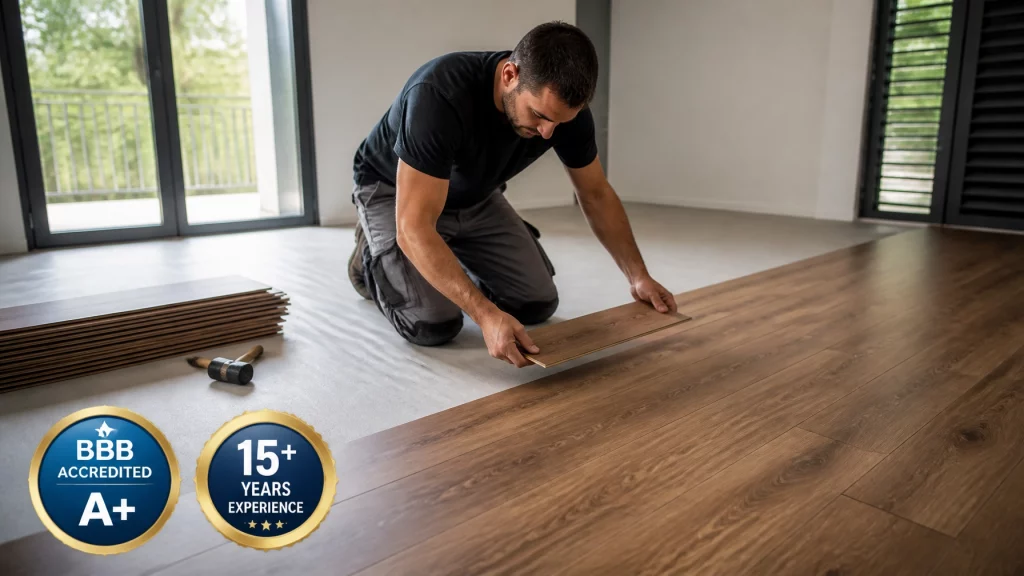
For bedrooms and living areas, many homeowners compare tile with LVP or SPC. These materials can offer more warmth and comfort, which is why LVP installation lake homes remains a popular option. Still, tile often makes the strongest case where water, dirt, and long-term durability are the main concerns.
Porcelain vs. Ceramic Tile for East Texas Lake Homes
Porcelain and ceramic tile are both made from clay and fired at high temperatures, but they are not identical.
Porcelain tile
Porcelain is denser and less absorbent than standard ceramic tile. That makes it a strong choice for:
- Bathrooms and laundry rooms
- Kitchens and mudrooms
- Entries near lake access points
- High-traffic hallways
- Main living areas where durability is the priority
- Some covered outdoor applications when the product is rated for them
Porcelain is also available in large-format sizes, wood-look designs, textured finishes, and patterns that work well with modern lake-home interiors.
Ceramic tile
Ceramic tile can be a practical choice when the area has less moisture or when the budget is more limited. It is often used for:
- Backsplashes
- Interior walls
- Decorative tile features
- Lower-traffic rooms
- Bathroom walls when the installation system is appropriate
Some ceramic tile is rated for floors, but not every ceramic product should be used in a high-traffic or wet location. The product rating, surface texture, thickness, and installation method all matter.
For many lake homes, a simple approach works well: use porcelain on floors and in wet areas, then consider ceramic or porcelain for backsplashes and decorative walls.
Tile Layout and Design Choices That Work
Tile design is not only about color. The layout changes how large, narrow, busy, or open a room feels.

Large-format tile
Large-format tile creates fewer grout lines and a cleaner visual field. It can make an open kitchen or living area feel less busy. However, large tile requires a properly prepared surface. Uneven areas are more noticeable, and the layout needs to be planned carefully around cabinets, walls, doorways, and transitions.
Wood-look tile
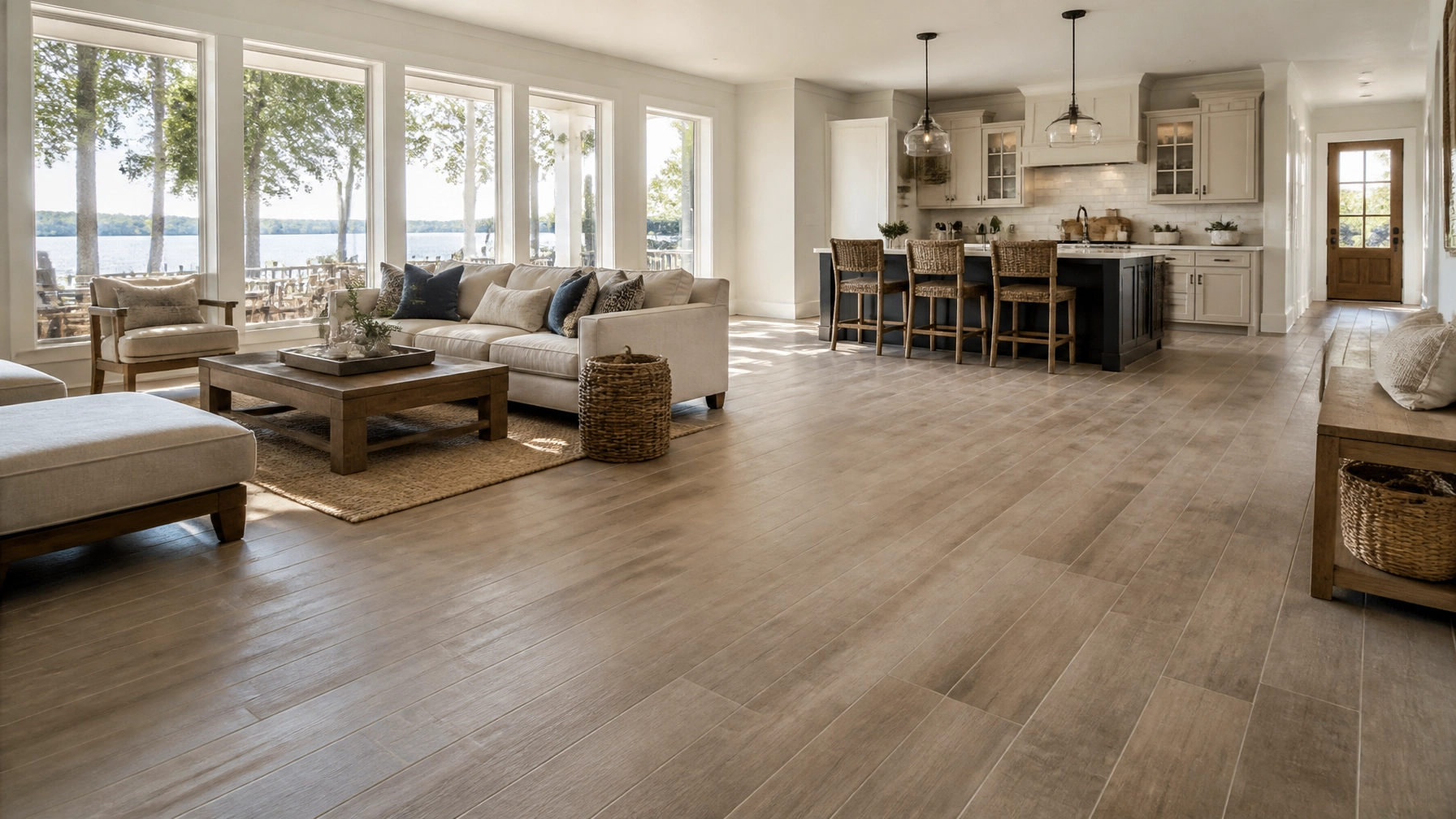
Wood-look porcelain tile gives you the appearance of timber with the durability and moisture resistance of tile. It works especially well in lake houses where you want a relaxed, natural style but do not want to worry as much about wet shoes or spills.
A plank-style tile can be installed in a straight lay, staggered pattern, or herringbone layout. The best choice depends on room size, furniture placement, and how much visual movement you want.
Straight lay and offset layouts
A straight lay feels clean and orderly. It works well with large-format tile and modern interiors.
An offset layout adds movement, but the amount of offset matters. Long plank tile should not always be installed with a dramatic half-tile offset because that can highlight bowing in the tile. Your installer can recommend a pattern that keeps the floor balanced and reduces visible lippage.
Herringbone and other patterns
Herringbone can add character to an entryway, bathroom, or backsplash. It also creates more cuts and requires careful centerlines. Patterns are best planned before installation so the edges do not end with small, awkward pieces.
A good layout should be centered on the most visible part of the room, not simply started from the first wall the installer reaches.
Grout and Sealer Choices for Humid Climates
Grout is part of the floor’s performance, not just a color between the tiles.
Traditional cement-based grout is cost-effective and works well in many areas. It is porous, though, so it may need sealing and periodic maintenance. In a lake home with wet feet, pets, and frequent cleaning, a quality sealer can help reduce staining.
Epoxy grout costs more, but it offers strong stain resistance and does not require the same type of sealing routine. It is often worth considering in:
- Custom showers
- Shower floors
- Bathroom floors
- Lake-entry areas
- Kitchens with heavy use
- Rental properties where maintenance needs to be simple
The best grout color depends on the tile and the amount of dirt the floor will see. Very light grout can show traffic quickly. Very dark grout may show mineral deposits or cleaning residue. A medium neutral shade is often easier to live with.
Glazed porcelain and glazed ceramic tile surfaces generally do not need to be sealed. Unglazed tile, natural stone, and cement-based grout may require sealing. Always follow the product instructions and ask your installer what will be sealed before the project is complete.
Tile in Bathrooms and Custom Showers
Bathrooms are one of the strongest applications for tile, but the waterproofing underneath the tile is just as important as the tile itself.
A properly built custom shower should include appropriate preparation around the shower pan, corners, seams, penetrations, and drain. Tile and grout alone are not a substitute for a waterproofing system.
Homeowners can combine:
- Large-format wall tile
- Smaller slip-resistant shower floor tile
- Recessed niches
- Built-in benches
- Accent bands
- Curbless or low-threshold entries
- Coordinating bathroom floor tile
A large-format wall tile can reduce grout maintenance, while a smaller tile on the shower floor can make it easier to create proper slope and add traction. For a bathroom remodel, see Apex’s custom shower and bathroom tile installation services.

When Tile Is Better Than LVP or SPC
Tile is usually the right call when you want maximum hardness, long-term durability, and strong moisture performance in a busy area. It is a good fit for lake entries, kitchens, laundry rooms, bathrooms, and spaces that receive repeated wet traffic.
The tradeoff is comfort. Tile is harder and can feel cooler than vinyl. It may also cost more to install because the project can involve demolition, floor preparation, cutting, setting, grouting, and transition work.
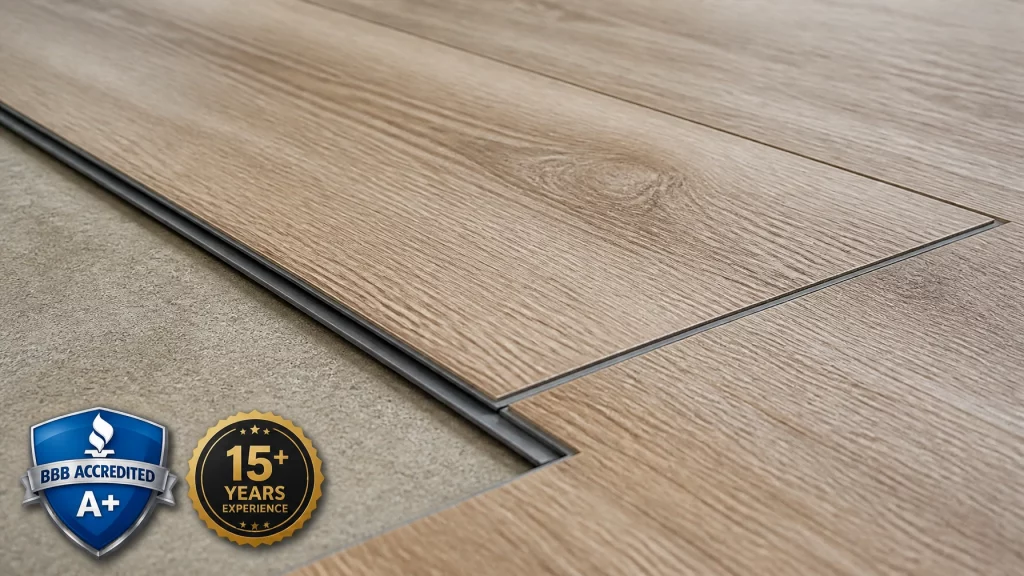
LVP offers a softer and warmer feel underfoot. It is often a good fit for bedrooms, dens, and living rooms. SPC, or stone polymer composite flooring, has a rigid core and is often selected for its stability, dent resistance, and moisture performance. That is why SPC flooring lake houses is frequently considered for rentals, vacation properties, and high-use rooms.
You can also combine materials. For example:
- Porcelain tile at the back door and in the kitchen
- SPC through the living room and hallway
- LVP in bedrooms where comfort matters most
- Tile in bathrooms and custom showers
Apex provides LVP and SPC flooring installation for homeowners who want to compare waterproof flooring options with tile.
Cost and Durability Considerations
Tile costs vary based on the product, room size, layout, demolition, subfloor preparation, and installation details.
As a general planning range, many homeowners see:
- Ceramic tile installed: approximately $7–$18 per square foot
- Standard porcelain tile installed: approximately $10–$25 per square foot
- Premium or large-format porcelain: approximately $20–$40 or more per square foot
- LVP or SPC: often below standard tile installation costs, depending on product and prep
These are broad budgeting ranges, not a project quote. A small bathroom with many cuts may cost more per square foot than a large, open room. A floor that needs leveling or repair will also require additional preparation.
Tile can last for decades when the substrate, setting materials, grout, and movement joints are handled correctly. The cheapest tile is not always the least expensive choice over time. A durable installation with a practical layout can reduce repairs and replacement work later.
Does Tile Crack in Texas Clay Soil?
It can, but the soil itself is not the only issue. Texas clay soil expands and contracts with moisture changes. If the structure or subfloor moves and the tile assembly does not accommodate that movement, cracking can occur.
Proper installation may include:
- Checking the existing substrate
- Correcting unsuitable or uneven areas
- Using the right underlayment or setting system
- Allowing for movement at walls and transitions
- Planning soft joints or movement joints where needed
- Avoiding installation over damaged or unstable surfaces
No installer can promise that a home will never move, but proper preparation greatly improves the odds of long-term performance. This is one reason to use a professional tile flooring installation contractor instead of treating tile as a simple weekend surface upgrade.

Practical Lake Home Flooring Tips for Texas
A few simple habits help protect any flooring near Cedar Creek Lake:
- Use mats at lake-facing doors, but choose mats with backing that will not trap moisture against the floor.
- Sweep sand and grit regularly so it does not scratch or dull the surface.
- Wipe wet footprints instead of allowing standing water to remain.
- Use the cleaner recommended for your grout and tile finish.
- Avoid harsh chemicals that can damage grout sealer.
- Check grout and caulk joints periodically in bathrooms and showers.
- Keep furniture pads under heavy pieces.
- Ask about maintenance before choosing a very light or very dark grout color.
Homeowners handling Ennis flooring projects and other East Texas homes rely on these same maintenance habits to keep tile, LVP, and SPC looking good longer.
These are practical lake home flooring tips Texas homeowners can use whether they choose tile, LVP, or SPC.
Tile Flooring East Texas FAQ
Is tile or vinyl better for a lake home?
It depends on the room and your priorities. Tile is harder, highly durable, and well suited to wet entries, kitchens, bathrooms, and lake-side access points. LVP and SPC are softer and often more comfortable in bedrooms and living areas. Many lake homes use both.
What is the best grout for humidity?
Epoxy grout is a strong choice for showers, bathrooms, and other areas exposed to frequent moisture because it resists staining and does not require traditional sealing. Cement-based grout can also work when properly installed and maintained.
Do you need to seal tile?
Glazed porcelain and ceramic tile usually do not need surface sealing. Cement grout, unglazed tile, and some natural materials may need sealing. The answer depends on the exact product and installation system.
Can tile really look like wood?
Yes. Wood-look porcelain tile is available in plank sizes with realistic grain variation, knots, and color changes. It provides a wood-style appearance with tile’s moisture resistance and durability.
What does tile flooring cost per square foot?
A broad installed range is about $7–$18 per square foot for ceramic tile and $10–$25 per square foot for standard porcelain. Large-format or premium tile can cost more. Prep, demolition, layout, and grout selection all affect the final price.
Does tile crack in Texas clay soil?
Tile can crack when movement in the structure or subfloor is not properly addressed. Professional preparation, suitable setting materials, and movement planning help reduce the risk.
Conclusion
The best tile floor for a Cedar Creek Lake home is not simply the most expensive tile on the shelf. It is the material, layout, grout, and installation system that match the room’s moisture, traffic, comfort, and maintenance needs.
Porcelain is often the strongest choice for wet and high-use spaces. Ceramic can work well for selected floors, walls, and backsplashes. Wood-look tile brings a relaxed lake-house style, while large-format tile creates a cleaner appearance with fewer grout lines. In other rooms, LVP or SPC may provide the comfort and budget balance you prefer.
For homeowners comparing Gun Barrel City flooring and tile options, Apex Custom Floors offers professional installation, design guidance, organized job sites, flexible financing, and a one-year workmanship warranty. We serve Cedar Creek Lake, Corsicana, North Texas, East Texas, and surrounding communities with more than 15 years of combined experience.
Get a Free Tile Flooring Estimate
Apex Custom Floors can help you compare porcelain, ceramic, LVP, and SPC for your lake home or remodeling project.
Apex Custom Floors
(903) 229-9556
https://apexcustomfloors.com/
Call today for a free estimate or to discuss your tile flooring, bathroom, custom shower, or waterproof flooring project.