
Meta description: Use this practical tile and flooring design guide to choose colors, textures, sizes, patterns, and room-by-room materials for Texas homes, lake properties, and busy commercial spaces.
Choosing flooring is not only about finding a color you like. The material needs to work with the room, the light, the traffic, and the way your family or customers use the space.
A lake house may need flooring that handles wet feet, sand, pets, and weekend guests. A full-time home may need a warmer surface that is comfortable underfoot. A retail or office space may need a simple design that looks clean after heavy daily traffic.
This guide focuses on tile and flooring design for real homes and businesses in North and East Texas. We will cover color, texture, tile size, layout patterns, room-by-room material choices, and ways to combine tile with LVP, SPC, and engineered hardwood.
If you are planning a flooring project near the lake, review these Gun Barrel City flooring design and installation services for local project support.
Start With the Room’s Purpose
The best flooring design begins with how the room is used. A beautiful material may not be practical in every area of the property.
Before choosing samples, consider:
- How much foot traffic does the room receive?
- Will people enter with wet shoes, lake sand, or dirt?
- Are pets using the space?
- Does the room receive strong sunlight?
- Is the home occupied every day or only on weekends?
- Will furniture be moved often?
- Does the design need to continue into nearby rooms?
- How much grout or floor maintenance are you willing to handle?
For example, a bathroom floor needs traction and moisture resistance. A living room needs comfort, visual warmth, and a floor that works with furniture. A commercial entry needs durability and a design that does not make dirt highly visible.
This approach also keeps the budget under control. You may not need the same material throughout the entire property. Using tile in wet or high-abuse areas and LVP, SPC, or engineered hardwood in living areas can provide a better balance.
Use Color to Set the Mood
Floor color affects the entire room. It changes how large the space feels, how much natural light is reflected, and how visible dust or pet hair will be.
Light flooring
Light beige, soft oak, pale gray, and warm ivory flooring can make a room feel larger and brighter. These colors work well in:
- Small bathrooms
- Narrow hallways
- Guest bedrooms
- Open-concept living spaces
- Rooms with limited natural light
Light flooring can also complement lake views and large windows. However, very pale grout and flooring may show mud, sand, and spills more quickly in an active lake home.
Medium neutral flooring
Warm gray, greige, taupe, sand, and medium oak tones are practical choices for busy Texas homes. They provide enough contrast to define the floor without overpowering the rest of the design.
Medium tones are often a good fit for homes with:
- Pets
- Children
- Frequent guests
- Vacation rentals
- Open kitchens
- High-traffic hallways
They also give you more flexibility with cabinets, wall paint, furniture, and countertops.
Dark flooring
Dark brown, charcoal, and deep gray floors can add contrast and make a room feel more grounded. They work well with light cabinets, white walls, brass fixtures, and modern furniture.
The tradeoff is maintenance. Dark floors may show dust, crumbs, and pet hair more clearly. In a lake house or rental property, a medium-depth color may be easier to live with.
Warm versus cool undertones
One of the most common design problems is mixing undertones. A floor with a strong yellow or red undertone may look out of place next to cool gray cabinets. Likewise, a blue-gray tile can make warm wood cabinets appear orange.
Place flooring samples beside:
- Cabinet doors
- Countertops
- Wall paint
- Trim
- Furniture
- Existing flooring
Review them in morning light, afternoon light, and evening lighting before making a final choice.
Choose Texture for Appearance and Daily Use
Texture is both a design choice and a practical decision.
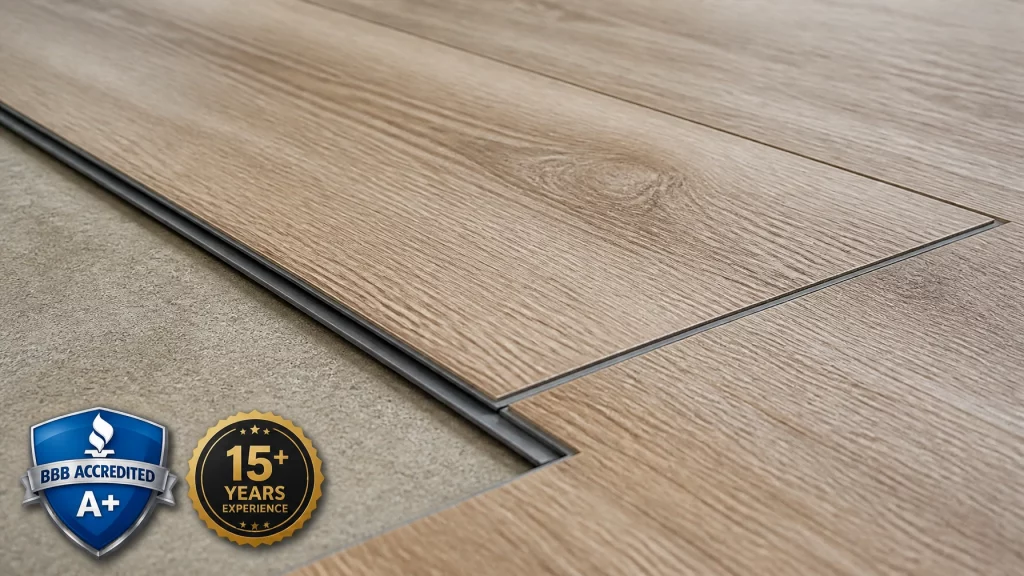
Wood-look LVP, SPC, and engineered hardwood can have smooth, wire-brushed, hand-scraped, or more heavily textured surfaces. A light texture helps create a natural appearance and can disguise small marks from daily use.
Tile texture matters even more in wet areas. A matte or lightly textured tile is generally more practical for bathrooms, entries, laundry rooms, and lake-side doors than a polished floor tile.
For shower floors, smaller tile formats can provide more grout joints and help the installer follow the slope toward the drain. For a kitchen backsplash, a smoother glazed surface is usually easier to wipe clean.
Texture should not be so deep that dirt becomes difficult to remove. In busy homes, look for a surface that has visual character without deep grooves.
A professional installer can also help you compare how different materials will feel underfoot. Tile is hard and cool. LVP and SPC are generally softer and quieter. Engineered hardwood adds natural warmth and grain variation.
Select the Right Tile Size
Tile size changes the scale of the room and the amount of visual movement.
Large-format tile
Large-format tile, such as 12-by-24-inch or 24-by-24-inch tile, creates a clean and open appearance. It uses fewer grout lines, which can make a large room feel less busy.
Large tile often works well in:
- Open kitchens
- Main living areas
- Large bathrooms
- Entryways
- Commercial lobbies
- Contemporary homes
The surface still needs to be properly prepared. Large tile is less forgiving when the floor has dips, high spots, or movement. Layout planning is also important so the room does not end with narrow slivers of tile along the walls.
Medium-format tile
Medium tile is versatile and easier to balance in average-size rooms. It can work well in hallways, laundry rooms, kitchens, and bathrooms where very large tile may not fit the proportions of the space.
It is also a practical choice when the room has multiple corners, doorways, or fixtures that make large-format layout more difficult.
Small tile and mosaics
Small tile works well for shower floors, accent areas, niches, borders, and decorative sections. Mosaics add detail without requiring the entire room to have a complicated pattern.
The extra grout lines can improve traction, but they also add more surface to clean. Use small tile with purpose rather than placing it everywhere.
A useful design plan is to use large-format tile on the main bathroom floor, a smaller mosaic on the shower floor, and a coordinated accent tile inside the niche.
Pick a Layout Pattern That Fits the Space
The same tile can look completely different depending on the layout.
Straight or stacked layout
A straight grid gives the room a clean, modern appearance. It works especially well with large-format tile and simple color palettes.
This pattern is also easier to coordinate with cabinets, walls, and furniture because it does not add as much visual movement.
Offset layout
An offset or brick layout creates a more traditional feel. It can work with rectangular floor tile, subway tile, and backsplash materials.
The amount of offset matters. A smaller offset may look more balanced with larger tile, while a traditional half-offset can create strong horizontal lines.
Herringbone
Herringbone adds movement and draws attention to the floor or wall. It can work well in:
- Entryways
- Small bathrooms
- Kitchen backsplashes
- Fireplace surrounds
- Accent walls
- Medium-size rooms
Because the pattern is busy, keep the color variation controlled. A strong wood-grain floor and bold herringbone backsplash may compete with one another.
Apex Custom Floors provides specialty tile installation for herringbone, mosaic, backsplash, fireplace, and accent-wall designs.
Vertical and horizontal wall layouts
Vertical tile can make a shower or backsplash wall feel taller. Horizontal tile can visually widen a narrow wall.
Large-format wall tile can create a calm, contemporary appearance. Smaller decorative tile can be used in a niche or accent strip without making the entire shower feel overly detailed.
Build a Room-by-Room Flooring Plan
Using one material everywhere is not always the best design choice. A coordinated room-by-room plan can make the home more comfortable and more functional.
Entryways and mudrooms
Entries near a lake, yard, or garage should be planned for moisture and grit. Matte porcelain tile in a warm neutral color is a practical choice.
Consider adding:
- A large interior mat
- A bench or shoe drop zone
- Medium-tone grout
- A simple straight layout
- A transition that does not create a trip hazard
The goal is to stop water and sand before they reach the living areas.
Kitchens
Kitchens can use tile, LVP, or SPC depending on the design and comfort goals. A wood-look SPC floor can connect the kitchen to the living room. Large-format tile can provide a more defined kitchen zone.
For the backsplash, coordinate the colors without matching every surface exactly. For example, a warm gray floor may work with a soft white backsplash and natural wood cabinets.
Bathrooms
Bathrooms benefit from a planned combination of sizes and textures. Use larger tile on the main floor, smaller tile on the shower floor, and a related wall tile for a cohesive design.
Avoid making every surface the same size. Variation gives the room structure while keeping the palette connected.
Living rooms and bedrooms
Living areas often benefit from the warmth and quieter feel of LVP, SPC, or engineered hardwood. Wood-look flooring can run continuously through the living room, hallway, and bedrooms to make the home feel more connected.
Engineered hardwood offers natural wood character and can be a strong choice for controlled living areas. Review engineered hardwood flooring options from Apex Custom Floors when you want real wood appearance with a stable layered construction.
Fireplaces and feature walls
A fireplace is a natural focal point. Large-format tile, stacked stone-look tile, textured tile, or a simple neutral surround can add interest without changing the entire floor.
Keep the fireplace design related to the flooring. The colors do not have to match, but they should share a common undertone.
Combine Materials Without Making the Home Feel Choppy
Mixing tile and flooring materials works best when the transition looks intentional.
A practical lake-home combination may include:
- Textured tile at exterior doors
- Waterproof tile in bathrooms and laundry rooms
- LVP or SPC in living rooms and bedrooms
- Engineered hardwood in a study or formal area
For homeowners comparing LVP installation lake homes often use with tile, comfort and visual continuity are usually the main considerations. LVP can provide a warmer, softer surface while tile handles the areas that see the most water.
Likewise, SPC flooring lake houses use in living areas can provide a rigid stone polymer composite core, wood-look design, and resistance to dents from furniture or heavy use.
To connect different materials:
- Keep the undertones consistent.
- Avoid placing two strong patterns directly beside each other.
- Run plank flooring in a direction that supports the room’s longest lines.
- Use clean, low-profile transitions.
- Plan the material change at a doorway, cabinet line, or natural room break.
- Bring all samples together before ordering.
Do not choose each room separately without looking at the entire floor plan. The materials should feel like part of the same home.

Design for Texas Humidity, Lake Traffic, and Maintenance
Good design must hold up after the photos are taken.
For waterproof flooring Cedar Creek Lake homeowners can use in active homes, product selection and installation details both matter. A waterproof label does not eliminate the need for proper surface preparation, perimeter planning, transitions, and moisture awareness.
Use these lake home flooring tips Texas property owners can apply:
- Place mats at doors leading to the lake, yard, garage, or boat area.
- Choose medium-tone grout for entries and other high-traffic locations.
- Use matte or textured tile where wet feet are common.
- Sweep sand and grit regularly.
- Add felt pads under chairs and tables.
- Keep the home ventilated during humid weather.
- Wipe up standing water even on water-resistant surfaces.
- Inspect grout and caulk joints periodically.
- Leave simple cleaning instructions for guests or renters.
For tile flooring East Texas homeowners select, the design should account for both local climate and daily habits. Homeowners planning Fairfield, TX flooring projects often deal with similar humidity, day-to-day traffic, and maintenance concerns, so a simple pattern with a forgiving color may perform better than a highly detailed design that requires constant cleaning.
Flooring Design for Businesses and Rental Properties
Business owners and property managers need attractive flooring that can handle daily use. The design should be easy to maintain and simple to repair if one section becomes damaged.
Commercial spaces often benefit from:
- Neutral colors
- Straight or stacked layouts
- Low-contrast patterns
- Durable LVP or tile
- Coordinated entry and restroom materials
- Clear transitions between public areas
- Flooring that works with the brand’s interior colors without relying on bold trends
A retail store may use wood-look flooring to create a warm customer experience. An office may benefit from a clean neutral floor that reduces visual distractions. A rental property may need a practical material that looks current but does not require special care.
Apex Custom Floors provides commercial flooring installation for offices, retail spaces, rental properties, and other busy properties. We can help coordinate material selection, layout, scheduling, and installation around the needs of the property.
Buy Flooring Materials Directly From Apex Custom Floors
Customers can buy flooring materials directly from Apex Custom Floors. We can help you review tile, LVP, SPC, waterproof flooring, engineered hardwood, and related material options based on your room, budget, design goals, and expected traffic.
Buying materials through the same contractor handling the installation can make planning easier. Quantities, trim, grout, transitions, layout requirements, and product compatibility can be reviewed before the order is placed.
This is especially helpful when you are comparing several materials for different rooms. Apex can help you avoid ordering too little, selecting a product that does not fit the room, or overlooking the accessories needed for a finished installation.
Frequently Asked Questions
Should all the flooring in my home match?
No. The materials should coordinate, but they do not need to be identical. Use related undertones, similar depth of color, and planned transitions to keep the design connected.
What flooring design works best for a lake house?
Many lake homes use tile in entries, bathrooms, laundry rooms, and other wet areas. LVP or SPC can work well in living rooms, bedrooms, and hallways. The best plan depends on traffic, pets, comfort, budget, and how often the home is occupied.
Are large-format tiles harder to install?
They require more careful surface preparation and layout planning. If the floor is not flat, large tile can show unevenness more clearly. Professional installation helps reduce lippage and awkward cuts.
Is herringbone too busy for a small room?
Not necessarily. A small herringbone backsplash or entry floor can add detail. Keep the colors simple and avoid combining it with several other strong patterns.
What grout color is easiest to maintain?
Medium neutral colors such as warm gray, taupe, or greige usually hide everyday dirt better than bright white grout. The right choice also depends on the tile color and the room’s lighting.
Is SPC a good option for a vacation rental?
SPC, or stone polymer composite flooring, can be a practical choice for a vacation rental because it offers a rigid core, wood-look styling, and easy daily cleaning. Proper installation and subfloor preparation still matter.
Can Apex help me choose colors and layouts?
Yes. Apex Custom Floors can help you compare flooring materials, colors, textures, tile sizes, patterns, transitions, and room-by-room combinations before installation begins.
Conclusion: Design for Beauty and Real Life
A successful flooring design should look good on installation day and continue to make sense years later. Choose color based on the room’s light. Choose texture based on traffic and moisture. Choose tile size and layout based on the room’s scale. Then connect the spaces with consistent undertones and clean transitions.
For Texas homes, lake properties, rentals, and businesses, practical design is especially important. Tile can protect wet and high-traffic areas, while LVP, SPC, and engineered hardwood can add comfort and warmth where people spend more time.
If you are planning a flooring or tile project near the lake, review Richland Chambers Lake flooring services and design support. Apex Custom Floors serves homeowners, property managers, contractors, and business owners throughout Corsicana, North Texas, East Texas, Cedar Creek Lake, and surrounding communities.
Image Prompts for This Article
-
Featured image prompt: Photorealistic completed tile and flooring design in a modern Texas lake home, open-concept kitchen and living room with warm neutral large-format porcelain tile, coordinated wood-look flooring visible in an adjoining room, realistic furniture, natural mid-day sunlight through large windows, subtle lake view, authentic residential proportions, professional contractor-finished installation, clean grout lines and transitions, sharp focus, high resolution, wide-angle composition, no people, no text, no logos, no watermarks, no manufacturer branding, no artificial words, 16:9 landscape.
-
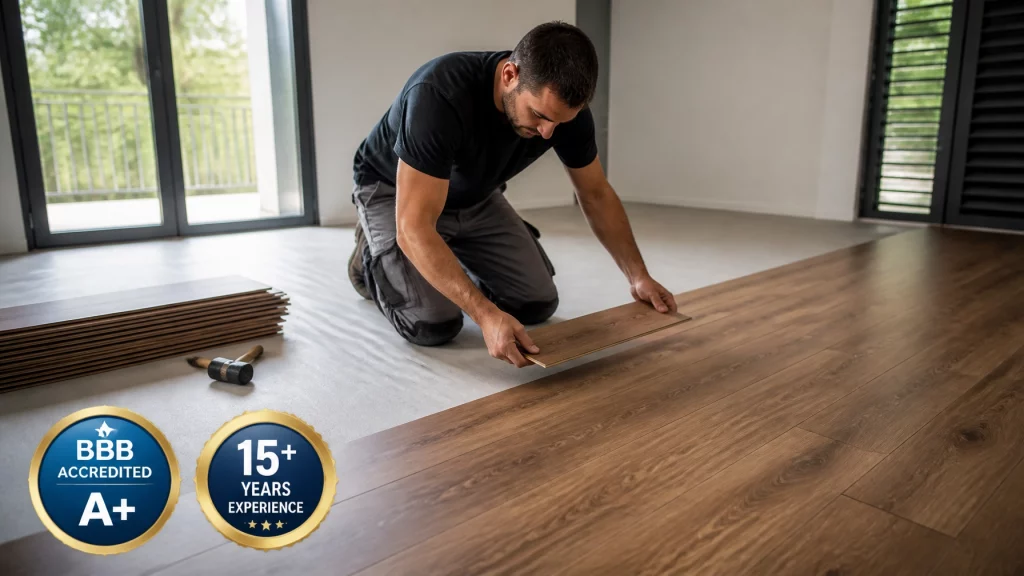
Supporting image prompt 1: Photorealistic professional flooring installer laying gray wood-look stone polymer composite flooring in a lived-in Texas home, realistic hand tools, carefully aligned plank layout, natural daylight, authentic active remodeling environment, installer interacting naturally with the material, realistic room dimensions, sharp focus, high resolution, clean professional craftsmanship, no text, no logos, no watermarks, no manufacturer branding, no artificial words, 16:9 landscape.
-
Supporting image prompt 2: Photorealistic modern Texas lake-home bathroom featuring coordinated large-format matte wall tile, smaller textured shower-floor mosaic, recessed niche, natural stone-inspired colors, realistic plumbing fixtures, frameless glass enclosure, soft natural daylight, professionally completed custom tile installation, authentic residential scale, no people, no text, no logos, no watermarks, no manufacturer branding, no artificial words, 16:9 landscape.
-
Supporting image prompt 3: Photorealistic Texas lake-home entryway designed for wet feet and sand, matte neutral porcelain tile with medium-tone grout transitioning cleanly to warm wood-look waterproof flooring, realistic bench, woven entry mat, casual shoes, natural mid-day lighting, lived-in but organized interior, professional contractor finish, accurate flooring scale and pattern, no people, no text, no logos, no watermarks, no manufacturer branding, no artificial words, 16:9 landscape.
Get a Free Flooring Estimate From Apex Custom Floors
Apex Custom Floors provides professional tile flooring, specialty tile, custom showers, LVP, SPC, waterproof flooring, engineered hardwood, commercial flooring, and flooring repair services throughout North and East Texas.
Call Apex Custom Floors at (903) 229-9556 for a free estimate.
We can help you compare materials, choose a design, plan the layout, and install flooring that fits your property, lifestyle, and budget.