Primary keyword: tile guide
Meta description: Use this practical East Texas tile guide to choose tile sizes, patterns, finishes, and materials that balance cost, durability, maintenance, pets, and resale value.
Choosing tile is more than picking a color from a sample board. The tile size, layout, finish, grout, and installation method all affect how the finished floor looks and performs.
This guide explains the practical choices that matter for East Texas homes, lake houses, rental properties, offices, retail spaces, and other commercial interiors. If you live near Cedar Creek Lake, Apex Custom Floors provides tile installation for residential and commercial properties throughout the area.
The right tile should fit your budget and your daily routine. It should also handle tracked-in dirt, pets, moisture, foot traffic, and regular cleaning without becoming difficult to maintain.
Start With the Right Tile Material
Porcelain and ceramic tile are the most common choices for floors, kitchens, bathrooms, entries, and commercial areas.
Porcelain tile
Porcelain tile is dense and highly water-resistant. It works well in bathrooms, laundry rooms, kitchens, entryways, and high-use spaces. Many porcelain products are also available in wood-look, stone-look, and concrete-look styles.
For busy homes with pets, porcelain is a practical choice because it resists scratches and does not absorb spills as easily as more porous materials. It is also a good option for lake homes where wet shoes, sand, and outdoor traffic are common.
Ceramic tile
Ceramic tile offers a wide range of colors, shapes, and patterns. It can be a cost-effective choice for many residential applications, especially walls, backsplashes, bathrooms, and moderate-traffic floors.
The specific product rating matters. A tile selected for a bathroom wall may not be suitable for a busy commercial floor. Always match the tile to the room and the amount of traffic it will receive.
For help comparing materials, layouts, and installation requirements, review Apex Custom Floors’ professional tile flooring installation services.
Choose a Tile Size That Fits the Room
Tile size affects the appearance of a room, the amount of grout, installation time, and total project cost.
Small-format tile
Small tile and mosaics work well in shower floors, niches, borders, and accent areas. The additional grout joints can provide more traction in a wet shower floor. However, more grout also means more cleaning.
Small tile can add detail to a bathroom or entryway, but it may require more layout work and more installation time than a standard rectangular tile.
Standard tile sizes
Common floor sizes include 12-by-12, 16-by-16, and 12-by-24 inches. These sizes work well in kitchens, bathrooms, laundry rooms, hallways, and living areas.
A 12-by-24-inch tile is popular because it creates a clean, modern look without requiring the higher material and preparation demands of very large tile.
Large-format tile
Large-format tile can make an open room look calmer and more spacious. It also reduces the number of grout joints, which can make routine cleaning easier.
Large tile requires careful floor preparation. Even small variations in the subfloor can affect the finished appearance. The larger the tile, the more important it is to check the substrate, layout, transitions, and setting method before installation begins.
For commercial areas, large-format tile may reduce visible grout and simplify maintenance. However, the best size depends on the building layout, traffic, access, budget, and future repair needs.

Select a Pattern That Works With the Space
Tile layout can change the character of a room. It also affects cutting, waste, labor, and the amount of planning required.
Straight lay
A straight grid layout places tiles in aligned rows. It is clean, simple, and often the most budget-friendly option. It also makes future repairs easier because replacement tiles can be matched to a consistent layout.
Straight lay works well in kitchens, utility rooms, commercial corridors, offices, and open living areas.
Offset or brick pattern
An offset pattern staggers each row. This is a natural fit for rectangular tile, especially wood-look or concrete-look products.
The amount of offset should match the tile manufacturer’s installation requirements. Some long rectangular tiles should not be offset too far because that can create uneven transitions between tile edges.
Herringbone
Herringbone adds movement and detail. It works well in entryways, bathrooms, backsplashes, and smaller feature areas.
It usually requires more cuts and more layout time than a straight or offset pattern. That can raise installation costs. Herringbone is often best used as an accent rather than throughout a large commercial floor.
Diagonal layout
A diagonal layout can make a small room feel wider. It also requires additional cuts and careful centering. This pattern can be useful when the room is not perfectly square or when you want to draw attention away from narrow dimensions.
Pick a Finish for Safety and Maintenance
Tile finish affects traction, visible wear, cleaning, and the way light moves across the room.
For most floors, matte or lightly textured tile is the practical choice. It tends to hide dust, paw prints, and light scuffing better than a polished surface.
Glossy tile can look attractive on walls, backsplashes, and decorative areas. On a busy floor, it may show scratches and dirt more easily. It may also be more slippery when wet.
For bathrooms, showers, laundry rooms, and entries, ask about the tile’s intended wet-area performance. A smaller tile with more grout joints may provide better footing in a shower floor than a large, smooth tile.
Mid-tone colors are usually easier to live with than very light or very dark floors. They help disguise everyday dust and dirt between cleanings. A darker grout can also help active areas maintain a more consistent appearance.

Think About Pets, Traffic, and Daily Use
A beautiful floor still needs to work for the people and animals using it.
For pet-friendly homes, consider:
- Dense porcelain or durable ceramic tile.
- Matte or lightly textured finishes.
- Mid-tone colors that hide fur and tracked-in dirt.
- Larger tile sizes to reduce grout joints.
- Stain-resistant grout in kitchens, entries, and pet areas.
- Entry mats that capture grit before it reaches the floor.
Tile is durable, but the grout still needs care. Pet accidents, food spills, and dirty water can discolor grout if they sit too long. Routine sweeping or dust mopping helps prevent grit from acting like sandpaper under shoes and paws.
In rental properties, durability and easy turnover cleaning may matter more than a complex pattern. In a personal residence, a decorative layout may be worth the added labor if it fits the long-term design plan.
A homeowner in Kaufman planning a kitchen, bathroom, or whole-home update can review local flooring and tile services in Kaufman before selecting materials.
Plan for Commercial Flooring Requirements
Commercial tile has different demands than residential tile. Retail stores, offices, restaurants, churches, rental properties, and public areas may receive constant foot traffic and more frequent cleaning.
For commercial applications, focus on:
- A tile rating suited to the traffic level.
- Matte or lightly textured surfaces.
- Mid-tone colors that hide normal wear.
- Straight or offset patterns for easier repairs.
- Large-format tile where the floor is properly prepared.
- Grout selected for stain resistance and routine cleaning.
- A maintenance plan that matches the building’s schedule.
Commercial flooring also requires scheduling and coordination. A business may need work completed in phases, during off-hours, or around employees and customers. Apex Custom Floors offers commercial flooring installation for offices, retail spaces, property managers, and businesses.
The lowest material price is not always the lowest project cost. A tile that requires extra preparation, excessive cutting, or difficult maintenance may cost more over time.
Protect the Investment With Proper Installation
Tile performance depends heavily on preparation. The subfloor must be suitable for the selected tile and layout. Uneven areas, movement, moisture concerns, and weak surfaces should be addressed before tile is installed.
Professional installation also helps with:
- Balanced room layouts.
- Clean cuts around cabinets and fixtures.
- Consistent grout joints.
- Proper transitions between flooring types.
- Large-format tile preparation.
- Shower waterproofing and wet-area details.
- Reduced risk of loose, cracked, or uneven tile.
For bathrooms and walk-in showers, tile is only one part of the system. The waterproofing, shower pan, corners, seams, slope, and drainage details matter just as much. Apex Custom Floors provides custom shower and bathroom tile installation with attention to waterproofing and long-term use.
Tile Maintenance Basics
Most porcelain and ceramic tile is straightforward to maintain.
A practical routine includes:
- Dust mop or sweep regularly.
- Clean spills as soon as possible.
- Damp mop with a cleaner approved for the tile and grout.
- Avoid products that leave a waxy residue.
- Use mats at exterior doors.
- Follow the grout or sealer manufacturer’s care instructions.
- Keep extra tile for future repairs.
Do not assume every tile, grout, or sealer should be cleaned the same way. Natural-looking finishes, cement-based products, and specialty tile may have different care requirements.
Frequently Asked Questions
What is the best tile size for a kitchen?
A 12-by-24-inch tile is a practical choice for many kitchens. It offers fewer grout joints than small tile and is easier to lay out than some very large formats. The room size, cabinet layout, and subfloor condition should guide the final choice.
Is matte tile better than glossy tile for floors?
Matte or lightly textured tile is usually better for busy floors because it hides wear and may provide better traction. Glossy tile is often more suitable for walls, backsplashes, and decorative areas.
Is porcelain tile good for homes with pets?
Yes. Porcelain tile is dense, durable, and easy to clean. A matte finish, mid-tone color, and stain-resistant grout can make the floor more practical for pets and daily traffic.
Does large-format tile cost more to install?
It can. Large-format tile may require more floor preparation, careful handling, and detailed layout work. It can also reduce grout joints and create a cleaner appearance. The total cost depends on the tile, room conditions, preparation, pattern, and installation requirements.
What tile pattern is best for a commercial space?
Straight and offset layouts are often the most practical for commercial spaces. They simplify installation, maintenance, and future repairs. The final pattern should still match the building’s design and traffic needs.
Can Apex Custom Floors help choose tile?
Yes. Apex Custom Floors can help you compare tile materials, sizes, finishes, layouts, grout, preparation needs, and installation options for residential or commercial projects.
Final Takeaway
The best tile is not always the largest, brightest, or most decorative option. It is the product that fits the room, the traffic, the cleaning routine, and the project budget.
For East Texas homes and businesses, matte porcelain or ceramic tile in a practical size and mid-tone color is often a strong starting point. From there, the layout, grout, finish, and installation method should be selected around how the space will actually be used.
If you are planning a tile project near Richland Chambers Lake, Apex Custom Floors can help with tile selection and professional installation. Our team serves homeowners, property managers, builders, and business owners across Corsicana, North Texas, and East Texas.
Image Prompts
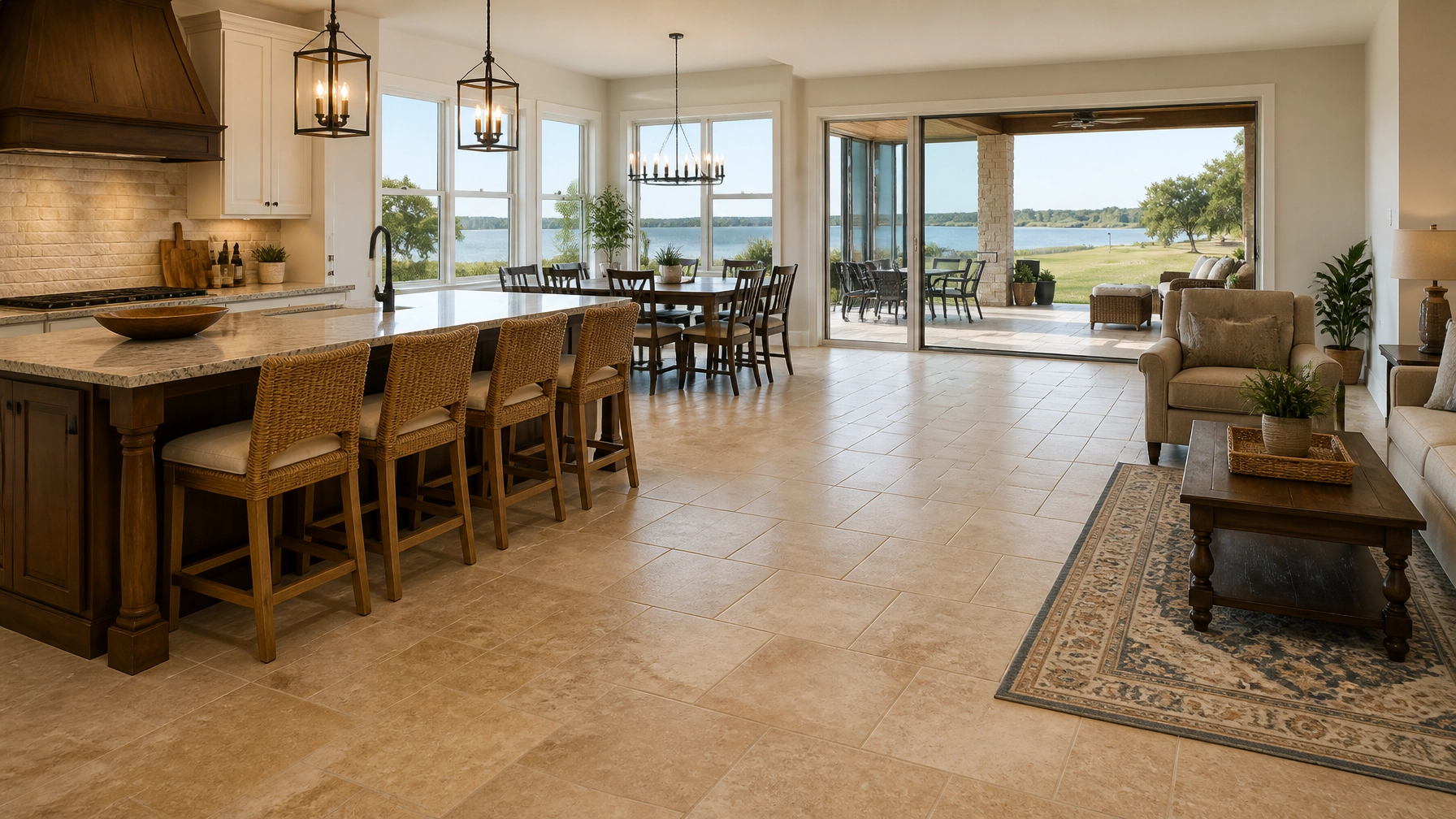
- Featured image prompt: Photorealistic completed flooring project by a professional Texas flooring contractor: open-plan East Texas lake-home interior combining a bright kitchen, dining area, and living room, professionally installed matte porcelain tile in a warm mid-tone stone color, clean 12-by-24-inch rectangular layout with subtle offset pattern, narrow consistent grout joints, realistic furniture, natural daylight, practical lived-in details, believable room proportions, sharp focus, high resolution, 16:9 landscape, no text, logos, or watermarks.
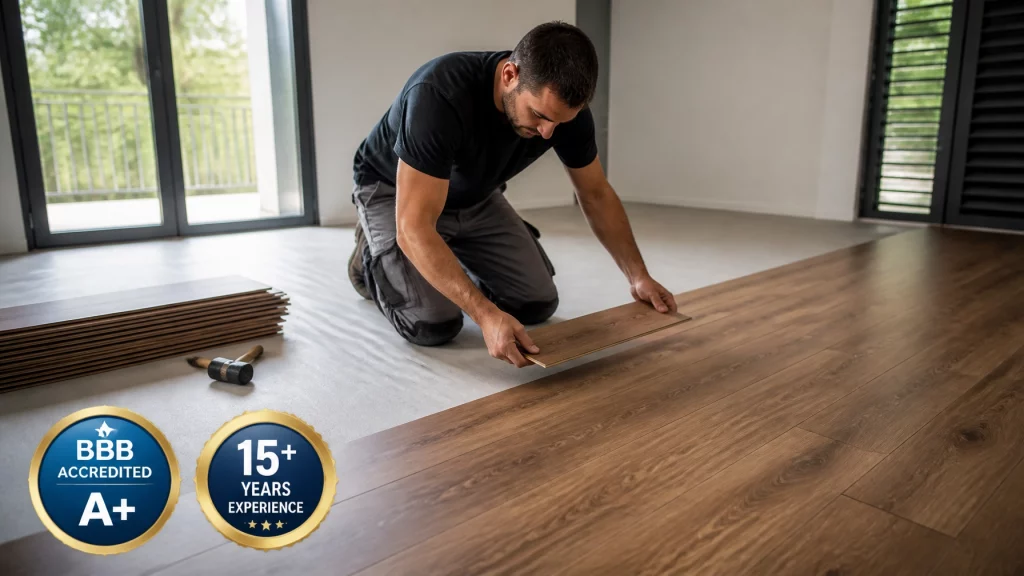
- Supporting image prompt 1: Photorealistic active residential tile installation in a realistic East Texas home, professional flooring installer checking large-format porcelain tile layout with laser level, tape measure, spacers, trowel, and organized tools, natural window light, authentic jobsite conditions, 16:9 landscape, no text, logos, or watermarks.
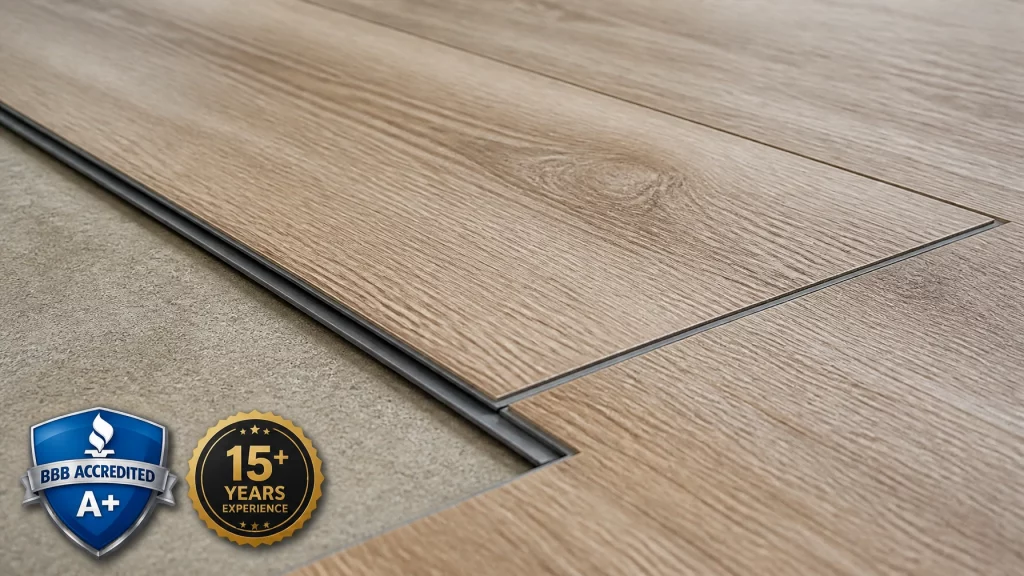
- Supporting image prompt 2: Photorealistic close-up of professionally installed matte, lightly textured porcelain tile in a Texas home, realistic stone-look variation, mid-tone neutral color, precise narrow grout joints, clean cabinet transition, natural daylight, sharp focus, 16:9 landscape, no text, logos, or watermarks.
- Supporting image prompt 3: Photorealistic completed commercial office or retail interior in North Texas with durable 24-by-24-inch matte porcelain tile, medium neutral tone, straight grid layout, consistent grout lines, realistic furniture, bright natural and practical lighting, no readable branding, 16:9 landscape, no text, logos, or watermarks.
Call Apex Custom Floors for a Free Estimate
Planning a kitchen, bathroom, lake house, rental property, office, or commercial flooring project? Apex Custom Floors can help you select tile that fits your space, budget, and daily use.
Call Apex Custom Floors at (903) 229-9556 for a free estimate or to discuss your project.
Apex Custom Floors
(903) 229-9556