
Owning a lake home in Texas is a dream for many, but it comes with a specific set of chores and maintenance needs. If you have a house near Cedar Creek Lake, you know exactly what I’m talking about. Between the high humidity, the constant influx of wet feet, and the sand that seems to follow everyone inside, your floors take a beating every single day.
By the time the sun starts to set and the evening air begins to cool, you might notice things about your floors that you didn't see during the busy afternoon. Maybe the floor feels slightly tacky from the humidity, or you notice a layer of fine lake grit shining in the low evening light. Keeping your floors in good shape requires more than just a quick sweep. It takes the right materials and a solid maintenance routine that fits the lake house lifestyle.
At Apex Custom Floors, we’ve spent over 15 years installing floors in lake communities across North and East Texas. We’ve seen what works and what fails when the Texas heat meets the lake water. In this guide, I’m going to share some practical tips to keep your lake home floors looking great and lasting for years.
Why Humidity and Lake Sand are Hard on Floors
The biggest enemies of any floor in a lake house are moisture and grit. In East Texas, humidity levels can swing wildly, especially in the evening when the temperature drops. This moisture doesn't just sit in the air; it settles on your floors. If you have the wrong type of flooring, that moisture can cause boards to swell, warp, or even grow mold underneath.
Then there’s the sand and silt. Whether you’re coming off a boat at Richland Chambers Lake or walking up from a private dock, you’re bringing the lake bed with you. Sand acts just like sandpaper. Every time someone walks across the floor with sandy feet, they are microscopically scratching the finish. Over time, those thousands of tiny scratches dull the floor and make it look worn out.
Most standard floors aren't built for this. Traditional laminate will soak up water at the seams and blow out. Solid hardwood can "cup" or "crown" as it reacts to the moisture coming off the lake. That’s why we focus on materials that can handle the reality of lake life without needing constant repairs.

Choosing Waterproof Flooring for Lake Homes
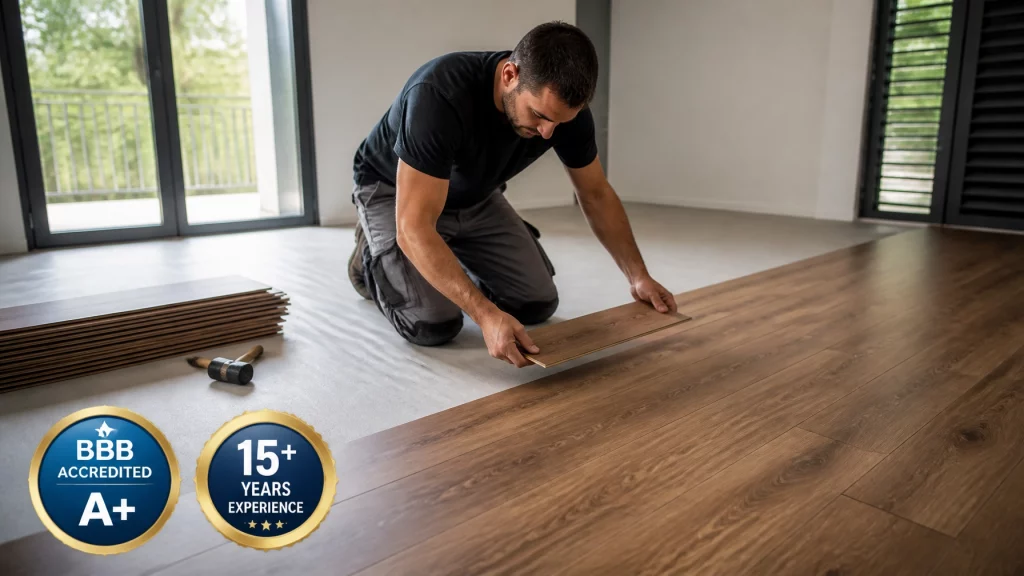
If you want a floor that you don't have to worry about every time a wet dog runs inside, you need to look at Luxury Vinyl Plank (LVP) installation. LVP is one of the best options for lake properties because it is 100% waterproof. It isn't just "water-resistant" like some older products; it can literally be submerged and it won't swell.
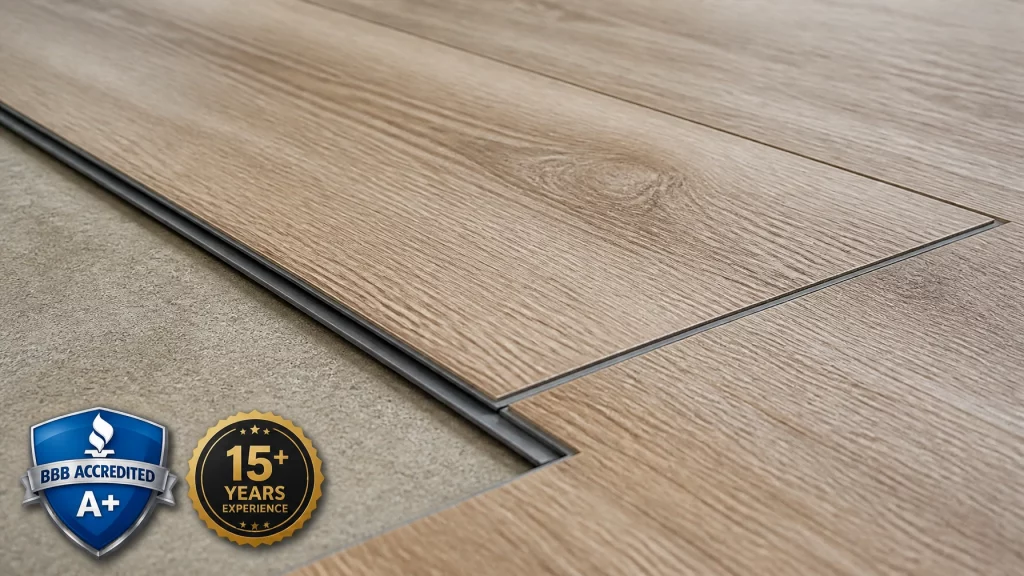
For lake houses specifically, I usually recommend SPC flooring (Stone Polymer Composite). This is a type of rigid core vinyl that is incredibly stable. Because the core is made with limestone powder, it doesn’t expand and contract nearly as much as other floors when the temperature and humidity change. This is a big deal for homes that might sit empty during the week with the AC turned up.
When you choose LVP or SPC, you get the look of real wood without the stress. You can have the aesthetic of engineered hardwood flooring in your main living areas, but with the peace of mind that a wet towel left on the floor overnight won't ruin your investment.
Durable Tile for High-Traffic Mudrooms
While LVP is great for the living room and bedrooms, I often suggest a durable tile flooring installation for the entryways and mudrooms. This is especially true for Gun Barrel City flooring projects where homes often have a direct path from the water into the house.
Porcelain tile is nearly bulletproof. It doesn't care about sand, it doesn't care about puddles, and it’s very hard to scratch. If you have a dedicated "wet entry" where people drop their life jackets and coolers, tile is the way to go. We often install large-format tiles with minimal grout lines to make cleaning even easier.
Another trick we use is epoxy grout. Standard grout is porous and can stain over time with lake mud and dirty water. Epoxy grout is waterproof and stain-resistant. It keeps those entries looking clean even after a busy holiday weekend with a dozen guests running in and out.

Protecting Your Floors from Summer Afternoon Traffic
The heaviest traffic in a lake home usually happens between 2:00 PM and 6:00 PM. That’s when everyone is coming off the boat, grabbing snacks, and heading back out. This is the "danger zone" for your floors.
One of the simplest things you can do is set up a "drop zone" outside your main entrance. A heavy-duty outdoor mat is your first line of defense. It knocks off the bulk of the sand before it ever reaches the door. Inside the door, a second, long runner rug can catch the remaining moisture.
I also recommend keeping a stack of "lake towels" right by the door. If people get into the habit of drying off before they walk across the living room, your floors will last much longer. For pet owners, having a dedicated towel to wipe down paws is a must. Those sharp claws plus a little bit of lake sand can do a lot of damage to a floor's wear layer if you aren't careful.
Maintenance Tips for Evening Lake House Cooling
When evening rolls around and the house starts to cool down, that's the best time to do a quick maintenance sweep. Since the humidity often rises as the sun goes down, any dust or sand on the floor can start to stick.
- Use a Vacuum, Not a Broom: Brooms often just push the fine lake sand into the cracks of your floor. A vacuum with a "hard floor" setting (no beater bar) will actually pull the grit out of the grooves. This is the best way to prevent scratches.
- Damp Mop Only: You don't need a bucket of water to clean LVP or tile. A damp microfiber mop with a pH-neutral cleaner is all you need. Avoid using bleach or harsh chemicals, as these can strip the wear layer off your vinyl or dull the finish on your tile.
- Check Your AC Filters: Keeping your indoor humidity under 55% is key to floor health. If your AC is working too hard or the filters are clogged, the moisture in the air will settle on the floor, making it feel sticky.
- Inspect the Transitions: Take a look at the areas where your floor meets the sliding glass door or the bathroom tile. These are the spots where moisture is most likely to seep in. If you see any caulking that is peeling or transitions that are loose, give us a call before it becomes a bigger problem.

FAQ Section
Is LVP better than hardwood for a lake house?
In most cases, yes. While hardwood is beautiful, the humidity and moisture levels at a lake house make it very difficult to maintain. LVP provides a similar look but is 100% waterproof and much more resistant to scratches from sand and pets.
How do I stop sand from scratching my new floors?
The best way is a two-mat system: one heavy-duty mat outside and one absorbent runner inside. Also, vacuuming daily during the summer months is essential to remove the grit that acts like sandpaper underfoot.
Can I install tile over my existing subfloor?
It depends on the condition and type of subfloor. In many Texas lake homes built on piers, the subfloor might need extra reinforcement to handle the weight of the tile and prevent cracking. We always perform a full subfloor inspection before any installation.
Does humidity affect waterproof flooring?
While the water won't ruin the material itself, extreme humidity can cause the subfloor underneath to shift or mold if it wasn't properly prepared. That’s why we emphasize professional moisture testing and high-quality underlayment.
How long does a typical installation take?
Most residential flooring projects take 3 to 5 days, depending on the square footage and the amount of furniture we need to move. We work hard to keep our job sites clean so you can get back to enjoying your lake home as quickly as possible.
Conclusion
Taking care of a lake home is a labor of love. The floors are the foundation of your space, and they deal with more stress than a typical city home ever would. By choosing the right materials like LVP or porcelain tile and staying on top of a simple evening cleaning routine, you can keep your home looking beautiful for years.
Whether you are looking for new floors for your Richland Chambers Lake properties or need a mudroom upgrade near the water, we are here to help. We understand the specific needs of Texas lake homeowners because we live and work here too. Our goal is to give you a floor that looks high-end but works as hard as you do.
If you’re ready to upgrade your flooring to something that can actually handle the lake life, give us a call. We offer free estimates and can help you pick the best material for your specific layout and traffic patterns.
Apex Custom Floors
(903) 229-9556
https://apexcustomfloors.com/
Call us today for a Free Estimate or to discuss your next project!