Owning a home on the water is a dream for many in North Texas. Whether you are spending your weekends at Cedar Creek Lake or living year-round near the shores of Richland Chambers Lake, your flooring has to work harder than it would in a standard suburban home. Between the humidity, the tracked-in water from the dock, and the occasional sandy footprint, standard floors often fail within just a few years.
At Apex Custom Floors, we have over 15 years of experience helping homeowners navigate these challenges. We are a BBB Accredited flooring contractor specializing in durable, waterproof solutions that look beautiful and stand up to the unique rigors of lake living. When it comes to modern vinyl options, two names dominate the conversation: Luxury Vinyl Plank (LVP) and stone polymer composite (SPC).
Choosing between the two can be confusing, but making the right choice now will save you thousands in repairs later. In this guide, we’ll break down the differences so you can decide which is the best fit for your Texas lake house.
The Unique Challenges of Lake House Flooring
Texas lake homes face environmental stresses that are quite different from homes in the city. If you’ve spent any time in Athens or Ennis during a humid July, you know how moisture hangs in the air.
High Humidity and Temperature Swings
Many lake houses are used seasonally. This means the AC might be turned up or off for weeks at a time. In the Texas heat, humidity can cause wood and some vinyl products to expand and contract. Over time, this leads to buckling, gapping, and failed locking systems. You need a floor that is dimensionally stable regardless of the thermostat setting.
Water, Mud, and Sand
A lake house is an "indoor-outdoor" space by nature. Kids and pets run in from the water with wet towels. Guests track in sand and silt from the shoreline. Traditional hardwood would warp and stain under these conditions, and carpet would become a breeding ground for mold and odors. Waterproof flooring is a non-negotiable requirement for any lakeside property.
Heavy Foot Traffic
Lake houses are built for entertaining. From Fourth of July parties to family reunions, your floors will see a high volume of foot traffic. You need a wear layer that can handle the abrasion of grit and sand without scratching, and a core that won’t dent when a heavy cooler is dropped in the kitchen.
What is Luxury Vinyl Plank (LVP)?
Luxury Vinyl Plank, or LVP, has been the standard-bearer for waterproof flooring for years. It is a multi-layered product designed to mimic the look of real wood while providing moisture resistance.
LVP typically consists of:
- A Wear Layer: A clear top coating that protects against scratches and stains.
- A Print Layer: The high-resolution image of wood grain or stone.
- A PVC Core: The "meat" of the plank, usually made from flexible polyvinyl chloride.
- An Attached Underlayment: Often included for sound dampening and comfort.
While LVP is 100% waterproof on the surface, its flexible PVC core makes it "softer" underfoot. This can be a benefit for comfort, but it also makes the floor more susceptible to temperature changes. In a fairfield home with consistent climate control, LVP is an excellent choice. However, in a lake house that sees extreme heat, that flexibility can lead to planks shifting over time.

What is Stone Polymer Composite (SPC)?
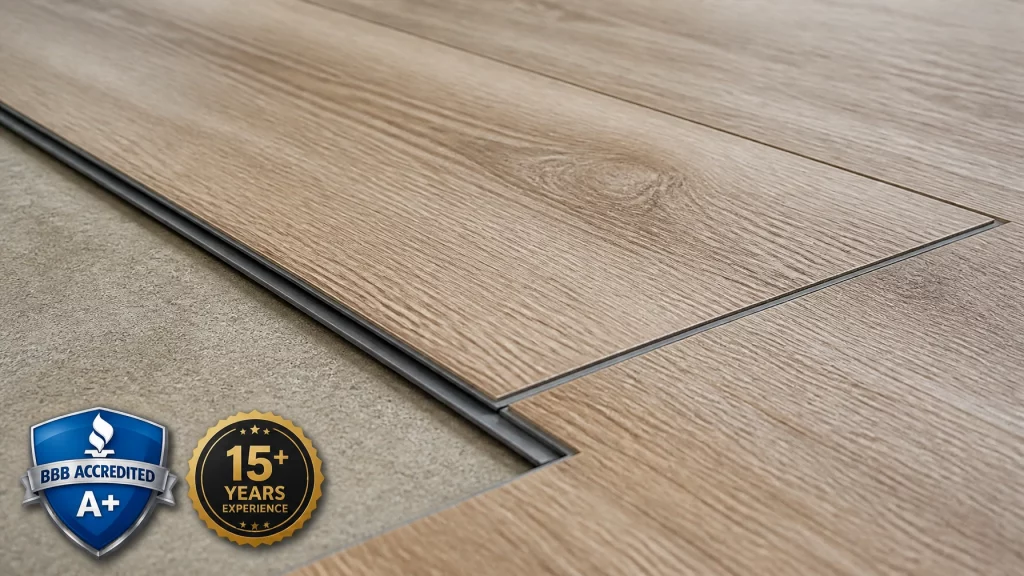
Stone polymer composite is the next generation of vinyl flooring. While it looks identical to LVP on the surface, the core is fundamentally different. Instead of a flexible PVC core, stone polymer composite uses a mixture of natural limestone powder, polyvinyl chloride, and stabilizers.
This creates a "rigid core" that is incredibly dense and virtually indestructible.
Why Stone Polymer Composite is Built for Texas
The primary advantage of stone polymer composite is its dimensional stability. Because it is stone-based, it does not expand or contract when the humidity spikes or the temperature drops. If you have a sunroom with floor-to-ceiling windows overlooking the water, stone polymer composite is the only vinyl product that won’t buckle under the direct Texas sun.
It is also significantly more dent-resistant than standard LVP. If you drop a heavy cast-iron skillet in your kitchen remodel, a stone polymer composite floor is far more likely to emerge unscathed.
LVP vs. Stone Polymer Composite: A Side-by-Side Comparison
When helping our clients in Corsicana or Hillsboro choose their materials, we usually break it down into four categories:
1. Durability and Impact Resistance
Stone polymer composite wins here. The rigid core provides "bulletproof" protection against dents from furniture and dropped objects. Flexible LVP is more prone to telegraphing, meaning if your subfloor has minor imperfections, you might eventually see them through the softer LVP planks. Stone polymer composite hides these imperfections much better.
2. Comfort Underfoot
Standard LVP is the winner for comfort. Because it is flexible and softer, it has a bit more "give" when you walk on it. Stone polymer composite feels harder and more like walking on tile or stone. If you have joint pain and spend hours standing in the kitchen, you might prefer the slight cushion of a high-quality LVP with a thick underlayment.
3. Temperature and Sunlight Resistance
For lake houses with large windows, stone polymer composite is the clear choice. Standard LVP can soften and expand when exposed to high heat and direct sunlight for long periods. Stone polymer composite remains stable and flat, even in the harshest Texas summers.
4. Cost
Generally, stone polymer composite is slightly more expensive than standard LVP due to the density of the materials and the manufacturing process. However, when you consider the lifespan and the lack of maintenance required, the return on investment for a lake house is often higher with a rigid core product.

Why Waterproof Flooring is Essential for the Texas Coastlines
Whether you are looking at luxury vinyl plank installation or tile flooring installation, "waterproof" is the keyword. In a lake environment, water doesn't just come from spills; it comes from the air and from the feet of everyone entering the home.
Both LVP and stone polymer composite are constructed with materials that do not absorb water. This means if your lake house has a minor leak while you are away for the week, the floors won't be ruined. Unlike laminate, which uses a wood-based core that swells and "pears" at the seams when wet, these vinyl options remain intact.
At Apex Custom Floors, we also emphasize the importance of custom showers and waterproof transitions. If your flooring meets a wet area, like a bathroom or a mudroom, the way those floors are joined is critical to preventing subfloor rot.
Professional Installation Matters for Long-Term Performance
You can buy the most expensive stone polymer composite in the world, but if the installation is handled poorly, the floor will fail. This is especially true in lake houses where subfloors are often uneven or subject to moisture from crawlspaces.
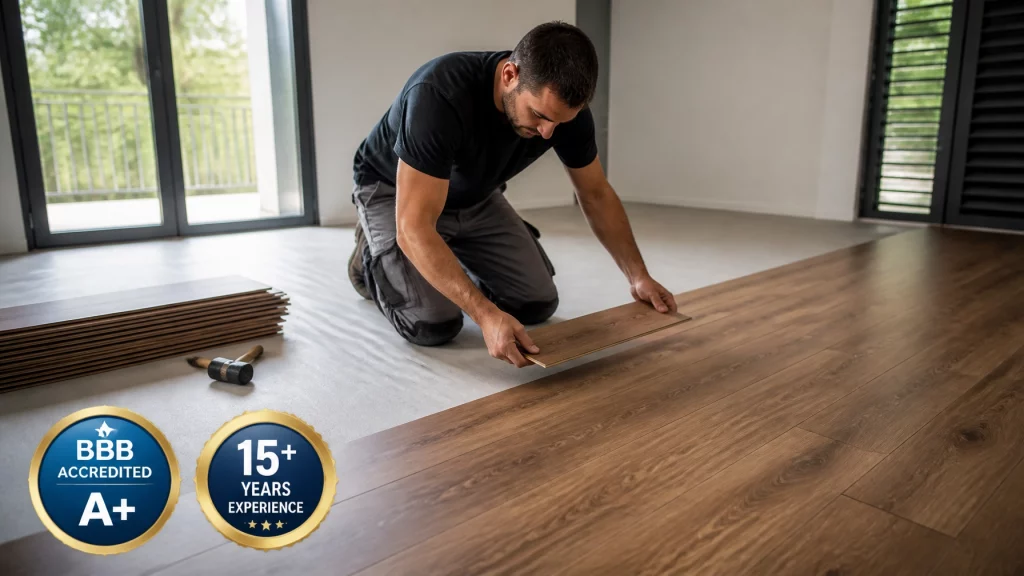
Our team at Apex Custom Floors brings over 15 years of experience to every job. We don't just "slap planks down." We perform a thorough subfloor inspection, ensure the surface is level within industry standards, and use the correct transition strips to allow for whatever minor movement might occur.
We serve communities across North and East Texas, including:
We are more than just installers, Apex Custom Floors also sells high-quality flooring materials directly. Call Apex Custom Floors at 903-229-9556 to learn more.

FAQ: Lake House Flooring Questions
Is stone polymer composite better than tile for a lake house?
It depends on your style. Tile is incredibly durable and waterproof, but it is much harder to install and more expensive. Stone polymer composite gives you the warmth of a wood look with a much faster installation time.
Can I install LVP over my existing floors?
In many cases, yes. Rigid core products like stone polymer composite can often be installed over existing hard-surface flooring if it is flat and well-bonded. This can save you a lot of money on demolition.
How do I clean my lake house vinyl floors?
One of the best things about these floors is how easy they are to maintain. A simple sweep to remove sand and a damp mop with a pH-neutral cleaner is all you need. Avoid using steam mops, as the extreme heat can sometimes damage the wear layer.
How long does installation take?
Most residential projects can be completed in just a few days, depending on the square footage and the amount of furniture we need to move.
Conclusion
Choosing the right flooring for your lake house doesn't have to be a stressful experience. If you prioritize durability, moisture resistance, and stability, stone polymer composite is almost always the winner for a waterfront property. If you are looking for a more budget-friendly option for a well-conditioned home in Corsicana, traditional LVP is still a fantastic choice.
No matter which path you choose, the quality of the material and the skill of the installer will determine how long your floors last. Don't trust your lake house investment to a "jack-of-all-trades" handyman. Work with a specialist who understands the North Texas climate and the specific needs of lakeside living.
Apex Custom Floors
(903) 229-9556
https://apexcustomfloors.com/
Ready to upgrade your lake house? Contact us today for a Free Estimate and let's find the perfect flooring for your lifestyle.