Living on the water is a dream for many Texans. Whether you’ve got a weekend getaway at Richland Chambers Lake or a permanent residence overlooking the shores of Cedar Creek, you know that lake life comes with its own set of challenges. Between wet feet tracking in water from the dock, humidity that sticks to everything, and the occasional sandy mess, your floors take a beating.
At Apex Custom Floors, we’ve spent over 15 years helping homeowners in North and East Texas navigate these challenges. We’ve seen what works and what fails when the Texas sun hits those big lakeside windows. When it comes to modern, durable, and waterproof solutions, the conversation usually boils down to two heavy hitters: Stone Polymer Composite (SPC) and traditional Luxury Vinyl Plank (LVP).
In this guide, we’re going to break down the differences so you can make an informed decision for your home. We’ll look at why "stone polymer composite" is often the secret weapon for seasonal homes and how traditional LVP still holds its own in the right environment.
The Unique Challenges of Lakefront Living in Texas
Owning a lake house in the Corsicana area isn't the same as owning a standard suburban home. The environment is more aggressive. If you aren't careful with your material selection, you could end up with warped planks, fading colors, or floors that simply can’t handle the moisture.
Humidity and Moisture
Lakeside humidity is real. Even with a good HVAC system, the air inside a lake house tends to be more humid than inland homes. If you have a seasonal property that you leave "closed up" for weeks at a time, that humidity can fluctuate wildly. Standard wood products can swell and buckle under these conditions. This is why waterproof vinyl flooring has become the gold standard for these areas.
Temperature Swings
Texas weather is famous for swinging 40 degrees in a single day. In a house with large windows facing the water, the direct sunlight can create "hot spots" on your floor. Traditional vinyl can expand and contract when it gets hot, leading to gaps or peaking at the seams.
Sand, Grit, and Tracking
Waterfront living means people are constantly moving between the outdoors and indoors. Sand and grit are abrasive. They act like sandpaper on your floor’s finish. You need a wear layer that can stand up to the "scrubbing" action of lakefront debris.
Defining Luxury Vinyl Plank (LVP) for Your Lakeside Retreat
Traditional Luxury Vinyl Plank (LVP) revolutionized the flooring industry by providing a wood-look product that was actually waterproof. It typically consists of a PVC core, a print layer, and a clear wear layer.
For many homeowners, luxury vinyl plank installation is the perfect balance of cost and performance. It’s softer underfoot than tile or stone, making it comfortable for walking around barefoot: something we do a lot of at the lake.
However, traditional LVP is flexible. This flexibility is a double-edged sword. While it can be more forgiving over a subfloor that isn't perfectly level, it is also more prone to showing "telegraphing" (where the imperfections of the subfloor show through the plank) and can be more sensitive to those high-heat Texas afternoons.

What is Stone Polymer Composite?
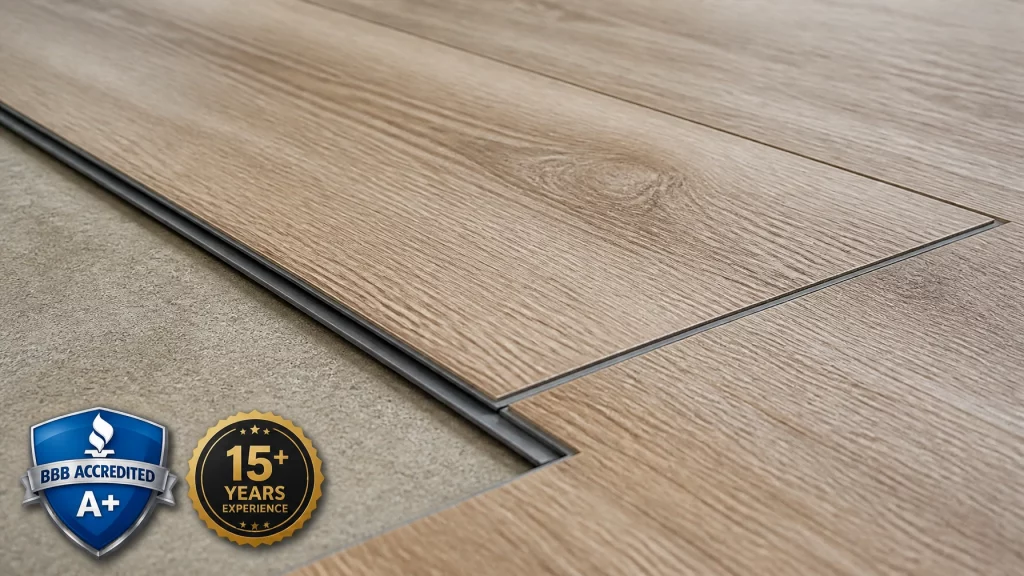
If you want the toughest version of vinyl flooring, you’re looking for stone polymer composite. Unlike traditional LVP, which has a flexible core, stone polymer composite features a rigid core made from a mixture of limestone and stabilizers.
This limestone-based core makes the plank incredibly dense and dimensionally stable. When we talk about "stability," we mean the floor's ability to resist changing shape when the temperature or humidity shifts. For a Cedar Creek Lake flooring project, this stability is often the deciding factor.
Key Benefits of Stone Polymer Composite:
- Indentation Resistance: Because the core is so hard, it’s much harder to dent with heavy furniture or dropped items.
- Temperature Stability: It won't expand or contract nearly as much as traditional LVP when the sun hits it.
- Waterproof: Like LVP, it is 100% waterproof from top to bottom.
- Subfloor Forgiveness: Because it is rigid, it won't "telegraph" minor bumps in your plywood or concrete subfloor.
Head-to-Head: Stone Polymer Composite vs. Traditional LVP
Choosing between these two often comes down to how you use your home. Here is a quick comparison to help you decide.
| Feature | Traditional LVP | Stone Polymer Composite |
|---|---|---|
| Core Material | Flexible PVC | Rigid Limestone/PVC |
| Durability | High | Extreme |
| Comfort | Softer & Warmer | Harder & Cooler |
| Heat Resistance | Moderate | Superior |
| Installation | Click-lock | Click-lock (Requires flat subfloor) |
| Best For | Primary residences, bedrooms | Lake houses, sunrooms, high-traffic |
If your lake house is your primary residence and you keep the air conditioning at a steady 72 degrees year-round, traditional LVP is a fantastic choice. It feels a bit softer on the joints and provides a cozy atmosphere.
However, if your home is a vacation rental in Gun Barrel City or a weekend spot where the AC gets turned up when you leave, stone polymer composite is the safer bet. It can handle the "bake" of a Texas summer without buckling.
Why Stone Polymer Composite Wins for Seasonal Lake Houses
Many of our clients at Apex Custom Floors are looking for "set it and forget it" solutions. They don't want to worry about their floors while they are back at their main house in Dallas or Tyler.
The rigid core of stone polymer composite acts like a shield. In many lake houses, the subfloor might be older pier-and-beam construction. These subfloors can move slightly. While traditional LVP might follow those movements and eventually show gaps, the rigidity of stone polymer composite helps bridge small imperfections, keeping the floor looking flat and uniform for years.
Furthermore, lake houses often feature "open concept" layouts with massive glass doors leading to the deck. The UV rays and heat concentration in these areas can be brutal. We've seen flexible LVP planks literally "curl" at the edges in front of sliding glass doors. Stone polymer composite stays flat because that limestone core simply doesn't react to the heat the same way.

Installation Matters: Prepping Your Lake House for New Floors
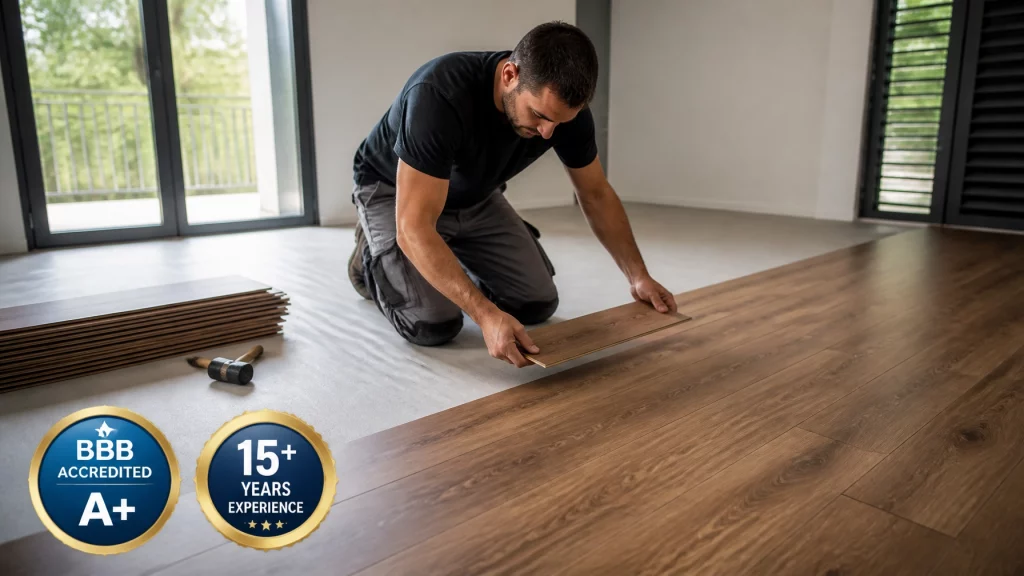
You can buy the most expensive stone polymer composite on the market, but if it isn't installed correctly, it won't last. Lake houses, especially older ones around Corsicana, often require significant subfloor preparation.
Because stone polymer composite is rigid, it needs a very flat surface. If there’s a "hump" or a "dip" in your subfloor, a rigid plank won't bend to meet it. Instead, it will "bridge" over the dip. Over time, walking on that bridged area will put stress on the click-lock mechanism, eventually causing it to break.
Our team at Apex Custom Floors focuses heavily on the prep work. We check for moisture levels, sand down high spots in the concrete, or use self-leveling compounds to ensure your new floor has a perfect foundation. This attention to detail is why we are BBB Accredited and backed by 15+ years of experience. We don't just "lay floors"; we build flooring systems that last.
If you are considering a full remodel, don't forget the wet areas. Many of our lakeside clients pair their new SPC flooring with custom tile showers to create a truly waterproof, low-maintenance home.
FAQ: Lake House Flooring Questions
Q: Can I install stone polymer composite over my existing tile?
A: In many cases, yes. Because it is rigid, it can often go over existing hard surfaces like tile, provided the tile is well-bonded and the grout lines aren't excessively wide or deep. This can save you a lot of money on demolition.
Q: Is SPC flooring loud to walk on?
A: Because it is denser than traditional LVP, it can have a "clickier" sound if installed without a proper underlayment. Most high-quality stone polymer composite planks come with a pre-attached acoustic pad to dampen sound and add a bit of cushion.
Q: Does stone polymer composite look like real wood?
A: Absolutely. Modern printing technology is incredible. Most people can't tell the difference between a high-end stone polymer composite and actual engineered hardwood once it’s installed.
Q: How do I clean my lake house floors?
A: Maintenance is simple. A damp mop and a pH-neutral cleaner are all you need. Avoid steam mops, as the intense heat can sometimes damage the wear layer or the adhesive in the core over time.
Conclusion: Making the Right Choice for Your Texas Home
Whether you’re looking at a sleek modern look for a new build or a rustic wood feel for a cabin renovation, choosing the right material is key to your long-term satisfaction. For most Texas lake houses, especially those with seasonal occupancy or high sun exposure, stone polymer composite is the clear winner for its unmatched stability and durability.
However, if comfort and a softer feel are your priorities for a climate-controlled primary residence, traditional luxury vinyl plank is still an excellent, cost-effective choice.
At Apex Custom Floors, we’re proud to serve the Corsicana region and surrounding lake communities. We handle the heavy lifting: from guiding you on material selection to the final piece of trim: so you can get back to what matters: enjoying the lake.

Get Started on Your Flooring Project Today
We are more than just installers: Apex Custom Floors also sells high-quality flooring materials directly. Call Apex Custom Floors at 903-229-9556 to learn more.
Apex Custom Floors
(903) 229-9556
https://apexcustomfloors.com/
BBB Accredited | 15+ Years Experience | Free Estimates