When you walk into a flooring store or start browsing options for your home in Ennis, TX, you are going to see a lot of terms thrown around. You’ll hear about "LVP," "luxury vinyl," and "stone polymer composite." It can get confusing fast. If you are planning a remodel in Corsicana or Fairfield, choosing the right material isn't just about the color; it’s about how that floor is going to handle the Texas humidity, your kids, and your pets.
At Apex Custom Floors, we’ve spent over 15 years installing these materials across North and East Texas. We’ve seen what works in a lakeside cabin at Richland Chambers and what stands up to the heavy foot traffic of a busy family home in town. Most people use the term "LVP" as a catch-all, but there is a big technical difference between standard luxury vinyl plank and stone polymer composite (often called SPC).
Understanding these differences will help you spend your money wisely and ensure your floor looks great for years to come.
What Exactly is Luxury Vinyl Plank (LVP)?
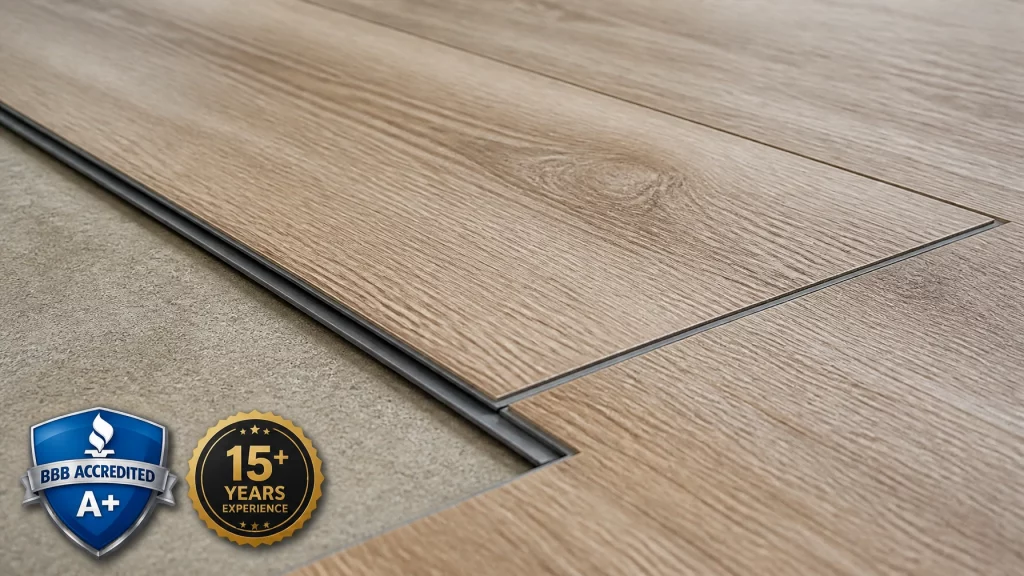
Standard luxury vinyl plank, or LVP, is a type of flooring made primarily of PVC (polyvinyl chloride) and other compounds that make it flexible. It usually consists of several layers: a backing layer, a vinyl core, a high-resolution printed image layer (that looks like wood or stone), and a clear wear layer on top to protect it from scratches.
Traditional LVP is known for being "flexible." If you pick up a plank, you can actually bend it a bit. This flexibility makes it softer underfoot, which many homeowners in Fairfield, TX appreciate in bedrooms or areas where they stand for long periods.
However, because it is flexible, it tends to "telegraph" or show the imperfections of the subfloor underneath it. If your concrete slab isn't perfectly smooth, you might eventually see the bumps or dips through a standard LVP floor. This is one reason why we always emphasize proper subfloor preparation at Apex Custom Floors.
What is Stone Polymer Composite (SPC)?
Stone polymer composite is the heavy-duty sibling of traditional LVP. Instead of a flexible vinyl core, it features a rigid core made from a mixture of limestone powder and PVC. This makes the plank incredibly dense and tough. When you hold a stone polymer composite plank, it feels solid, almost like a piece of wood or tile, and it doesn't bend.
This rigidity is a game-changer for homeowners in the Corsicana area. Because it is a rigid-core product, it can hide minor subfloor imperfections much better than traditional LVP. It also makes the floor much more stable when the temperature changes. If you’ve ever seen a vinyl floor "buckle" or "gap" during a hot Texas summer, it was likely because the material expanded or contracted too much. Stone polymer composite is designed to resist that movement.

Durability and Dent Resistance: The Stone Polymer Composite Advantage
In a head-to-head battle for durability, stone polymer composite usually wins. Because the core contains stone dust, it is much harder than standard vinyl.
If you drop a heavy cast-iron skillet in your kitchen or if you have heavy furniture like a grand piano or a heavy oak dining set, standard LVP might dent over time. Stone polymer composite is significantly more resistant to these types of impacts. This makes it the go-to choice for commercial flooring services or for families with large dogs whose claws can be tough on softer surfaces.
Both materials feature a "wear layer" on top. This is the clear coating that protects the printed wood design. When comparing floors, always look at the wear layer thickness (measured in "mils"). A 20-mil wear layer is generally the standard for high-quality residential and light commercial use. Whether you choose LVP or stone polymer composite, ensuring you have a thick wear layer is key to preventing scratches.
Waterproofing: Are They Both Safe for Bathrooms?
One of the main reasons homeowners choose luxury vinyl plank & SPC over hardwood is because of moisture. In Texas, we deal with humidity and the occasional plumbing leak.
Both traditional LVP and stone polymer composite are considered waterproof. The materials themselves, vinyl and limestone, do not absorb water. This means if you have a spill in the kitchen or the kids splash water out of the tub, the planks themselves won't swell or rot like natural wood might.
However, stone polymer composite has a slight edge because of its stability. Because the planks are so rigid and lock together so tightly, there is less chance of water seeping through the joints and getting trapped underneath. If you are looking for the absolute best performance in a wet environment like a laundry room or a basement-level floor, stone polymer composite is usually the safer bet.
Comfort and Sound: How the Floors Feel Underfoot
While stone polymer composite wins on toughness, traditional LVP often wins on comfort. Because LVP is more flexible and has a softer core, it feels a bit warmer and more cushioned when you walk on it barefoot.
Stone polymer composite can feel a bit harder and colder, similar to tile flooring. However, many high-quality stone polymer composite products come with a pre-attached underlayment (usually foam or cork). This underlayment helps absorb sound and adds a bit of "give" to the floor.
If sound is a major concern, for example, if you are installing flooring on a second story and don't want to hear every footstep downstairs, you’ll want to look at the "IIC" (Impact Insulation Class) rating of the flooring you choose. We often recommend adding a high-quality underlayment if the product doesn't already have one to ensure your home in Hillsboro stays quiet and comfortable.

Cost Comparison: Upfront Price vs. Long-Term Value
In general, you will pay a bit more for stone polymer composite than you will for standard LVP. The manufacturing process is more complex, and the materials (the stone dust and high-grade polymers) are more expensive.
However, you have to look at the long-term value. A standard LVP floor might need to be replaced sooner if it gets dented or if the subfloor wasn't perfect and the planks begin to separate. Stone polymer composite is built to last. Many of the products we install come with long-term residential warranties because the manufacturers know how tough the rigid core is.
If you are remodeling a rental property or a room that doesn't get much use, standard LVP might be the most cost-effective choice. But for your "forever home" or a high-traffic living room in Kaufman, the extra investment in stone polymer composite usually pays for itself in durability and peace of mind.
Choosing the Right Option for Your North Texas Home
So, which one should you choose for your remodel? It really comes down to your specific needs and the room you are working on.
Choose Stone Polymer Composite (SPC) if:
- You have large pets or heavy furniture.
- You want the most stable floor for areas with temperature swings (like sunrooms).
- Your subfloor has minor imperfections.
- You want a floor that feels solid and doesn't "bounce."
Choose Traditional Luxury Vinyl Plank (LVP) if:
- You are on a tighter budget.
- You prefer a softer, warmer feel underfoot (like in a bedroom).
- Your subfloor is already perfectly smooth and level.
- You are looking for a quick, affordable refresh for a low-traffic area.
At Apex Custom Floors, we help homeowners navigate these choices every day. We don't just install the floors; we help you pick the material that fits your lifestyle. Whether you need a custom shower to go with your new bathroom floor or you are doing a whole-home flooring overhaul, we bring the expertise to get it done right.
Professional Installation: Why It Matters
No matter which material you choose, the quality of the installation is what determines how long your floor will last. A stone polymer composite floor is only as good as the subfloor it sits on. If the subfloor isn't flat, those rigid planks can actually snap at the locking joints over time.
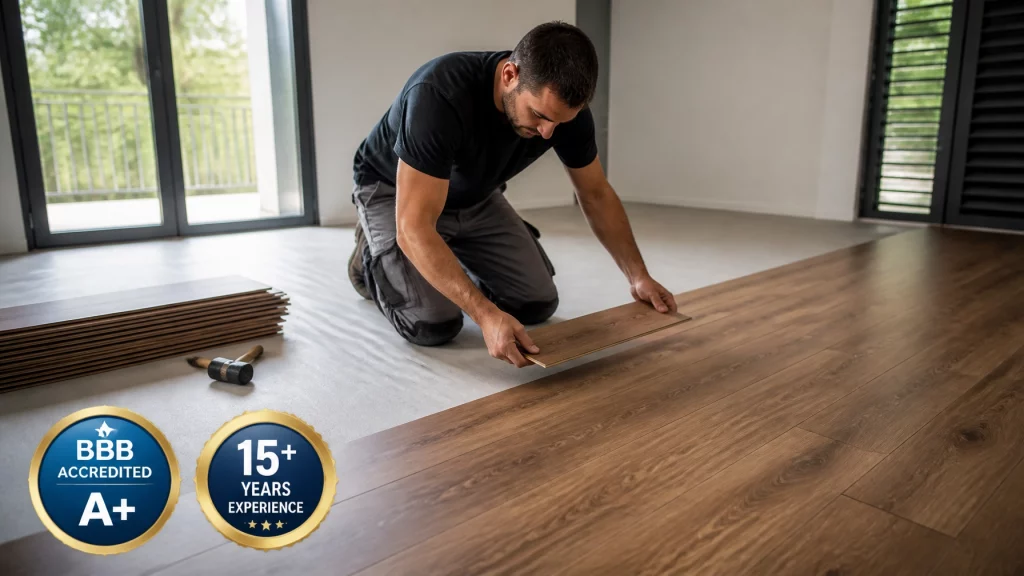
Our team at Apex Custom Floors has over 15 years of combined experience. We take the time to prep the site properly, sanding down high spots in the concrete or filling in low spots. We also ensure that the proper "expansion gaps" are left around the perimeter of the room so your floor can breathe without buckling. We back all our work with a one-year workmanship warranty because we believe in doing the job right the first time.

Frequently Asked Questions
Can I install stone polymer composite over my existing tile?
In many cases, yes. Because it is a rigid core floor, stone polymer composite can often be installed over existing hard surfaces like ceramic tile, provided the tile is well-bonded and the grout lines aren't too deep or wide. This can save you a lot of money and mess on demolition.
Is stone polymer composite eco-friendly?
Many stone polymer composite products are made with limestone, which is a natural material, and they are often formaldehyde-free and low-VOC (volatile organic compounds). Always look for "FloorScore" or similar certifications to ensure the product meets high indoor air quality standards.
How do I clean my new LVP or stone polymer composite floor?
One of the best things about these floors is how easy they are to maintain. All you really need is a soft broom or vacuum (without a beater bar) and a damp mop with a pH-neutral cleaner. Avoid using steam mops, as the intense heat can sometimes damage the vinyl layers or the adhesive.
Does it really look like real wood?
The technology used for the visual layers has improved drastically. Modern stone polymer composite flooring features high-definition printing and "embossed-in-register" textures. This means if you see a knot in the wood grain, you can actually feel the texture of that knot when you touch the plank.
Conclusion
Whether you decide on standard luxury vinyl plank or the rugged durability of stone polymer composite, you are making a smart choice for your Athens, TX home. Both options offer a beautiful, waterproof, and low-maintenance alternative to traditional wood or stone.
If you're still not sure which one is right for your specific project, give us a call. We love talking shop and helping our neighbors in Corsicana, Fairfield, and the surrounding lake communities find the perfect flooring solution.
Apex Custom Floors also sells flooring materials directly! Call Apex Custom Floors at 903-229-9556 for a free estimate or to browse our selection.
Apex Custom Floors
(903) 229-9556
https://apexcustomfloors.com/
- BBB Accredited A+
- 15+ Years of Experience
- Serving Corsicana, Fairfield, Ennis, and all of North/East Texas.