If you own a home on the water, you know that the environment is a bit different than a standard suburban lot. Between the humidity coming off the water, the sand and silt tracked in from the dock, and the temperature swings that happen in unconditioned sunrooms, your floors take a beating. When it comes time to upgrade, most of our clients ask the same question: should I go with Luxury Vinyl Plank (LVP) or Stone Polymer Composite?
Choosing the right waterproof flooring for Cedar Creek Lake homes isn't just about what looks good in a showroom. It’s about what will still look good five or ten years from now after a few hundred weekends of wet feet and summer parties. At Apex Custom Floors, we’ve spent over 15 years helping North Texas homeowners navigate these choices. We are a BBB Accredited company with an A+ rating, and we’ve seen exactly how different materials hold up in our local climate.
In this guide, we’re going to break down the technical differences between these two popular options so you can decide which is the best fit for your specific property.
Understanding Luxury Vinyl Plank (LVP) for Texas Homes
Traditional Luxury Vinyl Plank, often just called LVP, has been the standard for "wood-look" waterproof flooring for a long time. It’s a multi-layer product that usually consists of a backing layer, a flexible vinyl core, a high-definition decorative layer (the wood look), and a clear wear layer on top.
One of the main reasons people like traditional LVP is the "feel." Because the core is made of flexible PVC, it has a bit of "give" or bounce to it. If you’re standing in the kitchen for hours prepping dinner, your back and knees might prefer the softer landing of a flexible core. It also tends to feel a bit warmer underfoot than stone or tile.
However, for a lake house, that flexibility can sometimes be a drawback. Because the core is soft, it is more susceptible to "telegraphing." This means if your subfloor has a slight dip or a bump, the flexible plank will eventually mold itself to that shape, and you’ll see the imperfection on the surface. For many older lake cabins or homes with pier-and-beam foundations that move over time, this can be a real issue.
When we handle luxury vinyl plank installation, we focus heavily on subfloor prep to avoid these issues. But if your home is prone to movement or has significant subfloor irregularities, you might want to look at a more rigid option.

Why Stone Polymer Composite (SPC) is the Ultimate Lake House Upgrade
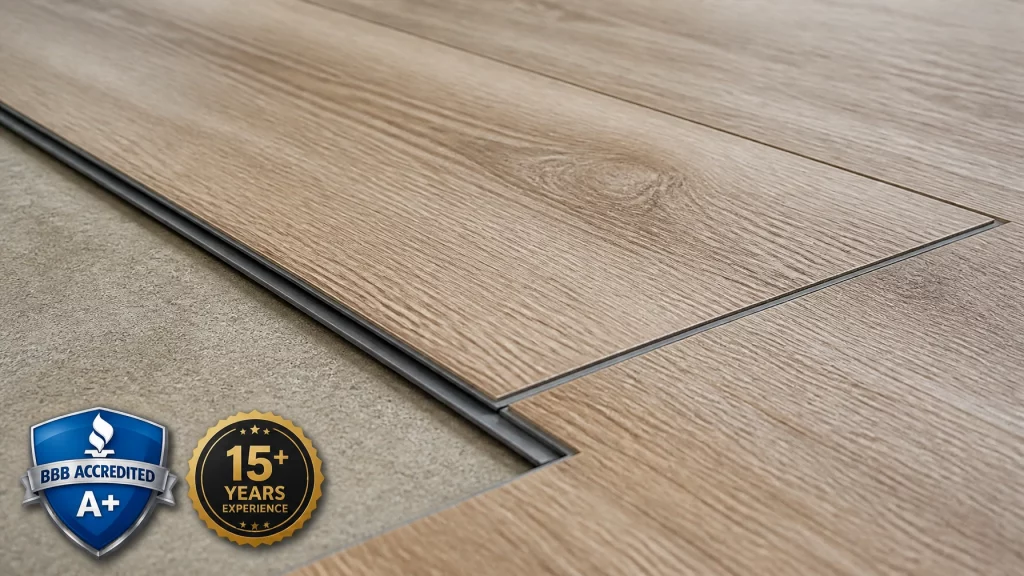
Stone polymer composite is often referred to as "rigid core" flooring. Instead of a flexible PVC center, the core of an SPC plank is made from a mix of natural limestone powder, polyvinyl chloride, and stabilizers. This creates an incredibly dense, rigid board that doesn't bend.
Why does this matter for your home at Richland Chambers Lake? The main benefit is dent resistance. If you’ve ever dropped a heavy cooler or moved a heavy piece of furniture on traditional vinyl and seen a permanent indentation, you’ll appreciate stone polymer composite. The stone core is almost impossible to dent with normal residential use.
Another huge factor is dimensional stability. Flexible vinyl expands and contracts quite a bit when the temperature changes. If you have a lake house that you leave unconditioned during the work week or a sunroom with floor-to-ceiling glass, traditional LVP can buckle or the seams can pop open in the Texas heat. Stone polymer composite is designed to stay flat and stable even when the temperature swings from 40 degrees at night to 100 degrees during a summer day.
Stability and Humidity: The Lake House Challenge
Humidity is the silent killer of many flooring types. While both LVP and stone polymer composite are technically 100% waterproof, they react differently to the high moisture levels found near the water.
In areas like East Texas, humidity can cause wood-based products to swell and flexible plastics to soften. Stone polymer composite is essentially "waterproof on steroids." Because it’s mostly stone, it doesn't absorb moisture and it doesn't change shape when the air gets thick. This makes it the ideal choice for "wet" areas like mudrooms, basements, and even custom tile showers adjacent bathrooms where steam and splashes are common.
For many of our clients, we suggest stone polymer composite for the main living areas and kitchens, while perhaps sticking to a softer LVP in bedrooms where comfort is the priority. However, if you want a seamless look throughout the whole house that can handle anything, the rigid core of the stone composite is hard to beat.

Maintenance and Longevity: Sand, Pets, and Wet Feet
Let’s talk about real-life lake living. You’ve got people coming in from the dock with wet feet, dogs running around with sandy paws, and the occasional spilled drink. You need a floor that you can just mop and forget about.
Both of these options are extremely easy to maintain compared to real hardwood or carpet. You don't need special waxes or oils; a damp mop and a neutral cleaner are all you need. However, the wear layer is what determines how well the floor resists scratches from sand and grit.
When you choose a stone polymer composite product, it often comes with a thicker, more robust wear layer designed for high-traffic or commercial use. This is vital because lake sand acts like sandpaper on your floor. If you have a thin wear layer, you’ll see the finish dull in high-traffic paths within a few years. We always recommend a wear layer of at least 20 mil for lake properties to ensure the floor keeps its luster.
If you are looking for a more traditional look with even higher durability for specific rooms, some homeowners still opt for tile flooring installation in entryways, but stone polymer composite has become so realistic that most people can't tell the difference until they touch it.
Cost vs. Performance: Making the Right Investment
Is stone polymer composite more expensive than traditional LVP? Generally, yes. The materials used to create that rigid stone core are more costly to produce, and the planks are heavier to ship. However, you have to look at the total cost of ownership.
If you install a cheap, flexible vinyl plank and it starts to buckle or "peak" at the seams because of the Texas sun, you'll be replacing it in five years. Stone polymer composite is often a "once and done" floor. It adds real resale value to your home because buyers recognize the quality of a rigid core floor. It doesn't sound "clicky" when you walk on it, and it feels solid underfoot, much like real wood or tile.
At Apex Custom Floors, we believe in doing it right the first time. We've been serving the community for over 15 years, and our goal is to install a floor that we won't have to come back and fix. Whether you are in a modern lakefront estate or a cozy weekend cabin, we can help you weigh the pros and cons based on your budget and how you use your home.

FAQ: Common Questions About Lake House Flooring
Is stone polymer composite floor cold?
It can be cooler than traditional LVP because it contains stone, but it’s nowhere near as cold as ceramic tile. If you have a pier-and-beam home, the underlayment we use can help provide a thermal break to keep the floors feeling comfortable.
Can I install stone polymer composite myself?
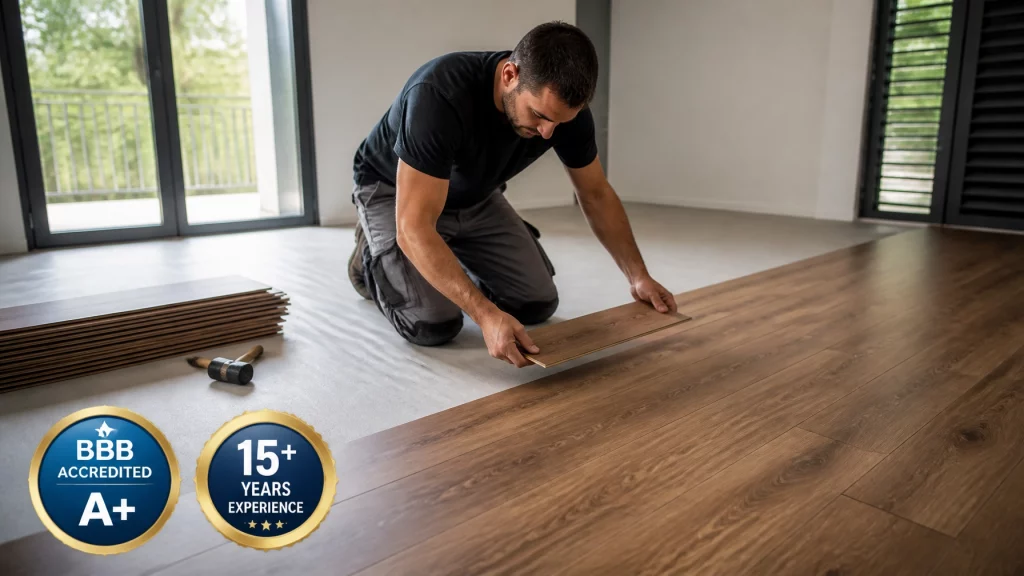
While many of these products are "click-lock," lake homes often have unique challenges like uneven subfloors and complex layouts. For a result that lasts and maintains its warranty, professional installation is always recommended.
Will my pets scratch these floors?
Both LVP and stone polymer composite are highly scratch-resistant. However, we recommend stone polymer composite for large dogs because the rigid core prevents the "indentation" that can happen when a heavy dog jumps or runs.
Do I need a separate underlayment?
Most high-quality stone polymer composite planks come with an attached acoustic pad. This helps with sound dampening and provides a bit of cushion. We can evaluate your subfloor to see if additional moisture barriers or leveling are needed.
Choosing the Best Floor for Your Texas Home
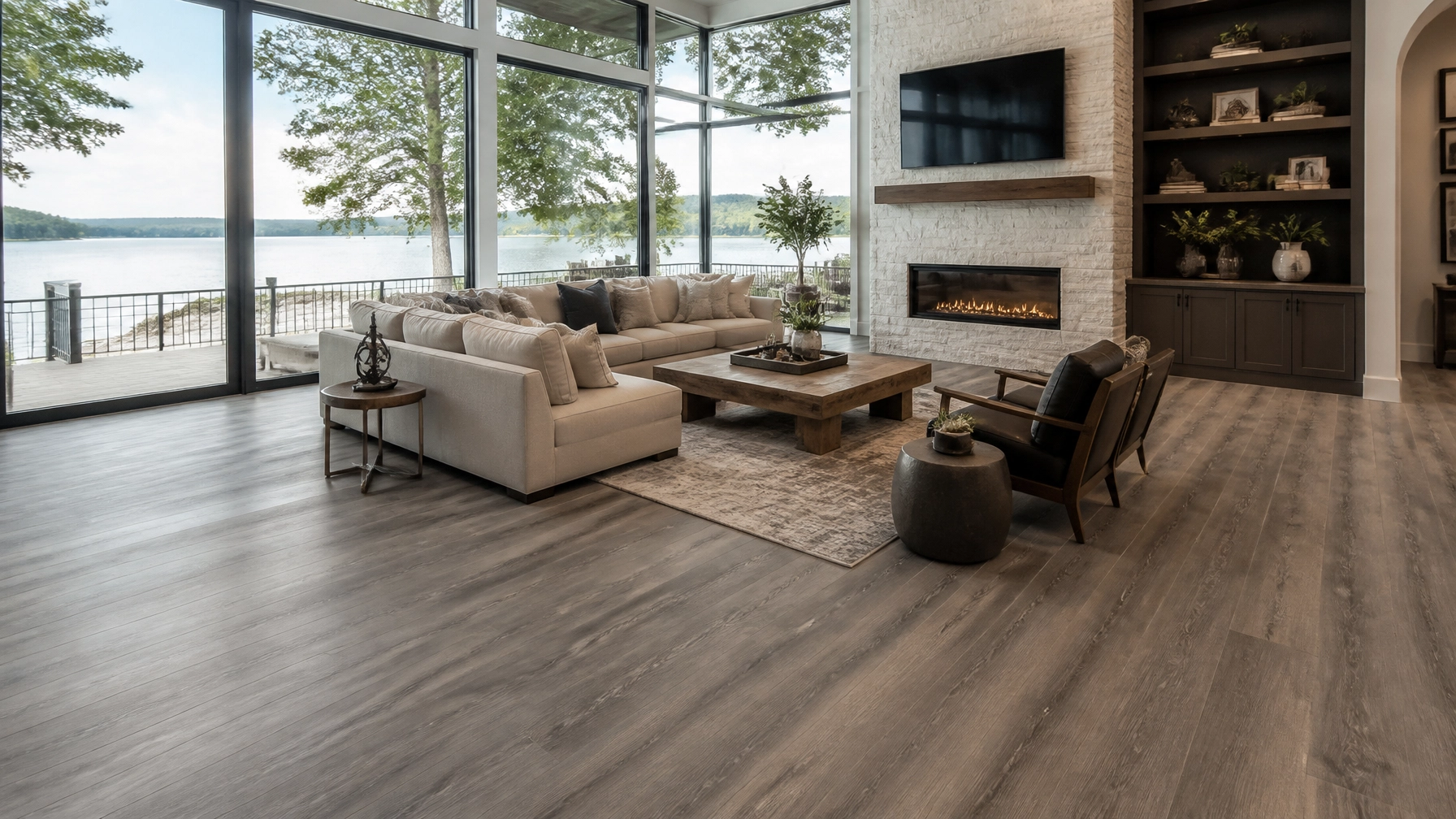
Deciding between traditional vinyl and a rigid stone core comes down to your specific needs. If you want maximum comfort and are on a tighter budget for a well-conditioned home, traditional LVP is a great choice. But if you want a floor that can withstand humidity, heavy traffic, and temperature swings without flinching, stone polymer composite is the clear winner for lake living.
Whether you're looking for a complete remodel in Corsicana or just updating a single room at the lake, the team at Apex Custom Floors is here to help. We guide you through the selection process, handle the heavy lifting, and back our work with a one-year workmanship warranty.
We are more than just installers: Apex Custom Floors also sells high-quality flooring materials directly. Call Apex Custom Floors at 903-229-9556 to learn more.
Apex Custom Floors
(903) 229-9556
https://apexcustomfloors.com/
BBB Accredited | 15+ Years Experience | Free Estimates