Living on the water in North Texas is a dream, but it comes with a unique set of challenges for your home’s interior. If you own a property near Cedar Creek Lake flooring, you know exactly what we’re talking about. Between the humidity coming off the water, the kids tracking in wet swimsuits, and the occasional sand and grit from the shoreline, your floors take a beating.
When it’s time to upgrade, most homeowners narrow their choices down to two popular options: traditional Luxury Vinyl Plank (LVP) and stone polymer composite. Both are marketed as "waterproof," but they perform very differently under the pressure of lake life. At Apex Custom Floors, we’ve spent over 15 years helping families choose the right materials for their specific environments.
In this guide, we’re going to break down the technical differences between these two products so you can make an informed decision for your home, whether you're looking for Athens TX flooring or a complete remodel in Fairfield.
What is Traditional Luxury Vinyl Plank (LVP)?
Traditional Luxury Vinyl Plank, or LVP, has been the go-to choice for homeowners wanting the look of wood without the maintenance of real timber. It’s made of several layers: a backing layer, a flexible vinyl core, a high-resolution image layer (the "wood" look), and a wear layer on top.
The defining characteristic of traditional LVP is its flexible core. Because it’s primarily made of PVC and plasticizers, the planks are somewhat soft and pliable. This makes them comfortable to walk on, but it also means they are more susceptible to the environment. In a controlled environment like a suburban home in Dallas, LVP is fantastic. But when you get closer to the moisture and temperature swings of Richland Chambers Lake flooring, that flexibility can sometimes become a liability.
What is Stone Polymer Composite?
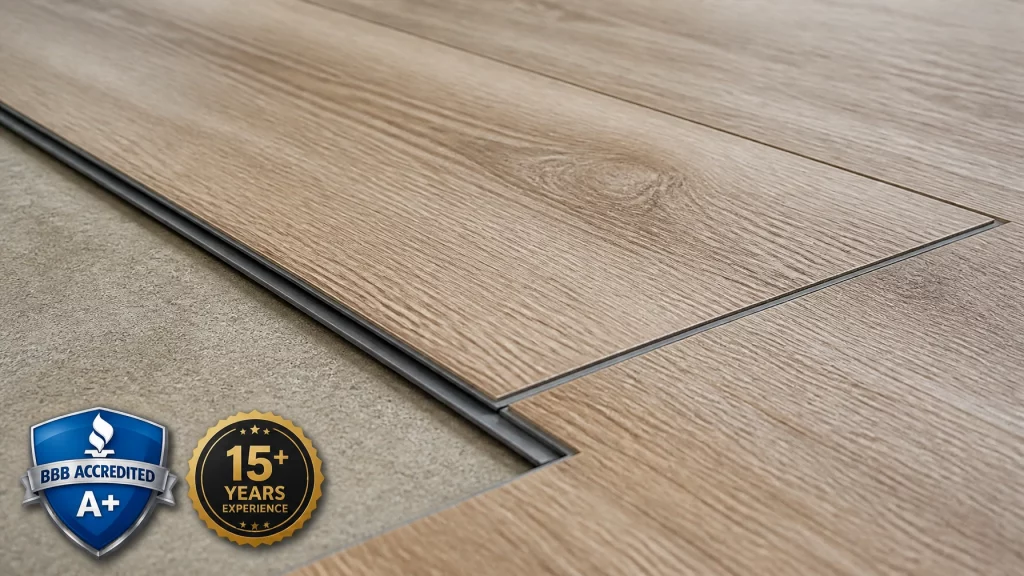
Stone polymer composite is the next evolution in the vinyl flooring world. Instead of a flexible PVC core, these planks feature a rigid core made from a mix of natural limestone powder, polyvinyl chloride, and stabilizers. This creates a dense, rock-hard center that doesn't bend.
When you hold a plank of stone polymer composite, you can immediately feel the difference. It’s heavier, thinner, and much more rigid than traditional LVP. This "rigid core" technology was specifically designed to solve the problems that flexible vinyl faces, namely, expansion and contraction due to heat and humidity. For many of our clients looking for luxury vinyl plank installation, stone polymer composite is the premium recommendation because of this added stability.

Why Lake Houses Need Specialized Flooring: The Humidity Factor
Humidity is the silent killer of many flooring types. In North Texas, the humidity levels can swing wildly from season to season. Near the lake, these swings are even more pronounced.
Traditional LVP is a plastic-based product. Like most plastics, it expands when it gets warm and moist and contracts when it cools down or dries out. If your LVP isn't installed with perfect expansion gaps, or if the temperature swings are too extreme (common in lake houses that might not run the AC 24/7 when unoccupied), you might see the planks start to "tent" or gap at the seams.
Stone polymer composite handles this differently. Because the core is mostly limestone, it is incredibly dimensionally stable. It doesn't care about the humidity coming off the lake. It stays flat and tight, even if the Texas sun is beating down through your large lakefront windows. This makes it a superior choice for sunrooms, entryways, and homes with large glass doors.
Durability & Dent Resistance
Let's talk about "lake life" reality. You have heavy coolers being dragged across the floor. You have heavy furniture like solid wood dining tables or recliners. You might have a dog that loves the water but brings in mud and grit.
- Dent Resistance: Traditional LVP is softer. If you drop a heavy cast-iron skillet or move a heavy sofa, it’s possible to dent the flexible core. Stone polymer composite is much harder to dent. Its stone-based core provides high impact resistance, which is why we often use similar products for commercial flooring services in high-traffic retail spaces.
- Scratch Resistance: Both floors usually have a similar wear layer on top. However, because stone polymer composite provides a more solid "anvil" underneath the wear layer, it can sometimes resist deep scratches better than a softer-core floor that might "give" under pressure.
Waterproof Performance and Maintenance
Both traditional LVP and stone polymer composite are 100% waterproof. This means if a pipe leaks or a kid leaves a wet towel on the floor for three days, the planks themselves won't rot, swell, or peel like natural wood or laminate would.
However, the "system" is only as good as the installation. Water can still seep through the seams and get under the floor, which can lead to mold issues in your subfloor. That’s why we emphasize professional installation. We use moisture barriers and proper sealing techniques to ensure your tile flooring installation or vinyl project stays beautiful for decades.
Maintenance for both is simple: a damp mop and a pH-neutral cleaner. You don't ever need to wax or sand these floors. They are built for people who want to spend their weekends on the boat, not scrubbing the kitchen.

Comfort vs. Performance: Choosing the Right Fit
If stone polymer composite is so much more durable, why would anyone choose traditional LVP? It usually comes down to comfort and cost.
- Underfoot Feel: Traditional LVP is softer. It has a bit of "give" when you walk on it, which can be easier on your joints if you’re standing in the kitchen for hours. Stone polymer composite feels more like tile, hard and solid.
- Warmth: LVP tends to feel slightly warmer to the touch. Stone polymer composite can feel a bit cooler, which might actually be a benefit during a Texas July but a downside in January.
- Subfloor Issues: Traditional LVP is thin and flexible. If your subfloor has minor bumps or dips, the LVP will follow those contours, often making the imperfections visible (we call this "telegraphing"). Stone polymer composite’s rigid core can bridge small gaps and imperfections in the subfloor, resulting in a flatter, smoother finished surface.
Professional Installation and the Apex Advantage
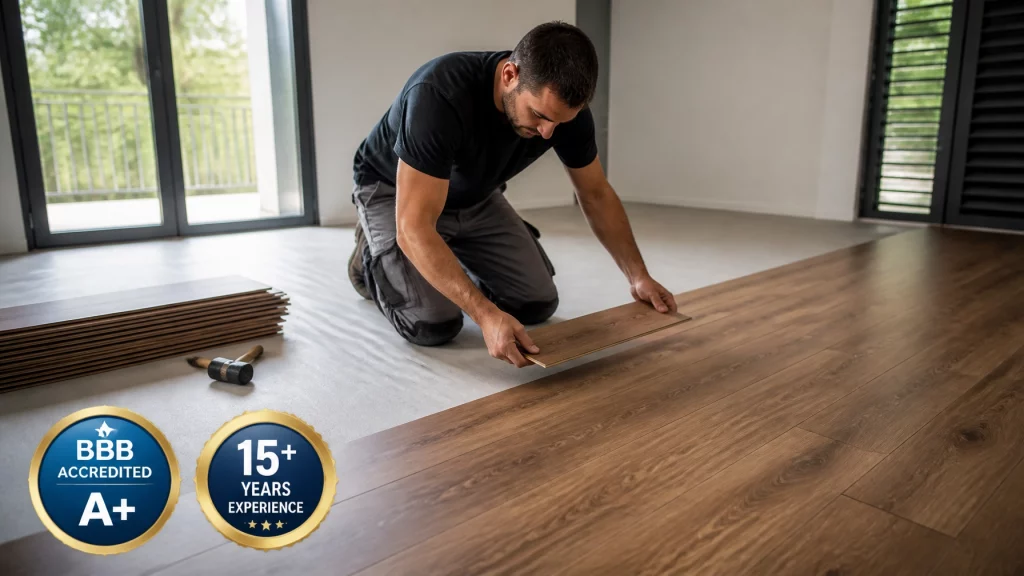
Whether you choose traditional LVP or the more robust stone polymer composite, the quality of the jobsite prep is what determines how long the floor lasts. As a BBB-accredited company with over 15 years of experience, we’ve seen every mistake in the book.
We don't just "lay boards." We assess your subfloor, check for moisture levels, and ensure the layout is aesthetically pleasing. For lake houses, we pay extra attention to transitions and baseboards to ensure a clean, professional look that adds real value to your property. We handle everything from the initial material selection to the final walkthrough, leaving our jobsites clean and organized.

Frequently Asked Questions (FAQ)
Is stone polymer composite more expensive than traditional LVP?
Generally, yes. The materials used to create the rigid core are more costly to manufacture than the flexible PVC used in traditional LVP. However, many homeowners find the extra investment worth it for the added stability and dent resistance, especially in rental properties or high-traffic lake homes.
Can I install stone polymer composite over my existing tile?
In many cases, yes. Because it is a rigid core floor, it can often be installed over existing ceramic tile as long as the tile is well-bonded and the grout lines aren't too deep or wide. This can save you a significant amount of money on demolition costs.
Do I need an underlayment for these floors?
Many stone polymer composite and LVP products come with a pre-attached pad. This pad helps with sound reduction and adds a bit of cushion. If your chosen product doesn't have one, we usually recommend adding a high-quality underlayment to improve the feel and sound of the floor.
Which one is better for pets?
Both are great for pets because they are scratch-resistant and waterproof. However, stone polymer composite gets the slight edge because its rigid core is harder to dent if you have very large, heavy dogs with thick nails.
How long does installation take?
For an average-sized lake house living area, we can often complete the installation in 1-2 days. Whole-home projects usually take 3-5 days, depending on the amount of furniture moving and subfloor prep required.
Conclusion
Choosing the right floor for your lake house doesn't have to be a headache. If you want the ultimate in stability, dent resistance, and performance against Texas humidity, stone polymer composite is the clear winner for main living areas and kitchens. If you are on a tighter budget and prioritizing a softer feel in a bedroom, traditional LVP is still a fantastic, waterproof option.
At Apex Custom Floors, we serve the entire region, providing expert guidance for Kaufman TX flooring projects and beyond. We are proud to be a local, family-oriented business that treats every home like our own.
We are more than just installers: Apex Custom Floors also sells high-quality flooring materials directly. Call Apex Custom Floors at 903-229-9556 to learn more.
Apex Custom Floors
(903) 229-9556
https://apexcustomfloors.com/