For homeowners in the greater Corsicana region: from the lake houses of Cedar Creek to the busy residential streets of Ennis: waterproof flooring is no longer a luxury; it is a technical necessity. Texas humidity and the inevitable spills of a busy household demand a surface that does more than just "look good." You need a floor that maintains its dimensional stability when the moisture levels rise.
When navigating the world of resilient flooring, you will inevitably face the choice between two dominant categories: Luxury Vinyl Plank (LVP) and Stone Polymer Composite (SPC). While both are marketed as waterproof, their internal chemistry and performance characteristics differ significantly. Understanding these nuances is the difference between a floor that lasts decades and one that fails after the first major humidity swing.
The Evolution of Waterproof Flooring
Traditional hardwood and laminate were notoriously susceptible to moisture. Once water penetrated the seams, the core would swell, the edges would peak, and the floor was essentially ruined. The introduction of luxury vinyl changed the trajectory of the industry.
Today, we utilize advanced composite cores that are impervious to liquid. However, "waterproof" refers to the material's ability to withstand submerged water without structural damage: it does not always account for how the planks react to heat or subfloor imperfections. This is where the distinction between LVP and SPC becomes critical.

Defining LVP: The Flexible Standard
Luxury Vinyl Plank (LVP) typically refers to traditional flexible-core vinyl. These planks are constructed with multiple layers, including a backing, a PVC vinyl core, a high-definition print layer, and a clear wear layer.
Core Composition
The core of traditional LVP is made of a PVC (polyvinyl chloride) compound that is engineered to be flexible. This flexibility is a double-edged sword. On one hand, it is more forgiving over minor subfloor irregularities: the plank can "hug" slight dips in the concrete. On the other hand, flexible PVC is more prone to expansion and contraction when exposed to the intense temperature fluctuations common in the Texas climate.
Underfoot Feel
Because the core is softer, LVP offers a more cushioned feel underfoot. It is quieter to walk on and retains more warmth than stone-based composites. For bedrooms or upper-level living areas where comfort is a priority, LVP remains a strong contender.
Defining SPC: The Rigid Core Powerhouse
Stone Polymer Composite (SPC) represents the next generation of waterproof flooring. Often referred to as "rigid core vinyl," SPC is designed to be virtually indestructible and remains the gold standard for high-traffic and moisture-prone environments.
The Limestone Advantage
The "Stone" in SPC comes from a core made of approximately 60% calcium carbonate (limestone), mixed with PVC and stabilizers. This creates a dense, incredibly rigid plank that does not bend.
Explore our specialized rigid core options like SPC Max and Pure SPC to see how this technology translates to your home.
Dimensional Stability
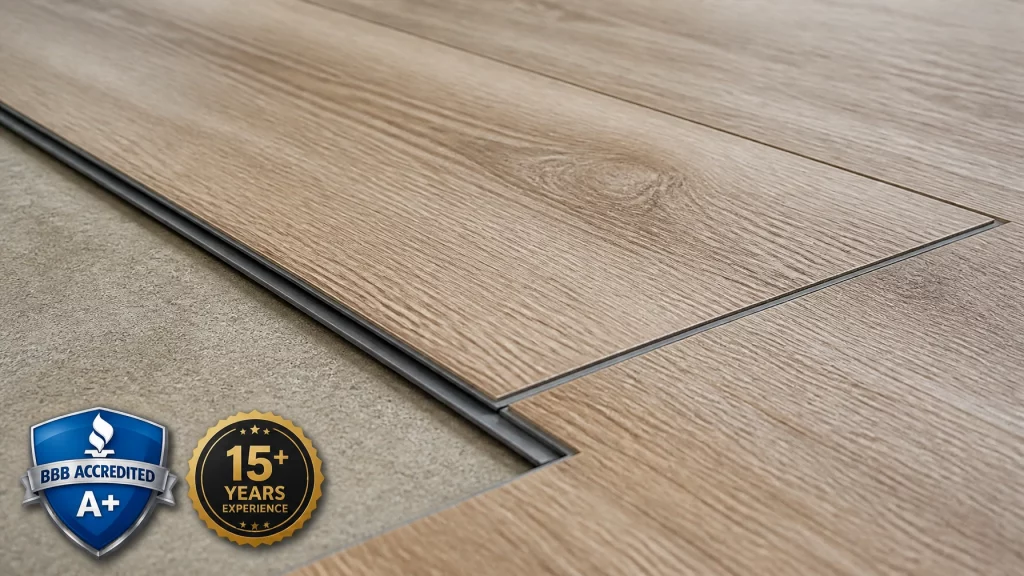
The primary advantage of SPC is its dimensional stability. Unlike flexible LVP, SPC does not expand or contract significantly with changes in humidity or temperature. This makes it the ideal choice for lake houses or rental properties where the HVAC might be turned off for extended periods, as the seams will remain tight and flush regardless of the environment.

Head-to-Head: LVP vs. SPC
To make an informed decision for your LVP flooring installation, you must weigh the technical trade-offs of each material:
- Dent Resistance: SPC is the clear winner. The limestone-infused core provides superior resistance to heavy furniture and high-impact drops. Flexible LVP is softer and more prone to permanent indentations over time.
- Subfloor Preparation: Because SPC is rigid, it requires a near-perfectly flat subfloor. Any high spots or "waves" in the concrete will cause the planks to "bridge," leading to potential clicking sounds or even breakage of the locking mechanism. Flexible LVP can telegraph minor imperfections, but it is less likely to suffer structural failure due to a slightly uneven subfloor.
- Aesthetics: Both offer stunning, high-definition visuals. Whether you want the look of reclaimed white oak or modern slate, both materials deliver realistic textures and colors.
- Waterproof Performance: Both are 100% waterproof. However, because SPC stays tighter at the seams during temperature shifts, it provides a more reliable barrier against moisture reaching your subfloor.
Strategic Applications: Where to Use Which?
At Apex Custom Floors, we draw on over 15 years of combined experience to guide our clients toward the right product for their specific room.
Bathrooms and Laundry Rooms
For these high-moisture zones, we almost exclusively recommend SPC. The rigid core ensures that if a leak occurs, the floor remains stable while you address the issue. The density of the stone composite also makes it an excellent match for the heavy vibrations of washing machines.
Kitchens and Mudrooms
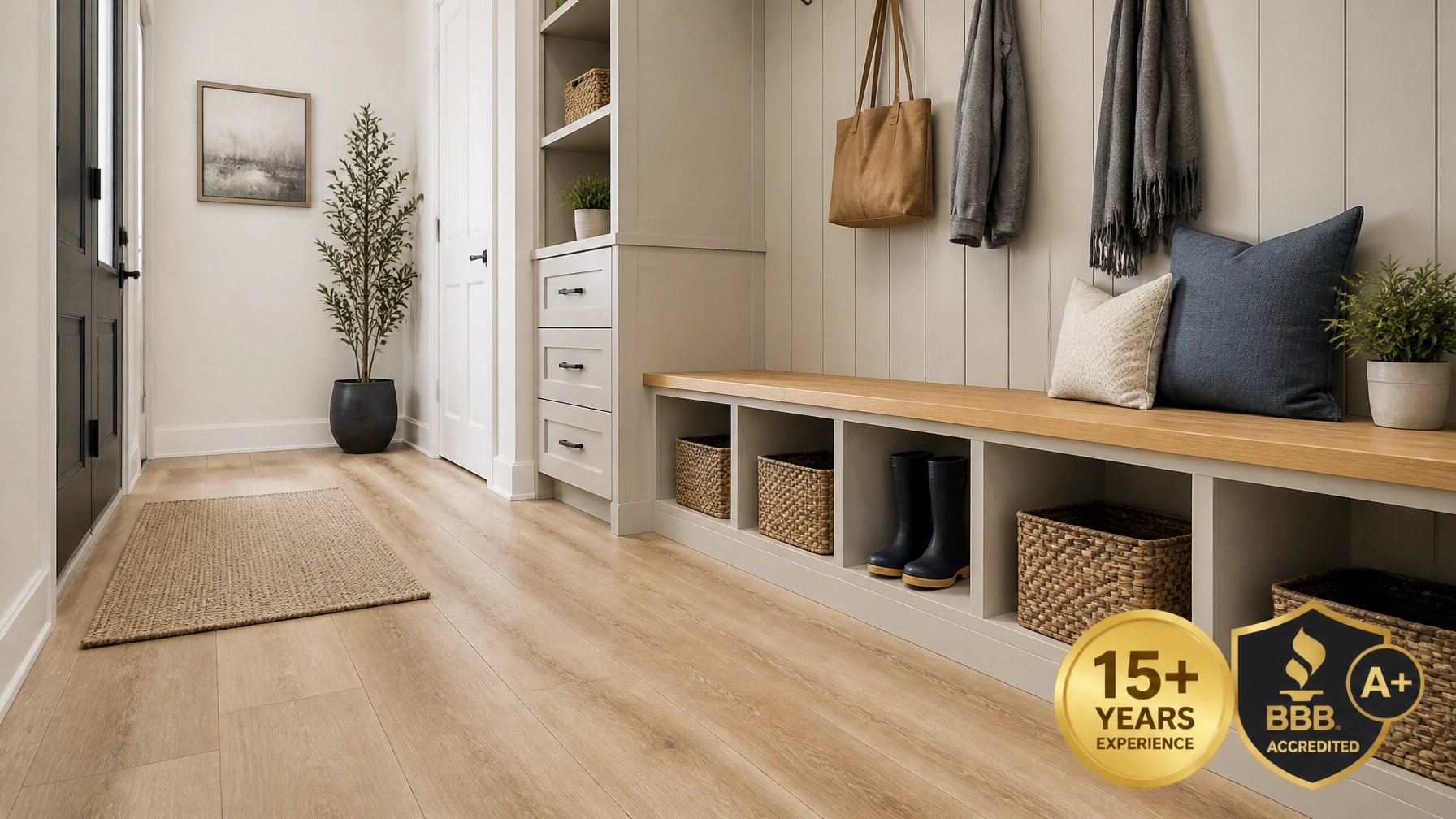
These areas see the most foot traffic and the most frequent spills. Again, SPC’s dent resistance makes it the superior choice for kitchens where dropped pots or heavy appliances are a factor. For mudrooms, the ability to withstand tracked-in moisture and grit without scratching is paramount.

The "Do It Right" Mentality: Why Professional Installation Matters
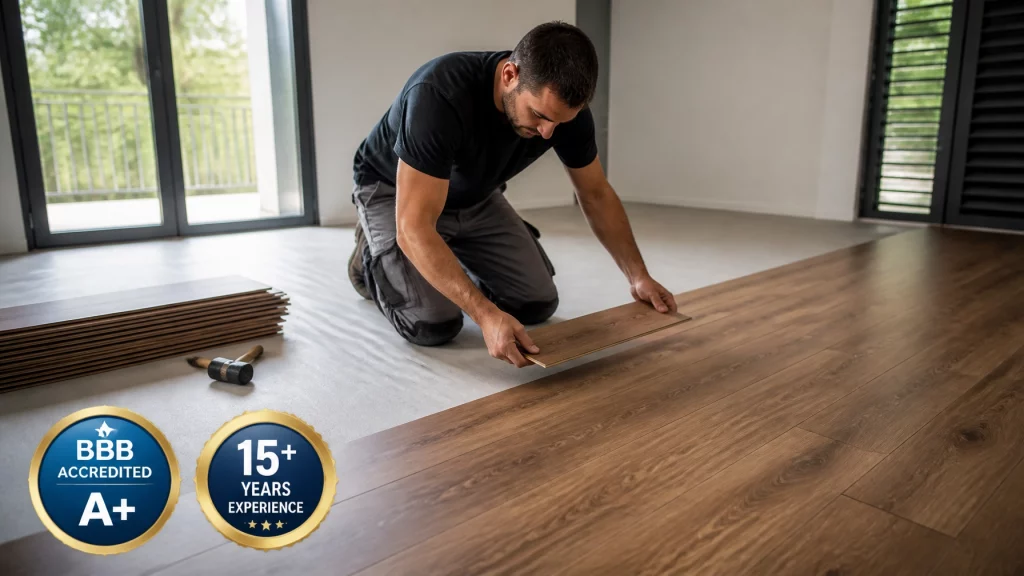
Choosing the right material is only half the battle. A "waterproof" floor is only as good as the technician installing it. Even the highest-grade SPC will fail if the subfloor is not properly prepped or if expansion gaps are neglected.
We have seen countless DIY attempts fail because the installer didn't realize that "waterproof" doesn't mean "vapor proof." Moisture coming up through a concrete slab can still cause mold issues if a proper moisture barrier isn't utilized. Our team at Apex focuses on the technical details: ensuring every click-lock joint is fully engaged and every transition is sealed correctly.
Our Professional Standards
- Clean and organized job sites: We treat your home with respect, maintaining a tidy workspace from start to finish.
- Proven Methods: We don't cut corners. From leveling the subfloor to selecting the right underlayment, we follow manufacturer specifications to the letter.
- One-Year Workmanship Warranty: We stand by our craft. If something isn't right, we fix it: no questions asked.

Upgrade Your Space with Confidence
Investing in your home's flooring is a significant decision. Whether you are a property manager looking for durability or a homeowner wanting to modernize your living space, understanding the difference between LVP and SPC ensures you get the results you expect.
Don't settle for "good enough." Choose a team that values durability, precision, and professional service. We are ready to help you navigate your material selection and provide a flawless installation that lasts for years to come.
Ready to start your flooring upgrade? Contact Jay at Apex Custom Floors today at (979) 393-1867 for an expert consultation and a professional estimate.